Bangkok river ferry vs cruise compared: fares, routes, crowds, and comfort on the Chao Phraya. Find out which suits your budget and travel style.
Quick comparison: ferry vs cruise
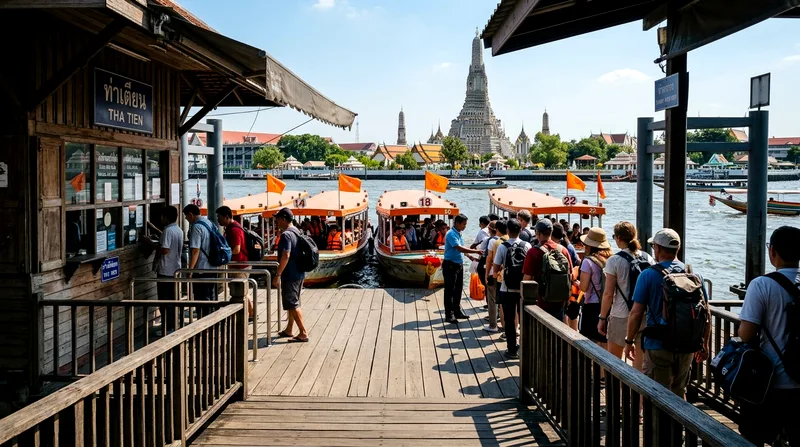
Bangkok sits on a working river, and two very different ways of experiencing it have developed side by side. The Chao Phraya Express Boat is public transport — cheap, fast, slightly chaotic, and used daily by thousands of Bangkok residents commuting to work. A guided river cruise is a tourism product — a scheduled, narrated, usually dinner-included experience aimed squarely at visitors who want comfort and context rather than a seat next to someone's grocery bags.
The Bangkok river ferry vs cruise decision really comes down to three things: how much you want to spend, how much structure you want, and whether you're treating the river as transport or as the main event. Neither choice is wrong. A solo backpacker riding the express boat to Wat Arun for under 50 baht is having a perfectly legitimate Bangkok experience; so is a couple paying several thousand baht for a sunset dinner cruise past the illuminated temples. The mistake is assuming one is simply a "better" version of the other — they're not interchangeable, and I'd argue most first-time visitors should actually try both rather than pick one and stick with it.
The ferry costs a fraction of a cruise and takes less time, but trades comfort and context for speed and savings.
Bangkok river ferry vs cruise: cost, duration, and comfort compared
| Option | Typical Cost | Duration | Comfort Level | Best For |
|---|---|---|---|---|
| Chao Phraya Express Boat | Under 50 baht per ride | 10-45 min depending on stops | Basic, can be crowded | Budget travelers, independent sightseeing |
| Orange Line Ferry (tourist flag) | Flat low fare, under 50 baht | Full route approx. 1 hour | Basic, standing possible | First-timers visiting temples |
| MINE Smart Ferry | Mid-range, higher than express boat | Similar route timing | Air-conditioned, more comfortable | Those wanting a step up without full cruise cost |
| Short sightseeing cruise | Several hundred baht | 1-1.5 hours | Comfortable seating, open deck | Couples, photographers, short trips |
| Dinner cruise | Several hundred to over a thousand baht | 2-2.5 hours | High comfort, tables, buffet | Couples, families celebrating, special occasions |
Figures are typical ranges; exact fares and schedules change, so check current prices when booking.
What the Chao Phraya Express offers
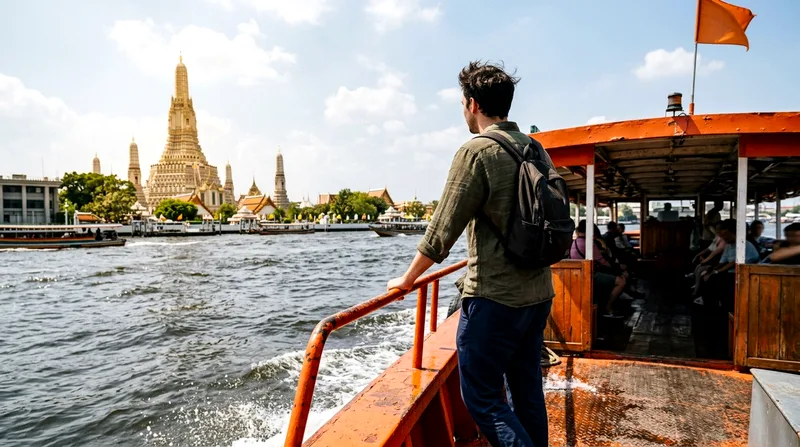
The Chao Phraya Express Boat runs along fixed piers from roughly Nonthaburi in the north down to Sathorn (Central Pier) in the south, with boats arriving every 10 to 20 minutes depending on the flag line and time of day. Flag colors — orange, yellow, green — denote different routes and stop patterns, which confuses almost every first-time rider. The orange-flag line is the one most tourists end up using, since it stops at the piers nearest the Grand Palace, Wat Pho, and Wat Arun. There's no narration, no air conditioning on most boats, and no guarantee of a seat during rush hour. What you get instead is the real texture of the river: monks boarding with alms bowls, vendors with coolers of drinks, school kids in uniforms, all moving through the same system you are.
What a guided cruise includes
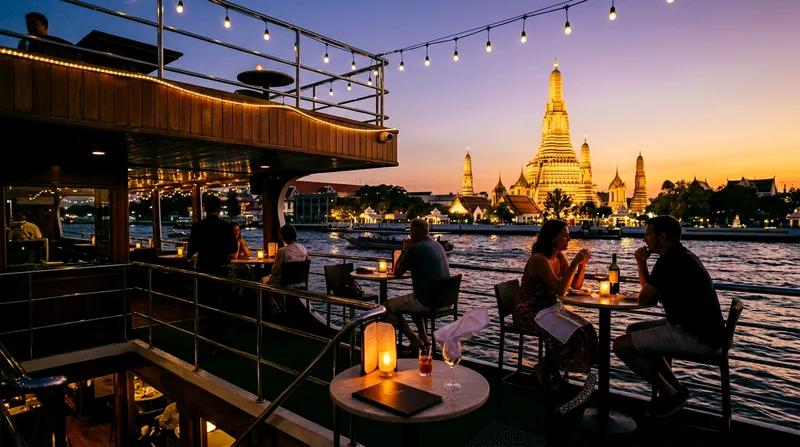
Guided cruises range from short one-hour sightseeing loops to multi-hour dinner cruises with live music and buffet service. Most depart from piers near Central Pier (Sathorn) or riverside hotels, run on a fixed schedule — typically one or two departures in the early evening — and follow a loop past the Grand Palace, Wat Arun, and Wat Pho before returning to the starting pier. Boats vary from mid-size open-deck vessels to larger multi-level ships with enclosed dining areas and live bands. Commentary, when offered, is usually pre-recorded or delivered by a host over a PA system rather than a dedicated guide walking the deck. You're paying mainly for the seat, the food, and the view — not for deep historical insight, which is worth knowing if that's what you're after.
Cost, time, and effort breakdown
This is where the Bangkok river ferry vs cruise question gets practical. The express boat is priced like what it is — public transit — while cruises are priced like entertainment, with food and ambience baked into the fare. If you're trying to stretch a daily budget, the math isn't close: you could ride the ferry back and forth across the city a dozen times for less than one cruise ticket.
But cost isn't the only variable. Effort matters too. The ferry requires you to figure out flag colors, pier numbers, and boarding procedure, which takes a bit of patience on your first attempt. A cruise requires almost no effort — you show up at the departure pier, hand over your ticket or voucher, and someone else handles the route, the timing, and the logistics.
Ferry fares and payment methods
Express boat fares are collected onboard by a conductor who walks the aisle with a ticket machine, and fares vary slightly by flag line and distance traveled — generally under 50 baht per ride, sometimes a bit more for longer orange-flag journeys. Cash in small baht notes works everywhere; some lines also accept the Rabbit Card used on the BTS Skytrain, though not universally, so don't count on it. There's no need to book in advance, no app required, and no fixed schedule to memorize beyond "boats come often." The MINE Smart Ferry, a newer air-conditioned option, costs more than the standard express boat but still sits well below cruise pricing — a reasonable middle path if you want shade and a guaranteed seat without paying cruise rates.
Cruise pricing and what's included
Cruise pricing is bundled: a single ticket covers the boat ride, a buffet or set meal, and often live music or a cultural performance. Short sightseeing cruises without food sit at the lower end, several hundred baht, while full dinner cruises with buffet service and multiple courses run into the thousand-baht range per person and up for premium boats. Children's fares are sometimes discounted, which matters for families; always confirm this when booking rather than assuming. Unlike the ferry, cruises need advance booking, especially during high season (November to February) when sunset departures sell out. I'd treat cruise pricing as you would a restaurant bill with a boat ride attached — rather than as river transport.
Routes, stops, and what you'll see
Both options travel the same river, but they use it differently. The ferry is point-to-point transport with dozens of piers, meant to get you somewhere. A cruise is a loop, meant to show you something. That distinction shapes everything about what you'll actually see and how long you'll look at it.
Ferry routes and major landmarks
The orange-flag express boat is the practical choice for temple-hopping: it stops at Tha Tien pier (for Wat Pho and the cross-river ferry to Wat Arun) and Tha Chang pier (for the Grand Palace), among dozens of others along the full route toward Nonthaburi. Because it's a real transit line, you can hop off, spend two hours at Wat Arun, and catch the next boat 15 minutes later — no waiting for a tour group. The trade-off is that you're seeing landmarks from a moving public boat rather than from a platform designed for photography, and the boat doesn't slow down for sightseeing. If you want photos of Wat Arun at a specific angle, you'll need to disembark at Tha Tien and cross separately rather than expecting the express boat to linger.
Cruise routes and guided commentary
Cruises typically run a there-and-back loop from Central Pier past the Grand Palace, Wat Arun, and Wat Pho, sometimes extending further to pass under Rama VIII Bridge, before returning to the starting point. Because the boat is slower and the route is designed for viewing, you get longer, more deliberate passes by each landmark — genuinely useful if photography or simply taking it in without rushing is the priority. Commentary quality varies a lot by operator; some offer decent historical context over the speaker system, others play generic music and let the lit-up temples speak for themselves. Groups organizing a Bangkok Forum-style itinerary planning session often debate this point — don't expect university-lecture detail, expect ambience with occasional facts.
Crowds, comfort, and experience quality
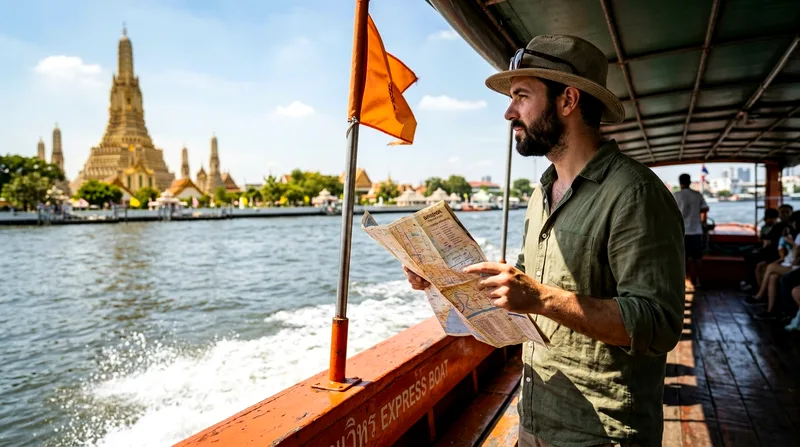
Comfort is the clearest dividing line in the Bangkok public boat vs cruise debate. The express boat was never designed with tourist comfort in mind — it's designed to move commuters efficiently, and it shows during rush hour. Cruises exist purely to be comfortable, which is the entire point of their higher price.
Peak times and passenger density
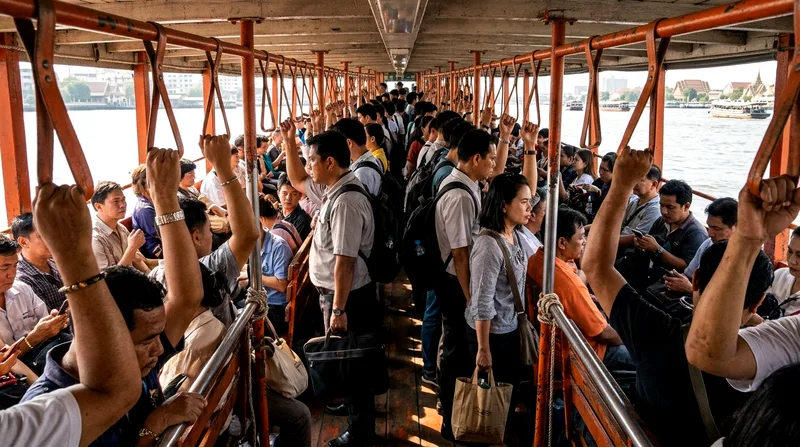
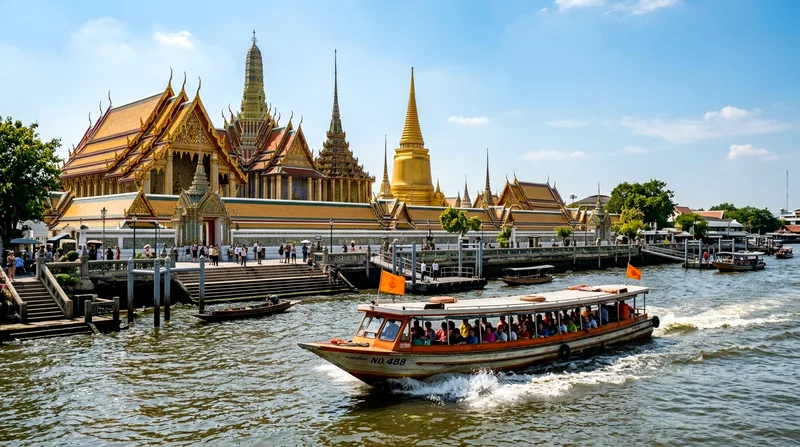
Weekday mornings (roughly 7:00-9:00) and evenings (17:00-19:00) see the express boat packed with commuters, and standing room only is common on the orange line near Sathorn. Midday and weekends are noticeably calmer, and that's the better window for sightseeing-focused riders who want a seat and breathing room. Cruises don't suffer this problem the same way — capacity is fixed by ticket sales, so a booked seat is a guaranteed seat — but popular sunset departures in high season can still feel crowded at the rail when everyone wants the same Wat Arun photo at once.
Amenities and photo opportunities
The express boat offers zero amenities beyond a roof and open sides — no toilet, no food service, no seating guarantee. A cruise typically includes restrooms, a bar or buffet line, and fixed or flexible seating depending on the boat size. For photography, the cruise's slower pace and elevated multi-deck boats generally produce better shots of illuminated temples at dusk, while the ferry gives you faster, grittier, more documentary-style images of river life. I'd rate the cruise ahead on comfort and photo opportunity, and the ferry ahead on authenticity — pick based on which you value more for this particular trip.
Who should choose which option
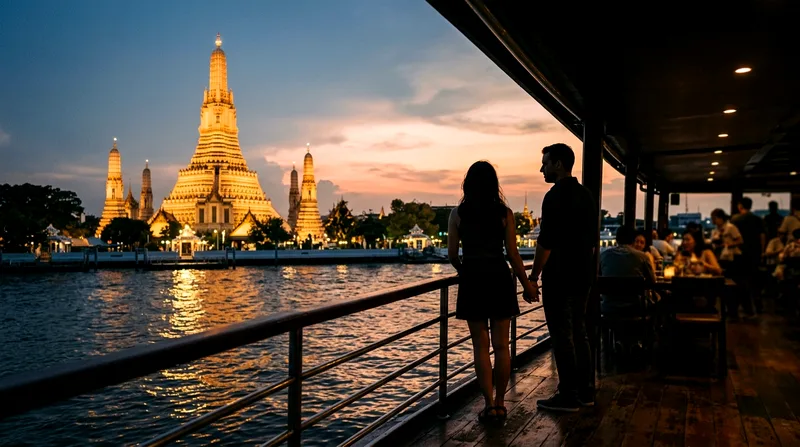
Solo travelers and backpackers on a tight daily budget should default to the ferry — it's faster for point-to-point sightseeing, costs next to nothing, and doesn't require booking ahead. Families with young children might prefer the MINE Smart Ferry or a short daytime cruise, since both offer seating and shade without the late-night dinner-cruise price tag or the crowding of rush-hour express boats. Couples wanting a romantic evening, particularly for an anniversary or a special one-off night in Bangkok, get genuinely good value from a dinner cruise — the sunset views of Wat Arun from a moving boat with a drink in hand are hard to replicate on a commuter ferry. Senior travelers who want to avoid standing or navigating pier staircases quickly will likely find cruises more comfortable, since boarding tends to be slower and more assisted.
European and other long-haul travelers comparing Bangkok against stops like Chiang Mai, Ayutthaya, or Siem Reap should note that Bangkok's river system is unusually well developed compared to those destinations — Chiang Mai's river boats are smaller and more tourist-oriented by default, and Ayutthaya's boat tours are closer to Bangkok's cruise model since there's no real public ferry network there. If you're building a wider Thailand itinerary that includes Phuket or Krabi for beaches and Bangkok for culture, don't skip the ferry experience entirely in favor of only booking a cruise — you'd miss a cheap, genuinely interesting slice of how the city actually moves. My honest take: do one cruise, ideally a dinner cruise at sunset, and use the ferry for everything else. That combination costs less than two cruises and gives you both the curated view and the real one.
Frequently asked questions
How much does the Chao Phraya Express Boat cost?
Fares generally run under 50 baht per ride, collected onboard by a conductor, with slight variation depending on the flag line and distance. It's cash-based in practice — carry small baht notes, since conductors don't always have change for large bills. No advance booking or app is needed.
What is the difference between a ferry and a cruise?
The ferry is public transport with no narration, no food, and frequent departures used mainly by commuters and independent travelers. A cruise is a scheduled tourism product with a fixed loop route, usually including a meal, drinks, and sometimes live music, priced several times higher than a single ferry ride.
Are Bangkok ferries cheaper than cruises?
Yes, by a wide margin. A single express boat ride costs under 50 baht, while even a short sightseeing cruise runs several hundred baht, and a dinner cruise can exceed a thousand baht per person. For pure river transport, nothing beats the ferry on price.
What do you get on a guided river cruise?
Typically a fixed-route loop past the Grand Palace, Wat Arun, and Wat Pho, a buffet or set meal, onboard restrooms, and sometimes live music or a cultural show. Commentary exists on some boats but tends to be light, atmosphere-focused rather than in-depth historical narration.
Is the public ferry enough or should I book a cruise?
For daytime sightseeing and temple visits, the ferry alone is enough — it's how most independent travelers see Wat Arun and the Grand Palace. If you want a relaxed evening with dinner and better sunset views without planning logistics yourself, add one cruise rather than relying on it for all river travel.