Plan your Erawan Falls day trip from Bangkok. Compare tour options, pricing, tickets, swimming tiers, and combined Kanchanaburi itineraries with expert tips.
What is Erawan Falls and why visit
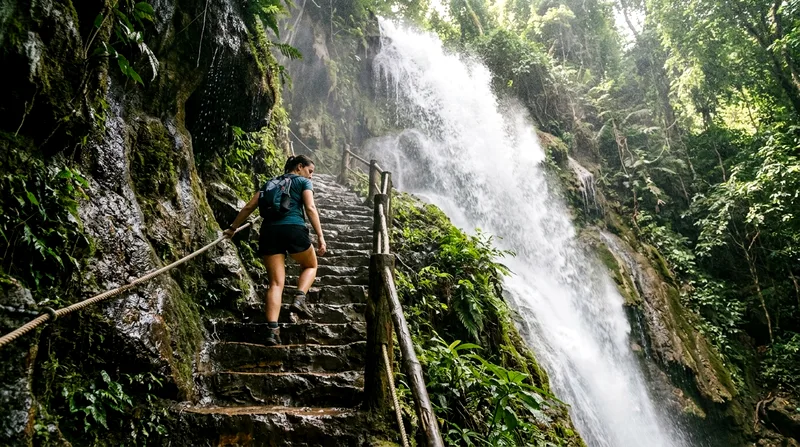
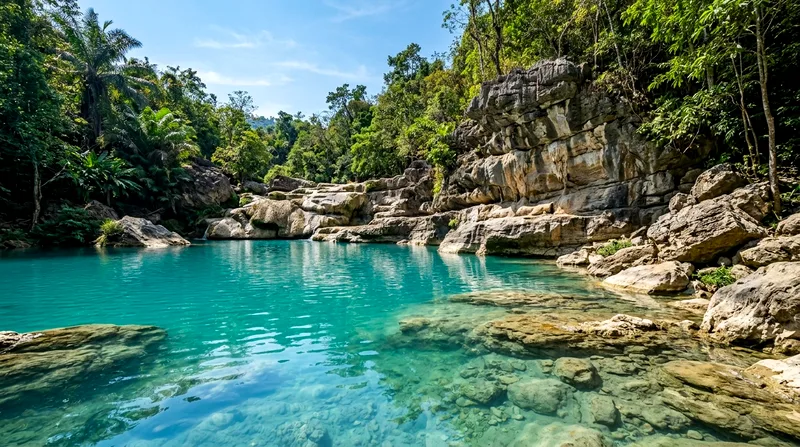
Erawan Falls sits inside Erawan National Park in Kanchanaburi Province, about 65 km west of Kanchanaburi town and roughly 220 km from Bangkok. It's the most visited waterfall in the park system west of the capital, and for good reason — the limestone-fed water runs a pale turquoise-green through seven distinct tiers, each with its own pool, rock shelf, and personality. Unlike Pattaya's beaches or Phuket's coastline, this is an inland nature day, built around hiking and freshwater swimming rather than sand.
What makes it different from, say, a day trip to Ayutthaya is the physical effort involved. Ayutthaya is temples and a slow boat; Erawan Falls is a 1.5–2 km uphill trail with wet rock, tree roots, and steps between tiers. You're not sightseeing passively here — you're climbing, wading, and occasionally scrambling. I think that's the appeal and also the catch: people who show up in flip-flops expecting an easy stroll tend to regret it by tier four.
The name comes from Erawan, the three-headed elephant of Hindu mythology — the seventh and highest tier is said to resemble its head. You don't need to reach tier seven to have a good day, but if you do, the view and the smaller crowd up there make the climb worth it.
Seven-tiered waterfall structure and swimming locations
Each of the seven tiers has a named pool, and swimming is allowed at most of them except during rare closures for erosion control, usually posted at the park entrance. Tier one, close to the parking area, is the busiest and most family-friendly — shallow, wide, and easy to reach in under 10 minutes. Tiers two and three are where most people settle for actual swimming, with deeper emerald pools and small cascades you can stand under. By tier five, crowds thin out noticeably, and tier seven requires the full uphill walk, which takes most people 45–60 minutes one way at an unhurried pace. Fish-nibbling your toes in the lower pools is normal — it's harmless, if a little startling the first time.
Difficulty levels and accessibility by tier
Tier one is accessible to almost anyone, including older travelers and young children, with a flat path and no real climbing. From tier two onward, expect uneven stone steps, exposed roots, and sections slick with spray — flip-flops are a genuine hazard here, not just an inconvenience. Rope railings appear on the steeper stretches between tiers four and seven, which helps, but there's no wheelchair or stroller access past the first pool. If you have knee issues or you're traveling with a senior family member who tires on stairs, plan to stop at tier two or three rather than push for the top — the view doesn't improve enough at tier seven to justify a fall on wet rock.
Getting there: independent vs guided tours
The honest answer is that both options work, and the right one depends on how much your time is worth versus your budget. Independent travel by public bus costs a fraction of a tour but eats into your day with waiting and transfers. A guided tour costs more but hands you a seat, a schedule, and usually extra stops at the Bridge over the River Kwai or Hellfire Pass on the way back.
Compared with Hua Hin or Krabi day trips, where a private car is often the only sane option, Erawan Falls actually has a workable public bus route — which keeps the independent option realistic rather than theoretical. That said, I wouldn't recommend the DIY route if you're traveling solo with only one day in Bangkok to spare; the margin for error (missed buses, no English signage at the Kanchanaburi bus terminal) is real.
A guided tour costs more than the public bus but buys back roughly 2–3 extra hours at the falls, which matters most if you're doing this as a single-day trip.
Erawan Falls day trip from Bangkok: travel options compared
| Option | Travel time each way | Approx. cost (per person) | Flexibility | Best for |
|---|---|---|---|---|
| Public bus + songthaew | 4–4.5 hrs | Low (a few hundred baht) | Low, fixed schedules | Budget solo travelers |
| Shared guided van tour | 2.5–3 hrs | Moderate | Medium, fixed pickup time | Couples, first-timers |
| Private car/driver | 2.5–3 hrs | High | High, flexible stops | Families, seniors |
| Self-drive rental car | 2.5–3 hrs | Moderate (car rental + fuel) | Highest | Confident drivers, small groups |
Typical figures based on standard Bangkok–Kanchanaburi routes; actual travel time varies with traffic and tour operator, so check current schedules before booking.
Self-guided travel by bus and local transport
From Bangkok's Mo Chit (Northern) Bus Terminal, buses run to Kanchanaburi roughly every 40 minutes, taking about 2.5–3 hours depending on traffic. From Kanchanaburi bus station, a local minibus (songthaew) continues to Erawan National Park, another 1.5 hours, with departures roughly hourly in the morning and far less frequent by early afternoon. Total travel time each way runs 4–4.5 hours, so a self-guided trip means leaving Bangkok by 6:30am if you want more than two or three hours actually at the falls. Total transport cost is low — typically a few hundred baht each way combined — but you're trading money for time and flexibility you don't fully control.
Guided tour options with hotel pickup
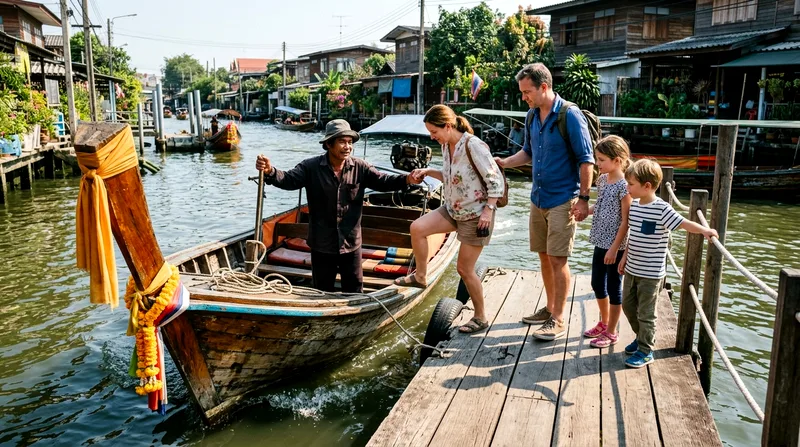
Most day tours offer hotel pickup from central areas — Sukhumvit, Sathorn, Khao San — typically between 6:30 and 7:30am, with an air-conditioned van or minibus doing the 2.5–3 hour drive direct to the park gate. This cuts out the Kanchanaburi bus transfer entirely, and most itineraries build in 3–4 hours of free time at the falls before heading back, sometimes via the Bridge over the River Kwai. You lose some spontaneity — you're on the van's schedule, not yours — but you gain a predictable return time to Bangkok, which matters if you have an evening flight or dinner plan. Compare current tours and prices on platforms like Klook or through operators listed on TripAdvisor before booking, since inclusions (lunch, park entry fee, pickup zones) vary by operator.
Tickets, entry fees and booking
Erawan Falls ticket price for foreign adults is typically around 300 baht, with Thai nationals and children paying less — this is a standard two-tier pricing structure used across most Thai national parks, not unique to Erawan. Payment at the gate is usually cash-only in baht, so don't rely on cards if you're arriving independently. If you book a guided tour, check whether the quoted tour price already includes this entrance fee — some budget tours list a lower headline price, then add the park fee as a separate cash payment at the gate, which can be an unwelcome surprise.
National Park entrance fees and what's included
The entrance fee covers access to all seven tiers and the marked trail system, plus parking if you've arrived by car or van. It does not include lockers, towel rental, or food — bring your own dry bag for phones and cash, since there's no secure storage near the lower pools. Toilets and basic changing areas exist near the entrance and at a couple of mid-trail points, but they're simple, not luxurious. Expect the gate to open around 8am and the park to close ticket sales in the mid-afternoon, with everyone cleared off the trail by roughly 4:30–5pm.
Online booking platforms and cancellation policies
Booking an Erawan waterfall tour online through Klook or similar platforms is straightforward, and most listings offer free cancellation up to 24 hours before departure — useful given Bangkok's unpredictable rainy-season downpours. Read the fine print on what counts as "included": some tours bundle lunch and a guide, others are transport-only with a meeting point rather than door-to-door hotel pickup. I'd avoid the very cheapest listings that don't specify group size — a cramped 20-person minivan with one stop for photos is a different day out from a smaller group with real free time at the falls. Always check current prices and inclusions directly on the platform before paying, since these details shift operator to operator.
Best time to visit and seasonal tips
Timing affects this trip more than almost any other factor, including which tour you book. Go in the wrong season or at the wrong hour and you'll wonder what the fuss is about.
Water levels and optimal visiting months
The best water levels and clarity generally run from roughly November through February, during Thailand's cool, dry season — flows are full from recent rain but not yet murky with runoff. March to May gets hot and the water can run lower and warmer, though it's still swimmable. June through October is the rainy season: tiers five through seven sometimes close due to slippery, dangerous conditions, and heavy rain can turn the clear green pools brown with sediment within hours. If your trip dates are flexible, aim for December or January — it's also peak tourist season in Bangkok generally, so expect company, but the waterfall itself looks its best.
Crowd management and least busy times
Arrive at or before the 8am gate opening and you'll have tier one and two nearly to yourself for an hour. By 10–11am, tour buses from Bangkok converge, and the lower pools get genuinely crowded — not Pattaya-beach crowded, but enough that photos without strangers in them become hard. Weekdays are noticeably calmer than weekends, when Thai domestic tourists add to the foreign tour groups. If your schedule allows, a Tuesday or Wednesday visit beats a Saturday by a wide margin.
Combined itineraries and nearby attractions
Because Erawan Falls sits deep in Kanchanaburi Province, most sensible itineraries pair it with at least one historical site nearby rather than making the long drive just for the waterfall alone.
Bridge over the River Kwai and Hellfire Pass
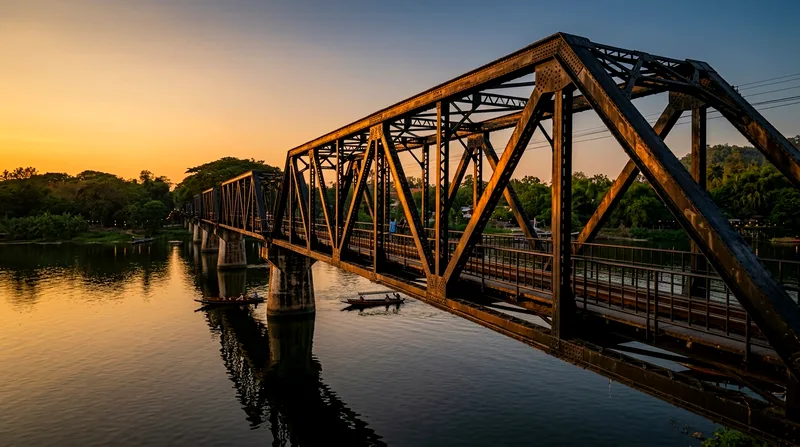
The Bridge over the River Kwai, built by POW and forced labor during WWII, sits in Kanchanaburi town itself and makes an easy add-on either on the way to or from the falls — most visits take 30–45 minutes including a walk across the bridge. Hellfire Pass, about an hour further from Kanchanaburi town, is a more sobering, detailed memorial site with a museum and a walking trail through the cutting itself; it needs 1.5–2 hours if you want to do it properly. Combining both with Erawan Falls in a single day is possible but tight — you'll be trading swimming time for history, so decide which matters more before booking a "triple combo" tour.
Multi-day Kanchanaburi packages from Bangkok
If one day feels rushed, a two-day Kanchanaburi itinerary gives you the falls at a relaxed pace, an overnight at a river-raft guesthouse, and time for the Death Railway train ride plus the bridge and Hellfire Pass without cramming it all into one van trip. This is a better fit for families with young children or senior travelers who don't want an early 6:30am pickup and a late-night return. Compared with a Chiang Mai or Krabi multi-day trip, Kanchanaburi is a far shorter hop from Bangkok, which makes it one of the easier overnight add-ons if your main base is the capital.
Frequently asked questions
Can I visit Erawan Falls as a day trip from Bangkok?
Yes, it's a well-established day trip — round-trip travel takes about 5–6 hours combined, leaving roughly 3–5 hours at the park depending on whether you go independently or by tour. Leave Bangkok by 6:30–7am to make it worthwhile; later starts mean less time at the falls and bigger crowds once you arrive.
How long does it take to reach Erawan Falls from Bangkok?
By guided tour or private car, expect 2.5–3 hours each way, covering roughly 220 km. By public bus to Kanchanaburi plus a connecting songthaew, budget 4–4.5 hours each way, since you're adding a terminal transfer and waiting time for the local minibus.
What is the typical price for Erawan Falls tours?
Shared group tours with hotel pickup generally fall in a mid-range bracket per person, often including park entrance and sometimes lunch; private car tours cost more but offer flexible timing. Prices and inclusions vary by operator and season, so compare current listings on Klook or similar platforms before you book rather than relying on a fixed figure.
How many tiers does Erawan Falls have and can you swim at all of them?
There are seven tiers, and swimming is generally permitted at most of them, though the uppermost tiers (five through seven) can close seasonally for erosion control or after heavy rain. Tier one and two are the easiest and most popular for swimming; tier seven requires a 45–60 minute uphill hike each way.
What should I pack and wear for an Erawan Falls visit?
Wear proper closed-toe sandals with grip (not flip-flops) and a swimsuit under light clothing. Bring a dry bag for your phone and cash, a reusable water bottle, sun protection, and cash in baht for the entrance fee since card payment isn't reliable at the gate.