Planning a Kanchanaburi day trip from Bangkok? Compare guided tours, the Bridge on the River Kwai, Death Railway, costs and booking options.
What is Kanchanaburi and why visit
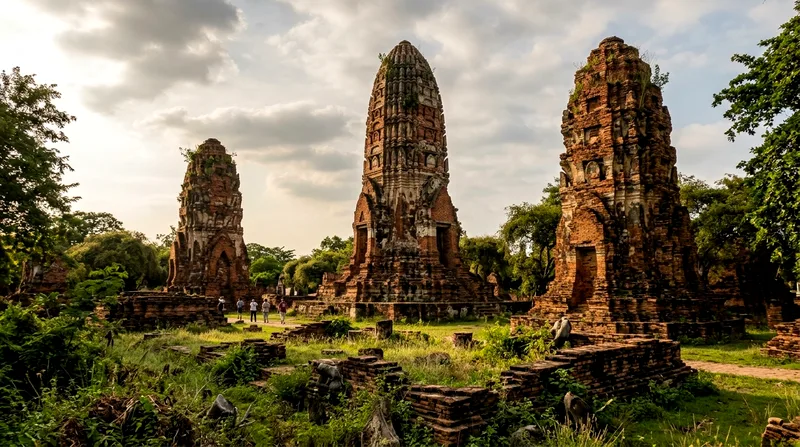
Kanchanaburi sits about 130 km west of Bangkok, roughly a two-hour drive depending on traffic leaving the capital. It's one of the few destinations within day-trip range that combines serious historical weight with jungle scenery and a waterfall worth the detour. That mix is why a Kanchanaburi day trip from Bangkok shows up on so many itineraries alongside Ayutthaya — though the two couldn't be more different in character. Ayutthaya is ruins and temples; Kanchanaburi is 20th-century war history, rivers, and limestone hills.
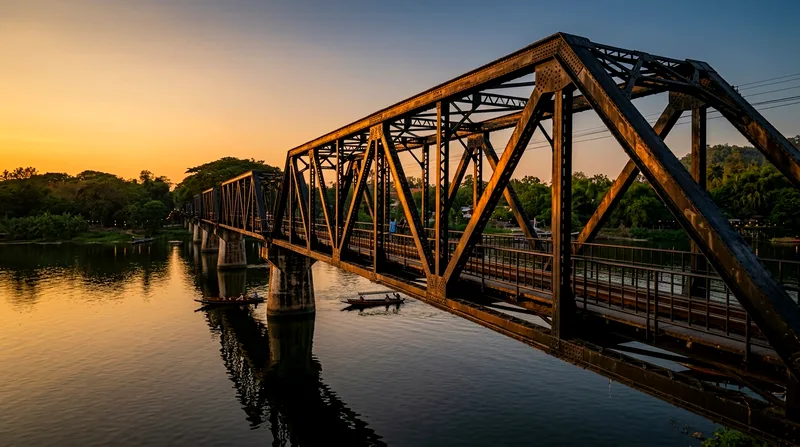
The town itself is modest, almost sleepy compared to Bangkok. You're not going for nightlife or shopping. You're going for the Bridge on the River Kwai, the Death Railway line that runs alongside it, and the sobering cemeteries that explain why this place matters. If that doesn't interest you, Kanchanaburi probably isn't worth the round trip — you'd be better served by Pattaya for a beach day or Hua Hin for a slower seaside break.
Bridge on the River Kwai history
The bridge was built in 1943 as part of the Thailand–Burma Railway, constructed under Japanese military command using Allied prisoners of war and conscripted Southeast Asian laborers. It's famous partly because of the 1957 film of the same name, which dramatized events loosely rather than accurately — the real bridge looks nothing like the one blown up on screen, and no explosion like that occurred. The current steel structure is a mix of original spans and postwar replacements; two curved sections mark where Allied bombing destroyed the original. You can walk across it for free, dodging the occasional tourist train, which takes about 10-15 minutes round trip if you just want the photo.
Death Railway and war heritage
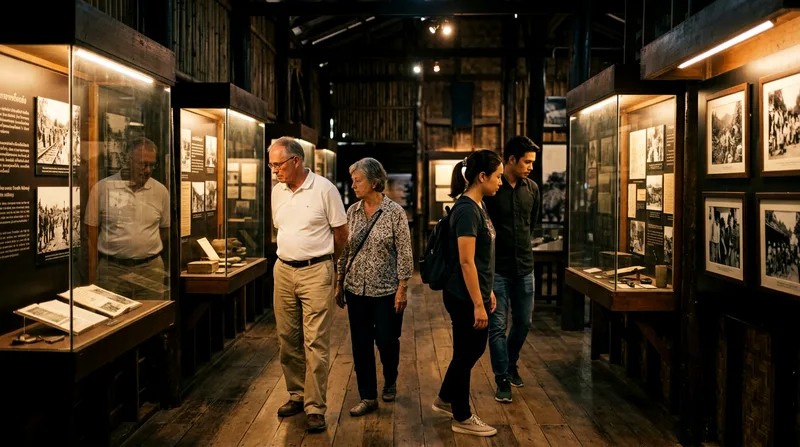
The wider rail line — officially the Thailand–Burma Railway, nicknamed the Death Railway — stretched 415 km and cost an estimated 90,000-plus civilian laborers and over 12,000 Allied POWs their lives, mostly from disease, starvation, and brutal working conditions. Today a surviving stretch runs tourist trains past Krasae Cave, where the track clings to a cliff edge above the river — a genuinely dramatic few minutes if you're on the train rather than just viewing it from below. The Kanchanaburi War Cemetery, maintained by the Commonwealth War Graves Commission, holds nearly 7,000 graves in neat rows and is free to enter. It's a quiet, sobering 20-30 minute stop that most tours include, and it's worth the time even if you're traveling with kids who might otherwise be restless — it tends to make an impression.
Independent travel vs guided tours
You can absolutely do Kanchanaburi without a tour, and some travelers prefer it. But the sites are spread out — the bridge, Hellfire Pass, and Erawan Waterfall aren't within easy walking or tuk-tuk distance of each other — and that's the practical argument for booking a guided day trip from Bangkok rather than improvising.
Self-guided transportation options
Minivans leave Bangkok's Mo Chit or Southern Bus Terminal for Kanchanaburi regularly, with the journey taking roughly 2-2.5 hours and costing a small fraction of a tour price. Trains run from Thonburi Station too, slower but scenic, at around 3 hours. Once in Kanchanaburi town, you'll need to arrange a songthaew, rented motorbike, or local taxi to reach the War Cemetery, the bridge, and anything further out like Erawan Falls, which is nearly 70 km from town. This works fine if you're staying overnight and have two days to spread the sites out. Trying to do it all in a single day using local transport is where independent travel falls apart — the connections aren't frequent enough, and you'll spend hours waiting rather than seeing anything.
Group and private tour benefits
A group tour bundles round-trip transport, a guide, and a fixed itinerary into one booking — usually departing Bangkok around 6:30-7:30am and returning by early evening. The obvious trade-off is schedule rigidity: you get maybe 45 minutes at the bridge, not three hours. Private tours cost more but let you adjust timing, skip a stop you don't care about, or add Hellfire Pass if the group itinerary doesn't include it. For families with young kids or senior travelers who don't want to manage public transport logistics in the heat, the guided option is the sensible default. I'd skip the group tours that cram in an elephant camp or long-neck village visit — these add-ons are often rushed, feel exploitative of animals or local communities, and eat into time better spent at the war sites.
Tour options, duration and what's included
Most Kanchanaburi day trip tours from Bangkok run 10-12 hours door to door, which sounds long but accounts for the drive both ways. That's the main catch: of a 12-hour day, you might spend only 5-6 hours actually at sites.
Full-day guided tours cover the most ground, but half-day and self-guided trips suit different budgets and schedules.
Kanchanaburi day trip options from Bangkok compared
| Option | Typical Duration | Approx. Cost Level | Best For |
|---|---|---|---|
| Half-day group tour | 5-6 hours | Low-mid | Bridge + train only, time-limited visitors |
| Full-day group tour | 10-12 hours | Mid | First-time visitors wanting bridge, railway, cemetery, Erawan |
| Full-day private tour | 10-12 hours | Mid-high | Families, flexible schedule, custom stops |
| Self-guided (bus/train + local transport) | Full day or overnight | Low | Budget travelers, those staying overnight |
| Overnight raft house tour | 2 days / 1 night | High | Travelers wanting a slower, immersive trip |
Cost levels are relative comparisons only; check current prices and exact inclusions before booking.
Half-day vs full-day itineraries
Half-day tours exist but are rare and usually only cover the bridge and a short train ride — fine if Kanchanaburi is a stopover en route to Erawan or further west, less useful as a standalone booking given the 4-hour round-trip drive involved. Full-day tours are the standard choice and typically combine the bridge, a Death Railway train segment past Krasae Cave, the War Cemetery, and either Erawan Waterfall or Hellfire Pass as the "nature" or "deeper history" component, but rarely both — there simply isn't time. If a listed itinerary claims to include the bridge, the railway, the cemetery, Erawan Falls, and Hellfire Pass all in one day, read the schedule closely; something will be a drive-by photo stop rather than a real visit.
Standard attractions and premium experiences
Standard inclusions across most operators are the bridge walk, a short Death Railway train ride, and the War Cemetery. Premium or upgraded versions add Hellfire Pass Memorial — a steep cutting through solid rock, hand-dug by POWs, with a free museum run by the Australian government — or swap in more time at Erawan Waterfall with swimming. Lunch is usually included in full-day tours, often a set Thai meal at a riverside restaurant; vegetarian options are generally available if you request them when booking. Private tours can add river rafting or an overnight stay in a raft house, which turns the day trip into something closer to an overnight escape from Bangkok.
Tickets, entry fees and booking
Walking onto the bridge itself is free. The War Cemetery is free. Hellfire Pass Memorial Museum is free, maintained as a memorial rather than a commercial attraction. The costs come from the train ride along the Death Railway (a short tourist segment runs a modest ticketed fare, typically under 200 baht), Erawan National Park entry (around 300-400 baht for foreign visitors, payable at the park gate), and of course transport, which is the bulk of what you're paying for on a tour.
Where to book tours
Platforms like Viator, GetYourGuide, and KKday list dozens of Kanchanaburi day trip options from Bangkok, filterable by group size, language, and whether Erawan or Hellfire Pass is included. Agoda, better known for hotels, also lists day tours and sometimes bundles them with Bangkok hotel stays, which can be convenient if you're booking accommodation anyway. Read the itinerary breakdown, not just the title — "Kanchanaburi full-day tour" can mean wildly different things between operators. Check current prices and exact departure times when booking, since these shift seasonally and by operator.
Cost comparison and inclusions
Group day tours from Bangkok are generally mid-range compared to other Thailand day trips — pricier than a DIY minivan-plus-songthaew combo, cheaper than a private full-day car and guide. Compare that to a Chiang Mai-based day trip to the Golden Triangle or an Ayutthaya tour from Bangkok, and Kanchanaburi tours tend to run a bit longer and cost a bit more, mainly because of the extra driving distance and the inclusion of train tickets and park fees. Private tours cost noticeably more per person for small groups but less per person if you're a family of four or more splitting the vehicle cost. Always check whether lunch, park entry, and the train ride are included in the quoted price — some listings quote a low headline figure and add these as extras on site.
Best time to visit Kanchanaburi
Kanchanaburi is hot year-round, like most of central Thailand, but timing still changes the experience meaningfully.
Seasonal weather and crowds
November through February is the coolest and driest stretch, with daytime temperatures around 28-32°C rather than the 35°C-plus of April and May. This is also when tour buses are fullest, particularly around the bridge area, which draws coach groups from both Bangkok and nearby resort towns. The rainy season, roughly June to October, brings afternoon downpours but also the fullest, most impressive flow at Erawan Waterfall — the cascades can look thin and underwhelming by March after months without rain. If seeing the waterfall at its best matters more to you than dry weather, aim for September or early October.
Optimal visiting windows
Whatever season, get moving early. Tours departing Bangkok at 6:30-7am beat the worst of the city traffic and reach Kanchanaburi before the heat and crowds peak at the bridge, usually by mid-morning. If you're driving yourself, the same logic applies — leave before 7am and you'll clear Bangkok's western sprawl well before rush hour settles in fully. Avoid weekends and Thai public holidays if you can; domestic tourists flood the bridge area and Erawan's parking lot fills early, sometimes leading to queues at the park entrance.
Nearby attractions and add-ons
Kanchanaburi province has more to offer than the bridge, and deciding which add-on to prioritize is really the key planning decision for your day.
Erawan Waterfall and caves
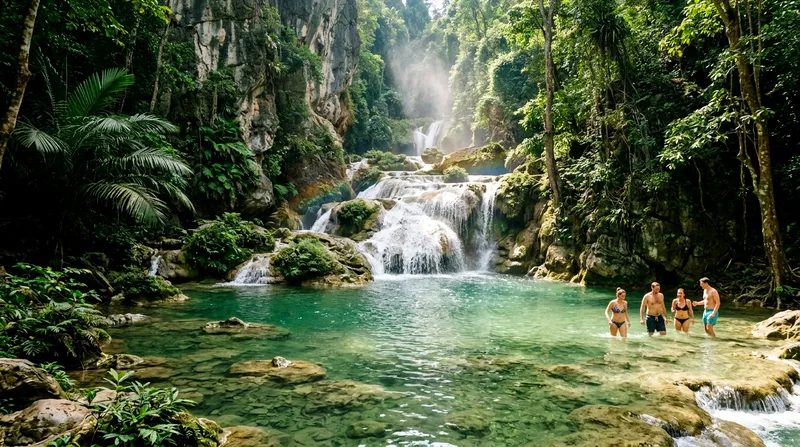
Erawan Waterfall has seven tiers climbing through forest, and reaching the top tier is a genuine hike — about 1.5-2 km of trail with some steep, slippery sections, taking 1.5-2 hours round trip if you go all the way up. Most tours only allow time for the lower two or three tiers, which disappoints some visitors who expected to see the famous top pools. Wear proper shoes, not flip-flops; the rocks get slick. Krasae Cave, visited via the Death Railway train, houses a small shrine inside a cliffside cavern and takes about 15-20 minutes to explore — it's a minor stop but a scenic one, paired naturally with the train ride itself.
Safari Park and alternative sites
Some operators offer Safari Park or elephant camp add-ons near Kanchanaburi — I'd generally steer clear of these. Animal welfare standards vary widely and are hard to verify from a tour listing, and the time would be better spent at Hellfire Pass or getting a proper amount of time at Erawan. If you want wildlife without the ethical question marks, Khao Yai National Park is a separate, better day trip for that purpose, though it's roughly the same distance from Bangkok in the opposite direction. For travelers extending beyond a single day, Kanchanaburi pairs reasonably well with Ayutthaya on a slower west-then-north loop, though most people treat them as separate day trips rather than combining them.
Frequently asked questions
Is a Kanchanaburi day trip worth it from Bangkok?
Yes, if war history or the Death Railway interests you — it's one of the more substantive day trips near Bangkok, unlike purely scenic options. If you only care about nature or beaches, your time is better spent on a trip toward Hua Hin or saving the day for Bangkok itself.
How long does a Kanchanaburi day tour take?
Most full-day tours run 10-12 hours from Bangkok hotel pickup to drop-off, including roughly 4 hours of driving each way combined. Actual time at sites is usually 5-6 hours total across all stops.
What attractions are included in standard tours?
Standard full-day itineraries typically include the Bridge on the River Kwai, a short ride on the Death Railway past Krasae Cave, and the Kanchanaburi War Cemetery. Erawan Waterfall or Hellfire Pass is usually offered as an either/or addition, not both.
How much does a Kanchanaburi day trip cost?
Group tours sit in the mid-range compared to other Thailand day trips, generally cheaper than a private car and guide but pricier than DIY minivan transport plus local songthaews. Check current prices on platforms like Viator, GetYourGuide, or KKday, since rates vary by season and inclusions.
What is the best way to book a tour?
Compare listings on Viator, GetYourGuide, KKday, or Agoda, reading the detailed itinerary rather than just the headline price — confirm whether lunch, park entry fees, and the train ride are included before you pay.