Complete Bangkok BTS and MRT guide covering routes, fares, day passes, and how to navigate the rail network to major attractions.
BTS Skytrain and MRT System Overview
Any Bangkok BTS MRT guide has to start with a basic distinction: these are two separate systems, built and run by different operators, that happen to connect at a handful of stations. They don't share one ticket, one app, or one fare structure, which trips up a lot of first-time visitors who assume Bangkok works like London or Singapore. It doesn't — but once you understand the split, the network is genuinely easy to use.
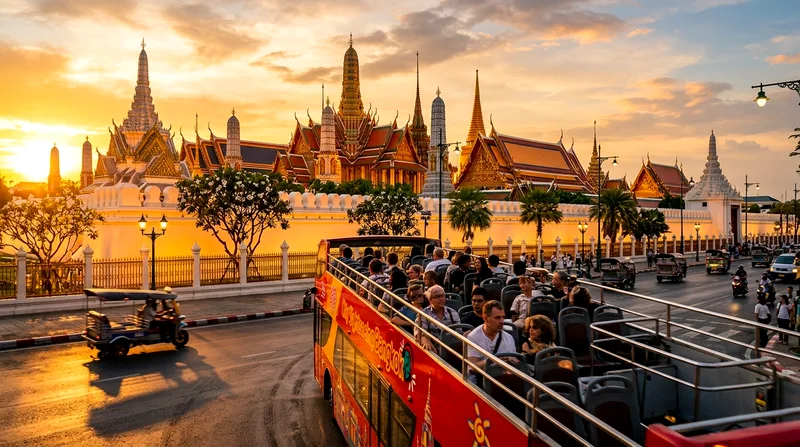
The BTS Skytrain runs on elevated tracks above the traffic, which is part of why tourists like it: you get a view of the city while avoiding gridlock below. The MRT subway runs mostly underground, covering areas the BTS doesn't reach, including parts of the Old City direction and the northern suburbs toward the Grand Palace-adjacent zones. Together they form Bangkok's rail backbone, but neither covers the riverside temples — for Wat Arun, Wat Pho, or the Grand Palace, you'll still need a boat or taxi for the final stretch.
Compared to Kuala Lumpur's rail network, which feels more joined-up with a wider mix of integrated lines, Bangkok's system is smaller but easier to learn in a day or two. If you've used Hong Kong's MTR, expect a less extensive but still reliable experience here.
What is the BTS Skytrain?
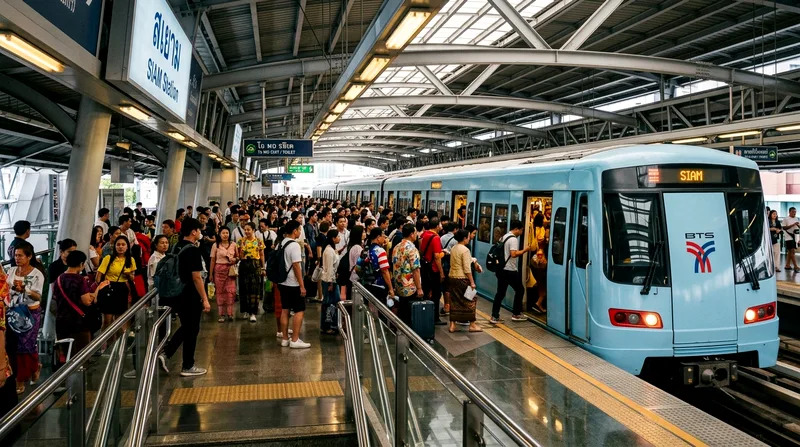
The BTS Skytrain opened in 1999 and operates two main lines: the Sukhumvit Line and the Silom Line. It's privately run, elevated almost entirely above street level, and serves Bangkok's commercial heart — Siam, Sukhumvit, Silom, and the newer extensions reaching toward Samut Prakan in the south and well past Mo Chit in the north. Trains run roughly every 3-8 minutes depending on time of day, from around 6am to midnight. For a tourist based near Sukhumvit or Siam, the BTS will likely be your most-used line.
What is the MRT subway?
The MRT Blue Line opened in 2004 and forms a loop-shaped route connecting Hua Lamphong (the old main train station) through Chinatown-adjacent areas, Sukhumvit, and back around toward the river side near the Grand Palace. A second line, the Purple Line, runs out to the western suburbs and is less useful for sightseeing. The MRT is state-owned, operates on broadly similar hours to the BTS, and its stations tend to have slightly better escalator and elevator provision than older BTS stations — worth knowing if mobility is a concern.
Routes, Lines and Major Stations
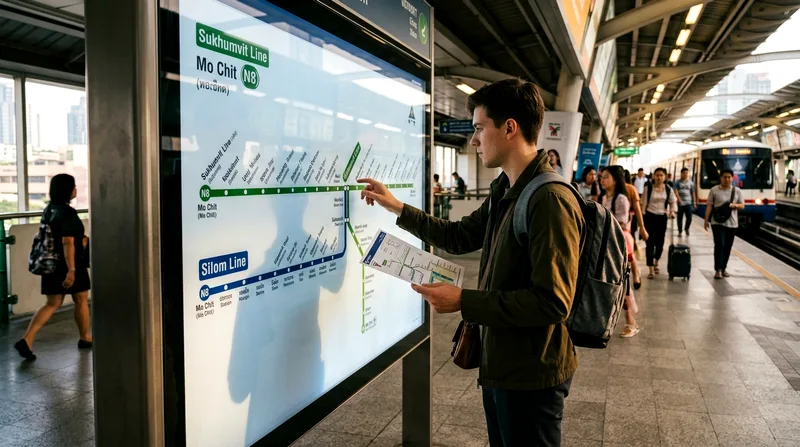
Understanding BTS routes in Bangkok means remembering there are really just two lines to track, plus the MRT loop, plus the separate Airport Rail Link. That's four systems in total, and knowing where they cross matters more than memorizing every station name.
BTS lines and key stations
The Sukhumvit Line runs from Mo Chit in the north (useful for the Chatuchak Weekend Market) down through Siam, Asok, and on toward Bearing and beyond. Asok station sits right by Sukhumvit Soi 21, one of the busiest nightlife and dining strips, and connects underground to the MRT's Sukhumvit station — a genuinely useful transfer if you're staying near Terminal 21 mall.
The Silom Line branches off at Siam and runs through Chong Nonsi and Sala Daeng — the latter connects to MRT Silom station, giving you another cross-system link near the Patpong and Silom business district. Chong Nonsi is also the stop for the Sathorn pier connection, which puts you on the river for trips to the Old City temples. If you're staying in Silom or Sathorn, this is your anchor station.
MRT lines and connections
The MRT Blue Line is the one most tourists use, mainly for reaching Chinatown (Wat Mangkon station), the old train station at Hua Lamphong, and Chatuchak Park, which sits near Mo Chit and offers an alternative entrance to the weekend market without the BTS crowds. The Blue Line also loops past Sanam Chai, a relatively new station that's the closest rail stop to the Grand Palace — still a 10-15 minute walk, but far better than nothing. The Purple Line mostly serves commuters heading to Nonthaburi and rarely factors into a tourist itinerary.
Fares, Payment Methods and Day Passes
This is where a lot of Bangkok BTS MRT guide advice gets outdated fast, so treat specific numbers as approximate and check current fares when you buy. That said, the structure itself is stable and worth knowing before you arrive.
A day pass only pays off once you're making four or more rides on the same system within a single day.
Bangkok BTS and MRT day pass options compared by cost, coverage and best use
| Option | Typical Cost (baht) | Coverage | Best For |
|---|---|---|---|
| BTS single ticket | 16-62 | One line, distance-based | Light sightseeing, 1-2 trips |
| BTS one-day pass | approx. 150 | Sukhumvit + Silom lines | Packed multi-stop sightseeing day |
| MRT single ticket | 17-45 | Blue Line, distance-based | Chinatown, Chatuchak, Hua Lamphong trips |
| MRT one-day pass | approx. 150 | Blue Line only | Multiple MRT-only stops in one day |
| Rabbit Card (stored value) | Pay-as-you-go | BTS + some BRT buses | Multi-day stays, flexible travel |
| Airport Rail Link ticket | 15-45 | Suvarnabhumi to Phaya Thai | Airport transfers only |
Figures are typical ranges and change periodically; check current BTS and MRT fares before you travel.
Single journey fares
BTS single tickets are distance-based, typically ranging from about 16 to 62 baht depending on how many stations you travel. MRT fares follow a similar distance-based model, generally in the 17 to 45 baht range. Buy single tickets from machines at each station — most accept coins and small notes, and many now take cards too, though machines occasionally run low on change during peak hours, which can mean a short queue at the staffed counter. Note that BTS and MRT tickets are not interchangeable; a BTS single ticket won't work at an MRT gate.
Day pass options and savings
The BTS offers a one-day pass covering unlimited travel on both the Sukhumvit and Silom lines, priced in the range of 150 baht. Do the math before buying: if a single typical cross-town journey costs around 40-50 baht, you need roughly four rides in a day to break even. That's realistic if you're doing a packed sightseeing day — Chatuchak market in the morning, Siam for lunch and shopping, Silom or Asok in the evening — but overkill if you're only making two trips.
The MRT sells its own separate day pass, usually priced similarly, plus multi-day tourist passes in some periods. There's no combined BTS-MRT day pass, which is the single most common point of confusion for visitors. For most trips, a stored-value Rabbit Card (for BTS) works out more flexible than a day pass, since it also covers some BRT buses and doesn't expire at midnight. Compare current passes and fares before you book your first top-up, since promotional tourist passes occasionally appear and disappear.
Accessibility for Seniors and Families
Bangkok's rail system is better for accessibility than it gets credit for, but it's inconsistent — some stations are excellent, others still rely on steep stairs as the only option.
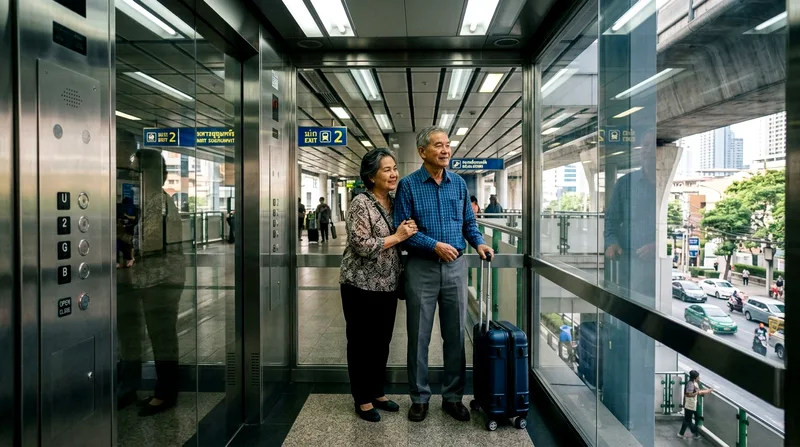
Elevators and accessibility features
Most newer BTS stations and all MRT stations have elevators from street level to platform, but some of the original BTS stations built in the late 1990s only added elevators later and they're not always easy to find — ask staff rather than hunting for signage. If you're traveling with a wheelchair or a stroller, MRT stations are generally the safer bet since the whole line was built after accessibility standards improved. Staff at both systems are generally helpful if you ask for the lift, even with limited English.
Child-friendly travel tips
Children under a certain height (roughly 90cm) typically ride free on both systems, though enforcement varies by station staff. Platforms have gap-and-gates safety screens at most stations, which families will appreciate compared to the open platforms you'll find on some older systems elsewhere in Asia. Trains get seriously crowded at rush hour — roughly 7-9am and 5-7pm — and that's genuinely not pleasant with a stroller or small kids, so plan museum and market visits outside those windows where you can.
Frequently asked questions
How do I pay for BTS and MRT in Bangkok?
Buy single journey tickets from machines at each station using coins or small notes, or get a stored-value Rabbit Card for the BTS, which you top up and tap. The MRT uses its own card system, separate from the Rabbit Card, though some machines now accept bank cards directly. Keep small change handy, as ticket machines occasionally run short during busy periods.
Is a day pass worth buying on the BTS or MRT?
Only if you're making four or more rides on the same system in one day. A single cross-town BTS or MRT trip costs roughly 40-50 baht, and the day pass runs around 150 baht, so two or three trips won't recoup the cost. For most sightseeing days mixing both systems, a Rabbit Card with pay-as-you-go credit is more practical than either day pass.
Where do BTS and MRT connect in Bangkok?
The main interchange points are Asok (BTS) to Sukhumvit (MRT), and Sala Daeng (BTS) to Silom (MRT), both requiring a fresh ticket since fares aren't combined. Siam station connects the BTS's two lines to each other, not to the MRT. Budget a short walk and a separate fare gate at each transfer.
What are the main BTS Skytrain lines?
The BTS runs two lines: the Sukhumvit Line, running north-south through Mo Chit, Siam, and Asok, and the Silom Line, running through Chong Nonsi and Sala Daeng toward the Silom business district. They cross at Siam station, the system's busiest interchange.
Is the BTS or MRT better for tourists?
Neither is strictly better — they serve different areas. The BTS covers Siam, Sukhumvit, and Silom, where most hotels and malls sit, while the MRT reaches Chinatown, Hua Lamphong, and the Chatuchak market area. Most multi-day visitors end up using both.