Suvarnabhumi airport transfer book guide: compare Airport Rail Link, taxis, private cars & buses to Bangkok. Pick the right option for your trip.
What is a Suvarnabhumi Airport Transfer?
A Suvarnabhumi airport transfer is simply the ride that gets you from the terminal to wherever you're staying in Bangkok — or back again for your departure. That sounds obvious, but the method you choose shapes your first hour (or your last) in Thailand more than almost any other single booking you'll make. Suvarnabhumi Airport (BKK) sits roughly 25km east of central Bangkok, and depending on traffic, time of day and your exact hotel location, that trip can take anywhere from 45 minutes to well over 90.
This isn't Phuket, where the airport is a 40-minute drive from most beach resorts with little traffic variation. Bangkok's road network backs up badly during rush hours (roughly 7-9am and 4-8pm), and a transfer that takes 45 minutes at 2pm can stretch past an hour and a half at 6pm. If you're booking a transfer for a specific flight time, this matters — a private car booked in advance accounts for traffic; a taxi hailed on a whim does not always factor that in until you're sitting in it.
Why airport transfers matter
Arriving in Bangkok after a long-haul flight, the last thing most people want is to negotiate a fare, hunt for an ATM, or figure out which train platform leads where. A pre-booked transfer removes that decision-making at the exact moment you're least equipped to make good decisions — jet-lagged, unfamiliar with Thai baht, possibly travelling with children or elderly parents. For families and senior travellers especially, knowing a driver will be holding a sign with your name on it is worth more than the money saved by winging it.
Distance and travel time overview
Expect 45-60 minutes to central areas like Sukhumvit, Silom or Siam during light traffic, and 60-90+ minutes during peak hours. If your hotel is in Sukhumvit near a BTS station, the Airport Rail Link plus a short taxi or BTS connection can actually beat a car stuck on the expressway. If you're heading further out — say, toward the river near Chinatown, or onward to Pattaya (about 2 hours southeast by road) — a private car with a fixed price is usually the less stressful option.
Transfer Options: Rail Link vs Taxi vs Private Car vs Bus
There's no single "best" way from Suvarnabhumi to Bangkok — there's a best way for your specific trip. I'd rank them by what kind of traveller you are rather than by price alone, because the cheapest option isn't always the one that saves you the most hassle.
A private car costs more than the Airport Rail Link but removes nearly every point of friction, which is the real trade-off travellers are weighing.
Suvarnabhumi airport transfer options compared: cost, time and best use case
| Option | Typical cost (THB) | Journey time (min) | Best for |
|---|---|---|---|
| Airport Rail Link | approx. 15-45 | approx. 30 (plus connection) | Light luggage, budget solo travellers |
| Metered taxi | approx. 300-500 | approx. 45-90 | Solo or couples, moderate luggage |
| Private car (sedan) | approx. 600-1,200 | approx. 45-90 | Families, seniors, late arrivals |
| Shared private transfer | approx. 400-700 per person | approx. 60-100 | Solo/budget travellers wanting door-to-door |
| Public bus | under 100 | approx. 90+ | Minimal luggage, flexible schedule |
Figures are typical published ranges and vary by platform, traffic and vehicle class; confirm current pricing when booking.
Airport Rail Link: speed and cost
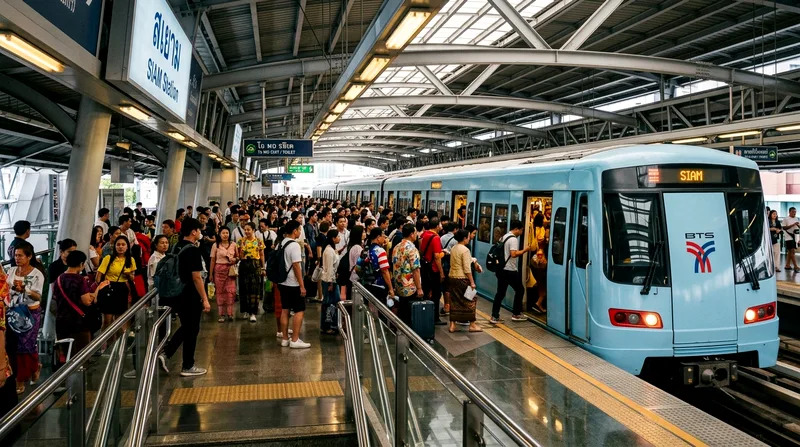
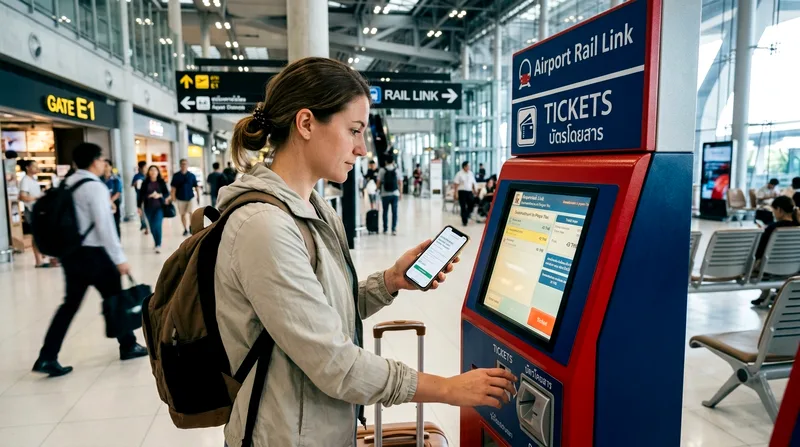
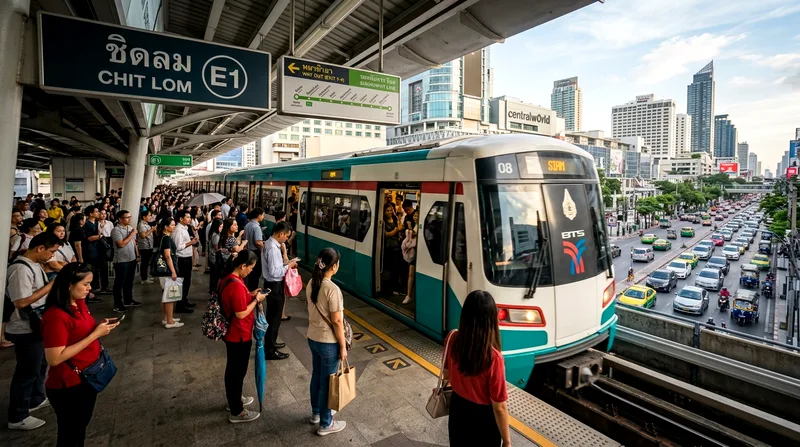
The Airport Rail Link (ARL) runs from Suvarnabhumi's basement level into the city, terminating at Phaya Thai station, with a stop at Makkasan (Ratchaprarop) for access to the Airport Rail Link City Line interchange. The express-style City Line journey takes around 30 minutes end to end, and fares are typically in the range of 15-45 THB depending on distance, published on the official SRT Electric Train (SRTET) site. It's by far the cheapest way into town. The catch: you'll need to connect to a BTS Skytrain or taxi at Phaya Thai to actually reach most hotels, and with heavy suitcases, children, or mobility concerns, that extra transfer adds real friction. It also doesn't run 24 hours, so a very late or very early flight rules it out.
Taxis: convenience and negotiation
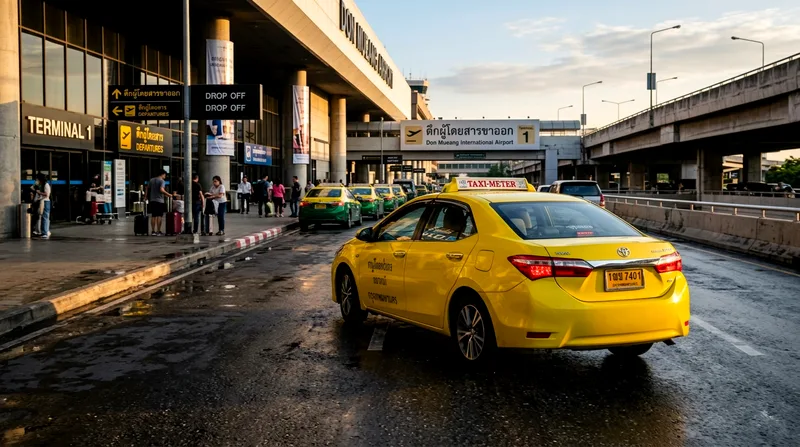
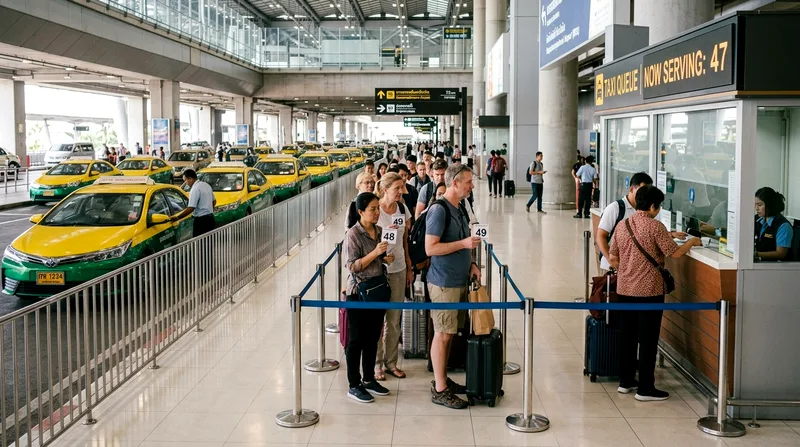
Metered public taxis queue at designated ranks on Suvarnabhumi's ground floor. They're required to use the meter, plus there's typically an airport surcharge (around 50 THB) and any expressway tolls, which the passenger pays on top. All-in, a taxi to central Bangkok often lands somewhere between 300-500 THB including tolls. The honest downside: queueing can take 15-30 minutes during busy periods, and a small minority of drivers will try to quote a flat "no meter" rate that's worse than the metered fare — politely decline and go to the next car in line if that happens. Taxis are fine for solo travellers with light bags and some patience; I'd avoid them late at night if you don't speak any Thai and have no idea what a reasonable fare looks like.
Private cars: comfort and reliability
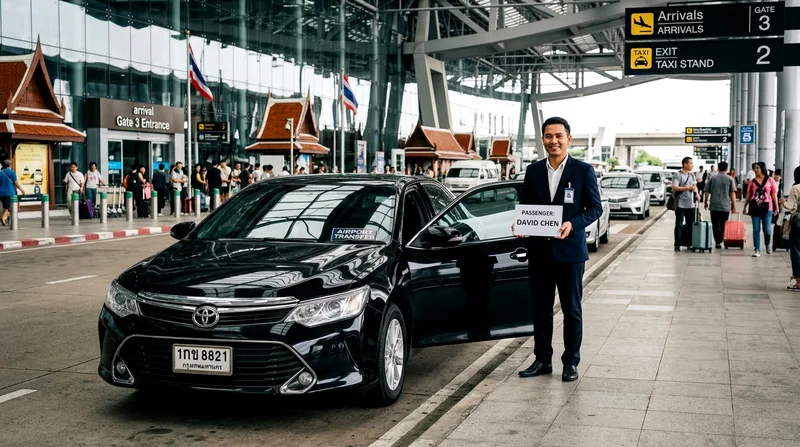
A private transfer — typically a sedan like a Toyota Camry for up to three passengers, or a van for larger groups — is booked in advance through a platform, with a fixed price agreed before you fly. A driver meets you at arrivals holding a name sign, tracks your flight for delays, and takes you directly to your hotel door. This is the option I'd recommend for families with children, senior travellers, anyone arriving late at night, or groups with more than two large suitcases. It costs more than a metered taxi — often somewhere in the 600-1,200 THB range for a sedan to central Bangkok depending on the platform and vehicle class — but the price is locked in, and there's no queueing or language barrier at 1am.
Buses: budget-friendly alternatives
Public buses and the airport's shuttle services connect to various parts of Bangkok for a fraction of a taxi fare, generally under 100 THB. They're the slowest option by a wide margin — figure 90 minutes or more depending on the route and traffic — and luggage space is limited. I only recommend buses if you're genuinely counting every baht, have minimal luggage, and have real flexibility in your schedule. For most families and anyone transiting after an overnight flight, this isn't worth the time saved in cost.
What's Included and What Isn't
Before you book a Suvarnabhumi airport transfer book confirmation through any platform, read the fine print on inclusions — this is where travellers get caught out, not in the base price.
Standard inclusions across services
Most private transfer bookings include flight tracking (so the driver adjusts for delays), a fixed price regardless of traffic, meet-and-greet at arrivals with a name sign, and one stop at your accommodation. Many platforms also include a free waiting period after landing — commonly around 60 minutes — to account for immigration and baggage queues at Suvarnabhumi, which can genuinely take 30-45 minutes during busy arrival banks.
Common exclusions and extra fees
Expressway tolls are sometimes included, sometimes charged separately in cash to the driver — check before you travel. Child seats are rarely included automatically and often need to be requested (and sometimes paid for) at booking. Extra stops, waiting beyond the grace period, or late-night surcharges (often for pickups between roughly 10pm and 6am) can add to the quoted price. Taxis never include tolls or the airport surcharge in the meter reading — that's always extra, paid directly to the driver.
How to Book Your Transfer
Booking ahead is genuinely one of the lowest-effort things you can do to improve your Bangkok arrival. It takes about five minutes on your phone before you fly.
Official booking channels and platforms
For the Airport Rail Link, you simply buy a ticket at the station machine or counter on arrival — there's no advance booking needed or available. For private and shared transfers, third-party platforms like Klook, Viator and GetTransfer let you compare vehicle types, read cancellation terms, and pay in advance in your home currency. These aren't the only platforms out there, but they're widely used, show driver and vehicle details before you pay, and send a confirmation with the driver's contact number. Avoid unofficial touts inside the terminal who approach you before you've even cleared customs — legitimate drivers wait at the designated meeting point with your name visible, they don't hustle you in the arrivals hall.
Advance booking vs on-arrival options
Booking in advance locks in your price, guarantees a driver is waiting regardless of flight delays, and lets you pay by card rather than scrambling for cash on landing. On-arrival options — taxi ranks, the Rail Link counter — work fine if you're flexible, comfortable improvising, and arriving at a reasonable hour. I'd book ahead for any flight landing after 9pm, for any trip with more than two bags, and always for families or senior travellers. For a quick weekend trip with just a backpack, on-arrival is perfectly workable and saves you nothing in stress either way.
Is It Worth It? By Traveller Type
Whether a booked transfer is "worth it" depends entirely on who's travelling and what they're carrying.
Solo budget travellers
If you're travelling light and don't mind a bit of navigation, the Airport Rail Link combined with a short BTS hop or local taxi is the cheapest route into the city by a wide margin. A shared private transfer is a reasonable middle ground if you'd rather skip the train but still want to save compared to a private car — expect to split the vehicle with other arrivals, which adds a stop or two to the route.
Families and groups
This is where a private van or sedan earns its higher price. Trying to manage two kids, a stroller and four suitcases through a train interchange is unpleasant at best. A private car with enough boot space, booked in advance, removes that entirely — door to door, no transfers, no queueing for a taxi with cranky children in tow.
Business and luxury travellers
For business travellers, the value isn't comfort — it's predictability. A pre-booked car with flight tracking means no risk of missing a meeting because the taxi queue was 40 minutes long. Compare that to Kuala Lumpur, where the KLIA Ekspres train is faster and more integrated into the city than Bangkok's Rail Link — Bangkok's traffic genuinely makes the private car option more valuable here than in many other Asian capitals.
Frequently asked questions
How do I book a transfer from Suvarnabhumi Airport to my hotel?
For a private car, book through a platform like Klook, Viator or GetTransfer before you fly — enter your flight number, hotel address and passenger count, then pay online. You'll get a confirmation with a driver contact. For the Airport Rail Link, no advance booking exists; buy your ticket at the station on arrival.
What is the cost difference between Airport Rail Link and private transfer?
The Airport Rail Link typically costs only a few hundred baht at most, while a private sedan transfer to central Bangkok generally runs several hundred to over a thousand baht depending on vehicle and platform. The gap buys you door-to-door service, luggage help and no need to navigate a station interchange.
How long does a transfer from Suvarnabhumi to Bangkok city centre take?
Expect 45-60 minutes outside peak hours and 60-90 minutes or more during morning and evening rush traffic. The Rail Link itself takes about 30 minutes but usually requires a connecting BTS or taxi ride to reach most hotels.
Can I cancel my airport transfer booking?
Most platforms allow free cancellation up to a set window before pickup — often 24 hours, though this varies by provider and fare type. Check the specific cancellation policy shown at checkout before you pay, since some discounted fares are non-refundable.
What payment methods are accepted for airport transfers?
Advance bookings through platforms typically accept major credit cards and sometimes digital wallets, charged at the time of booking. Metered taxis and the Rail Link generally expect cash in Thai baht, though some taxis now accept card or QR payment — don't rely on that being universal.