Bangkok market tour vs self-guided: compare cost, time, insider access, and crowds to find which suits your travel style and budget.
Options at a Glance
Bangkok's markets split into two rough categories, and that split matters more than most guides admit. There are city markets — Chatuchak Weekend Market, Or Tor Kor Market, the night-time Talad Rot Fai — that sit on the BTS or MRT lines and need nothing more than a phone and a bit of patience. Then there are the floating markets — Damnoen Saduak and Amphawa — sitting 60 to 110 km outside the city, reachable only by car, van, or a combination of bus and boat that gets confusing fast if you've never done it.
The decision between a Bangkok market tour and going self-guided isn't really one decision — it's two, and conflating them is where people waste money or waste a day. Treating Chatuchak and Damnoen Saduak as the same kind of trip is the single biggest mistake I see in trip planning threads.
What a guided market tour includes
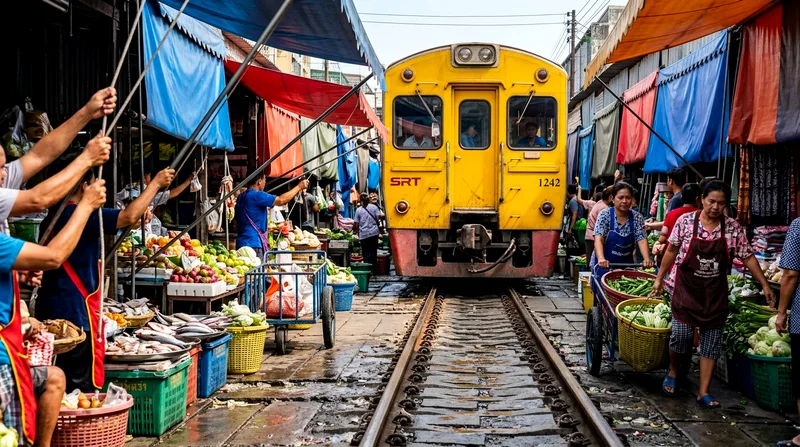
A typical Bangkok floating market tour bundles round-trip transport from a central hotel pickup point, a guide who handles logistics and translation, and usually a short longtail boat ride through the canals — sometimes combined with a stop at a nearby coconut sugar farm or the Maeklong Railway Market, where vendors fold their awnings back seconds before a train rolls through. Group sizes range from eight to twenty people in a minivan, and the whole thing typically runs 6 to 8 hours including transit. Some operators combine Damnoen Saduak with Amphawa as an afternoon-into-evening add-on, which stretches the day further but makes better use of the long drive out.
What solo exploration offers
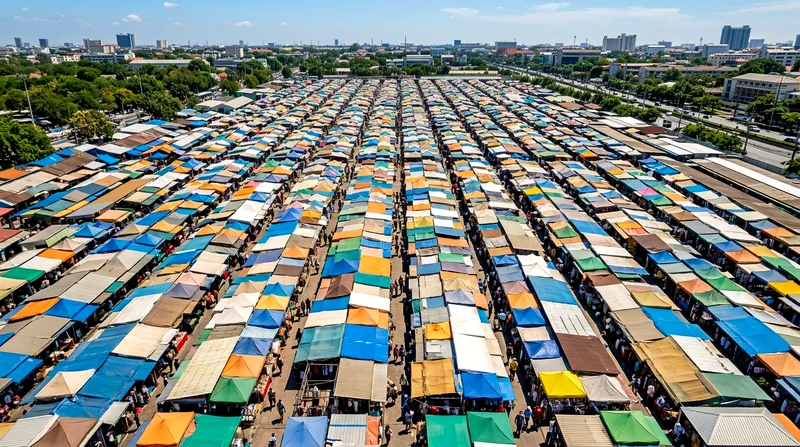
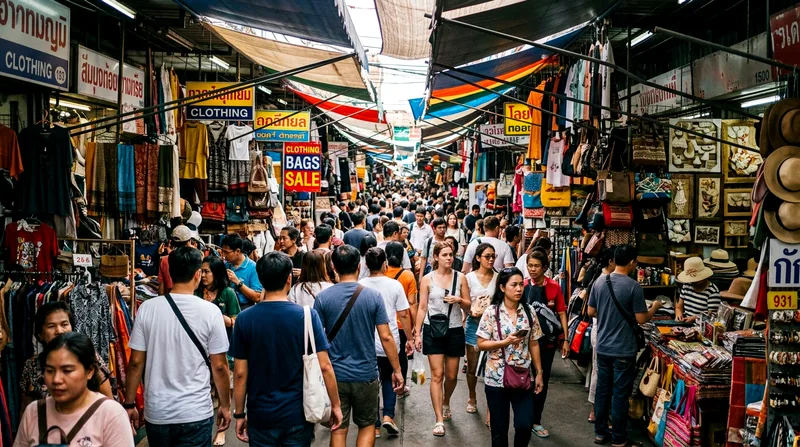
Going self-guided means picking your own departure time, skipping the farm-shop stops tours love to pad the itinerary with, and spending as long as you want at any single stall. For Chatuchak, this is clearly the better model — it's a 15-minute walk from Mo Chit BTS or Kamphaeng Phet MRT, open Saturday and Sunday roughly 9am to 6pm, and genuinely easy to navigate once you accept you'll get turned around at least twice among its 8,000-plus stalls. For the floating markets, solo means minivan transfers or a public bus from Bangkok's Southern Bus Terminal, then local transport at the other end — doable, but it eats a half day in transit planning most travelers underestimate.
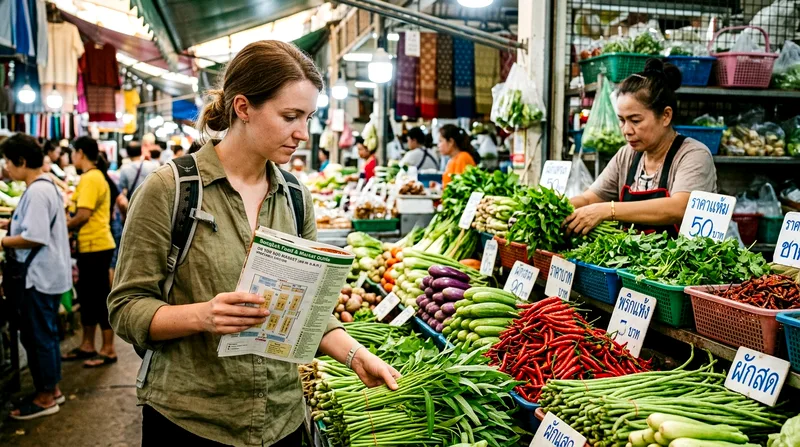
Cost: Tour vs Solo
Money is usually the deciding factor, so it's worth being blunt about where each option actually saves you cash and where it doesn't.
Tour pricing and what's covered
A guided floating market tour from Bangkok typically runs somewhere between 800 and 1,800 THB per person (roughly $22–$50), depending on group size, whether lunch is included, and whether it bundles Damnoen Saduak with Amphawa or the railway market. That price usually covers hotel pickup, air-conditioned transport, the guide's commentary, and sometimes a short boat ride — though boat rides at Damnoen Saduak are notorious for upselling once you're actually on the water, with boatmen pushing longer routes for extra cash. Check current prices and exact inclusions before you book, since what's bundled varies a lot between operators.
Solo travel expenses breakdown
Doing it yourself to Damnoen Saduak by public bus from the Southern Bus Terminal costs closer to 80–120 THB each way, plus local transport (a motorbike taxi or shared songthaew) to the market itself, plus whatever you pay for a boat ride on arrival — often negotiated individually and sometimes more expensive per person than the group rate on a tour, since you lose bulk pricing. For Chatuchak or Or Tor Kor, solo is unambiguously cheaper: BTS or MRT fare of 20–50 THB each way and zero guide fee. If your trip is Chatuchak-only, solo wins on cost easily. If it's Damnoen Saduak, the math is closer than people expect, and the time saved on a tour can offset the cash difference.
Time and Logistics
This is where the floating market comparison tips firmly toward guided, and where the city market comparison tips firmly toward solo.
Floating markets favor a guided tour for convenience, while city markets like Chatuchak are easier and cheaper to do alone.
Bangkok market tour vs self-guided: cost, time, and access compared
| Market | Guided tour cost (approx.) | Solo cost (approx.) | Travel time from Bangkok | Best approach |
|---|---|---|---|---|
| Chatuchak Weekend Market | 600-1,200 THB | 20-50 THB (BTS/MRT) | 20-30 min | Self-guided |
| Or Tor Kor Market | Rarely tour-bundled | 20-50 THB (MRT) | 15-20 min | Self-guided |
| Talad Rot Fai | Rarely tour-bundled | 50-100 THB (taxi/transit) | 25-40 min | Self-guided |
| Damnoen Saduak Floating Market | 800-1,800 THB | 300-600 THB (bus + local transfers) | 90-120 min each way | Guided tour |
| Amphawa Floating Market | Often bundled with Damnoen Saduak | 150-300 THB (minivan) | 60-90 min each way | Either, solo better for sunset |
Figures are typical ranges, not fixed prices; always check current costs and schedules before booking.
Guided tour schedules and duration
Floating market tours usually depart early — 6:30 to 7:30am — because Damnoen Saduak is at its most active, and least overrun by tour buses, before 9am. A standard tour runs 6 to 8 hours round-trip from central Bangkok, which sounds long until you compare it to arranging public buses and local transfers yourself, where the same trip can balloon to 9 or 10 hours with waiting time factored in. The fixed schedule is a real constraint, though — you don't get to linger past the pickup window, and if you wanted three hours at Amphawa's evening market instead of ninety minutes, a standard day tour won't give you that.
Self-guided planning and navigation
For Chatuchak, Or Tor Kor, or Talad Rot Fai, self-guided navigation is straightforward with a mapping app and the BTS or MRT — these markets sit close enough to transit stops that getting lost costs you minutes, not hours. Talad Rot Fai (the vintage night market) runs Thursday through Sunday evenings and is easy to combine with dinner nearby without any planning beyond checking which branch is open that week, since the market has moved locations before. For Amphawa specifically, solo travelers often do better visiting independently in the late afternoon by minivan from Victory Monument, timing arrival for sunset when the floating vendors and canal-side restaurants are both running — a schedule no standard day tour matches, since most tours prioritize Damnoen Saduak's morning rush instead.
Insider Access and Experience
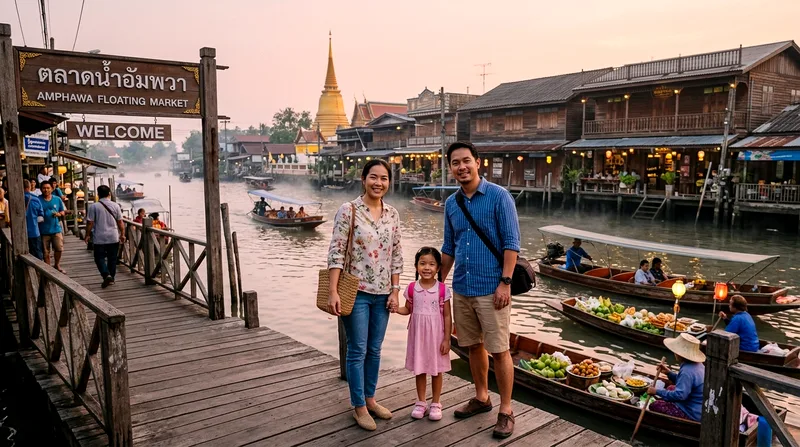
The value of a guide isn't transport — it's context, and context is unevenly distributed across Bangkok's markets.
Local knowledge and underrated spots
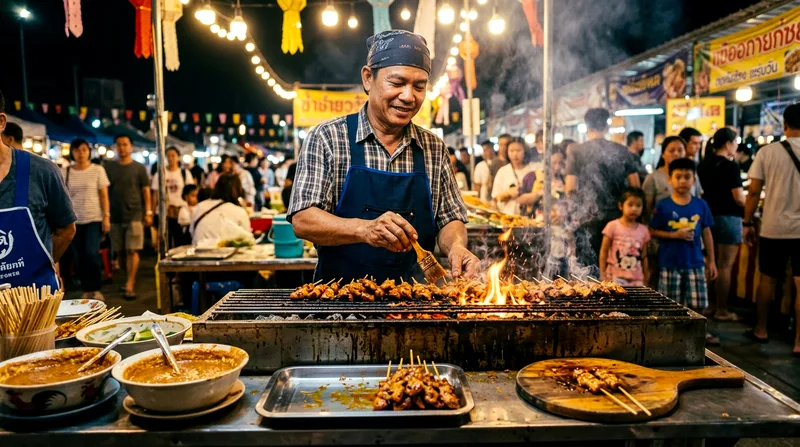
A decent guide at Or Tor Kor or Chatuchak can point you toward specific stalls — the fish-ball vendor three alleys off the main path, the fabric seller who's been there 20 years — that you'd otherwise walk past. At the floating markets, guides often explain what's actually being cooked on the boats (many visitors can't identify half the dishes without prompting) and can translate when bargaining, which matters more at Damnoen Saduak than in central Bangkok, where more vendors speak basic English. That said, a lot of this "insider" material is now covered adequately by a good blog post or a translation app — you're paying partly for convenience dressed up as expertise.
Learning and cultural immersion
Where a guide genuinely adds value is explaining why things are the way they are — why Amphawa's market only really comes alive on weekends, why Or Tor Kor is considered the "upscale" market Thais actually shop at versus Chatuchak's tourist-heavy stalls, why the Maeklong Railway Market exists five minutes from active train tracks at all. Solo travelers get the same cultural immersion, just slower and self-directed — you learn by asking vendors directly, which works fine in markets used to tourists but can feel clumsy at Amphawa, where English is spottier. If deep cultural context matters more to you than independence, that's a legitimate reason to book a guide, not just a convenience purchase.
Crowds and Atmosphere
Timing affects the market experience more than almost any other factor, and tours and solo trips handle timing very differently.
Tour group dynamics
Groups of 10 to 20 people moving together inevitably change how a market feels — you're herded somewhat, photo stops are brief, and you're rarely the only tour group at a given stall, since most operators use the same few docking points at Damnoen Saduak. The upside is genuinely practical: an early departure usually beats the worst of the 10am-to-1pm crowd surge, when tour buses from Pattaya and Hua Hin day-trippers also converge on the same canals. If crowd avoidance matters to you, the early tour slot is worth the 6:30am wake-up.
Independent exploration pace
Solo travelers set their own rhythm, which at Chatuchak is a real advantage — you can duck into an air-conditioned café when the heat gets brutal around midday, then head back out, something a tour schedule won't accommodate. At the floating markets, though, arriving independently often means arriving later than the tour buses, which puts you right into peak crowding rather than ahead of it. The trade-off is real: solo gives you pace control, guided gives you crowd-timing control, and you can't fully have both at Damnoen Saduak.
Who Should Choose What
There's no single right answer here — the right choice depends on which market, how much time you have, and how comfortable you are improvising transport in a language you don't speak.
Best for guided tours
Choose a guided tour if you're visiting Damnoen Saduak or Amphawa on a tight schedule — families with children who need the day structured, senior travelers who'd rather not manage bus transfers and negotiate boat fares, and first-time visitors to Thailand who want one less logistics headache on day two of the trip. It's also the better call if you're combining a floating market with Ayutthaya or the Maeklong Railway Market in a single day — coordinating multiple sites solo via public transport is possible but genuinely tiring, and most people underestimate how much of the day disappears into waiting for connections.
Best for solo exploration
Go self-guided for Chatuchak, Or Tor Kor, and Talad Rot Fai almost without exception — these are transit-accessible, low-risk, and better experienced at your own pace. Solo also suits budget-conscious travelers, couples who want an evening wandering Talad Rot Fai before dinner, and independent travelers who've already handled markets like Chiang Mai's Sunday Walking Street or Kuala Lumpur's Central Market without a guide and don't need hand-holding here either. If you're debating Amphawa specifically, solo in the late afternoon is often the better experience than a bundled morning tour stop, since you catch the sunset market crowd instead of competing with the Damnoen Saduak rush.
Frequently asked questions
Is a Bangkok market tour worth the money?
For the floating markets — Damnoen Saduak and Amphawa — yes, generally. The transport logistics are genuinely tricky to solve independently, and a tour priced around 800–1,800 THB saves hours of transfer planning. For Chatuchak or Or Tor Kor, a paid tour is rarely worth it — both sit on the BTS/MRT network and are simple to navigate alone for a fraction of the cost.
Can you visit Bangkok markets alone safely?
Yes. Chatuchak, Or Tor Kor, and Talad Rot Fai are busy, well-lit, heavily trafficked tourist and local spots with no particular safety concerns beyond standard pickpocket caution in crowds. The floating markets are also safe solo, though navigating the public bus and local transfer system takes more patience and a bit of Thai or a translation app for negotiating boat fares.
How much does a guided market tour cost?
Expect roughly 800 to 1,800 THB (about $22–$50) per person for a half-day to full-day floating market tour from Bangkok, depending on group size and whether lunch, a boat ride, or an extra stop like Amphawa or the railway market is included. Always confirm exact inclusions and current pricing before booking, since this varies between operators.
What's the best time to visit Bangkok markets?
Chatuchak is open Saturday and Sunday, roughly 9am to 6pm — arrive before 10am to beat both heat and crowds. Damnoen Saduak is busiest and most authentic before 9am; after that, tour buses dominate the canals. Amphawa comes alive in the late afternoon and evening, especially on weekends, making it a poor match for a standard morning floating-market tour itinerary.
Do you need a guide to understand Bangkok markets?
No, not strictly. City markets are easy to self-navigate with a translation app and basic planning. A guide adds real value mainly at the floating markets, where language gaps are wider and transport logistics are harder — there, a guide's context and negotiation help genuinely change the experience, not just the convenience.