Book your Maeklong railway market tour from Bangkok. Compare guided tours, train schedules, tickets, and combination packages with floating markets.
What is Maeklong Railway Market
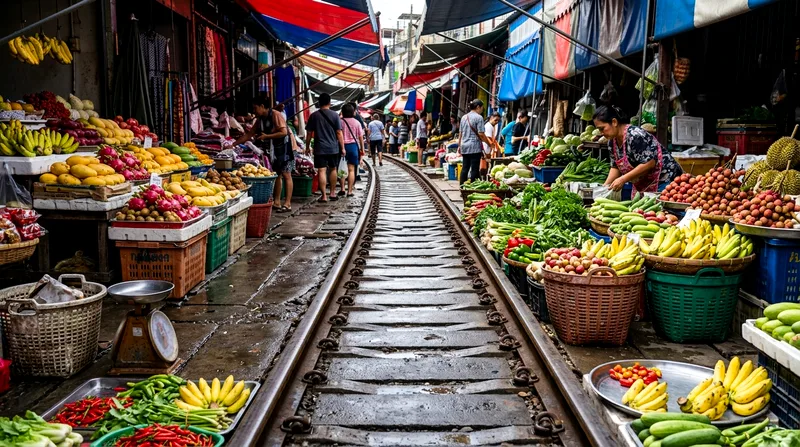
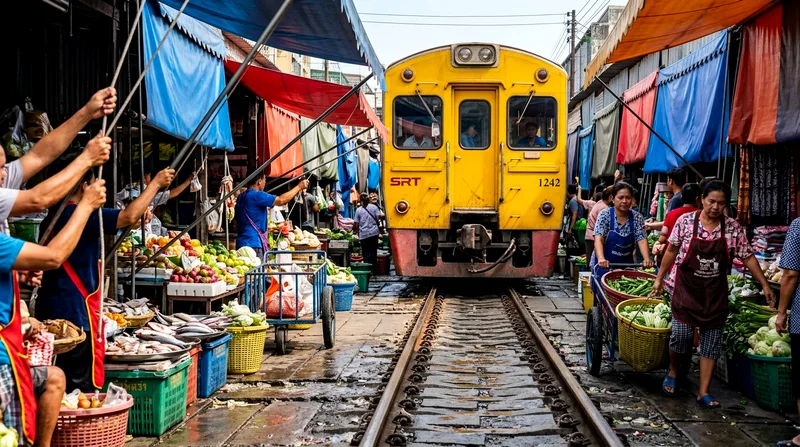
Maeklong Railway Market sits about 70 kilometers southwest of Bangkok in Samut Songkhram province, and it's exactly what the name suggests: an active rail line running straight through a working market. Several times a day, a diesel train trundles through at walking pace while vendors yank back awnings, slide produce baskets off the tracks, and resume selling within seconds of the train passing. Locals call it "Talad Rom Hup" — the umbrella-pulling market — which is a more honest name than the tourist-facing one.
This isn't staged for visitors. The market has operated on this stretch of track since the early 1900s, and the vendors were there long before anyone thought to sell a Maeklong railway market tour to foreigners. That history matters because it explains why the setup still feels improvised rather than curated — baskets of shrimp paste and dragon fruit sit inches from the rail, and the whole operation resets in under a minute.
I'd rank this as a genuinely interesting half-day stop, not a full-day destination on its own. If you've seen photos and expect a long, dramatic spectacle, you'll be disappointed — the train passage itself lasts two to three minutes. The build-up and the vendors' practiced choreography are the real show.
Market layout and vendor types
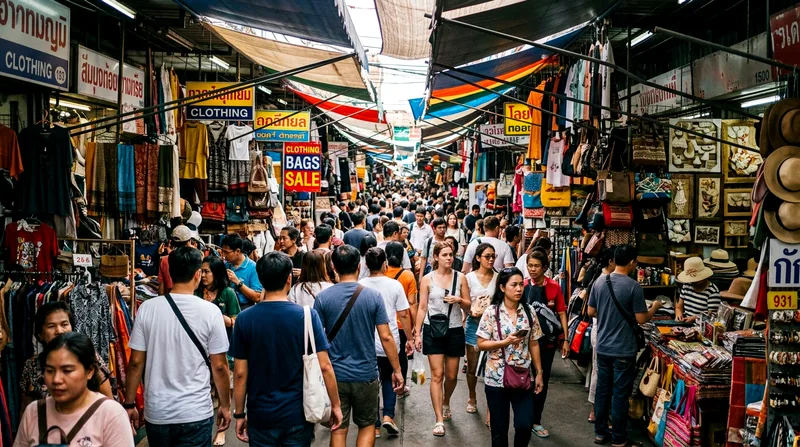
The market runs along both sides of a single track for roughly 100 meters, narrowing to barely a meter wide in places. Stalls sell fresh seafood, fruit, dried goods, clothing, and cooked street food — this is a working local market first, souvenir stop second. Expect crates of fish, squid, and shrimp laid out within arm's reach of the rail, alongside more everyday goods like cooking oil and plastic housewares. Unlike Chatuchak or the Chiang Mai night bazaars, there's almost no tourist tat here; vendors are selling to Thai shoppers as much as to visitors, which keeps prices honest and the atmosphere unpolished.
Why it's worth visiting
It's worth visiting because nowhere else packages "everyday Thai market" and "slightly alarming train encounter" into one 15-minute payoff. Compare it to Ayutthaya's ruins or the Dragon Temple-style ornate shrines around Bangkok — those are visual and historical. Maeklong is kinetic and a little absurd, and kids in particular remember it longer than another temple visit. The catch: the actual attraction is brief, so don't build your whole day around it unless you're pairing it with something else nearby.
Best Time to Visit and Train Schedules
Trains run on a fairly fixed daily pattern, though you should treat published times as approximate rather than guaranteed — delays of 10-15 minutes aren't unusual. Historically there have been around four passages a day: roughly two mornings (one around 8:30am, another near 11:00am) and two afternoons (around 2:30pm and 5:30pm), though schedules shift periodically and local sources should be checked closer to your visit date. The market itself is open most of the day, so you're not locked into train times to browse — only to see the main event.
Train timing and market hours
If you only have time for one passage, the late-morning or early-afternoon slots tend to work best for day-trippers coming from Bangkok, since they allow a reasonable departure time and still leave daylight for a floating market stop afterward. Arrive at least 20-30 minutes before the scheduled train time — vendors start their pre-train routine gradually, folding goods back from the track edge, and that's worth watching too. Don't assume you can just show up and catch a train within minutes; gaps between passages run two to three hours.
Peak seasons and crowd management
Weekends and Thai public holidays bring noticeably more visitors, and the narrow walkway means crowd density directly affects your photo options and how close you can comfortably stand. Weekday mornings are calmer. If you're traveling with young kids or anyone unsteady on their feet, a crowded weekend passage can feel genuinely tight — the safe standing zones are limited, and tour groups bunch up around the best vantage points. Senior travelers should ask tour operators about vantage-point access before booking, since standing space is first-come, first-served.
How to Visit: Independent vs Guided Tours
You have two real choices: drive yourself (or take public transport) and time the trains manually, or book a guided tour that handles transport, timing, and usually a floating market stop too. Neither is objectively better — it depends on how much you value your time versus your budget.
Guided tours cost more than DIY transport but remove the risk of missing the train entirely.
Maeklong railway market tour options compared: cost, time, and flexibility
| Option | Travel time from Bangkok | Flexibility | Floating market included | Best for |
|---|---|---|---|---|
| Self-drive / private car | 1.5-2 hours | High | No, unless arranged separately | Confident drivers, flexible schedules |
| Minivan from Victory Monument | 1.5-2 hours | Low | No | Budget solo travelers |
| Train + local transit | 2-2.5 hours | Low | No | Rail enthusiasts, patient travelers |
| Half-day guided tour | 1.5-2 hours (incl. pickup) | Medium | Usually (Damnoen Saduak) | First-timers, couples, seniors |
| Full-day combo tour | Full day (6am-6pm typical) | Medium | Yes, often two markets | Families, photographers, first Bangkok visit |
Typical figures based on common tour structures; exact timing and inclusions vary by operator, so confirm before booking.
Getting there independently by transport
From Bangkok, you can reach Maeklong by minivan from Victory Monument (roughly 1.5-2 hours depending on traffic) or by a combination of train and connecting transport via Wongwian Yai and Mahachai, which is slower but a novelty in itself since you ride a train to see a train market. Driving yourself or hiring a private car gives you flexibility but no guarantee you'll line up your arrival with a scheduled passage — and missing it means a long wait or a wasted trip. Parking near the market is limited and chaotic on weekends, which is one reason I don't recommend self-driving unless you're comfortable with Thai provincial roads.
Guided tour benefits and options
A guided Maeklong railway market tour removes the timing guesswork entirely — operators build the itinerary around confirmed train times and usually combine the stop with Damnoen Saduak or Amphawa floating market, sometimes both. This is where the real value is: you're not just buying a ride, you're buying a day that's been sequenced so you're not standing around waiting or backtracking across Samut Songkhram's back roads. Group tours cost more than DIY transport but less than hiring a private driver for the same route. The trade-off is less flexibility — you'll move on a set schedule, and photo time at the market can feel rushed if your group is large.
Booking Tours and Entry Information
There's no admission fee to enter Maeklong Railway Market itself — it's a public market and rail line, not a ticketed attraction. What you're paying for when you book a tour is transport, guiding, scheduling, and usually bundled stops elsewhere. That distinction matters: if someone advertises "Maeklong market tickets," they mean the tour package, not an entry fee.
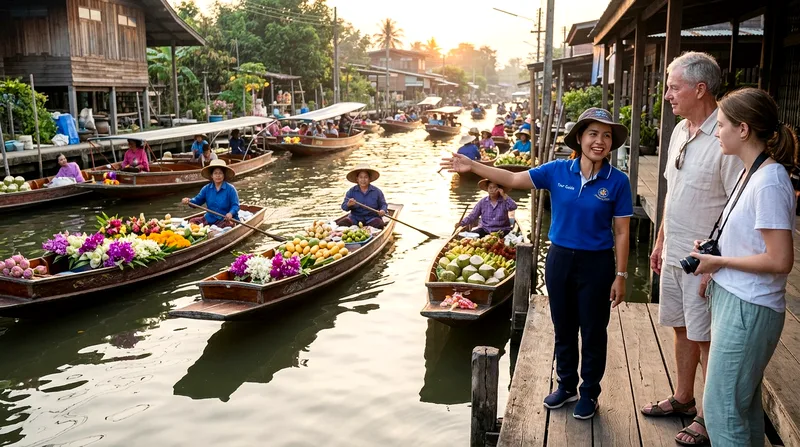
Tour operators and package types
Platforms like Viator, GetYourGuide, and KKday all list half-day and full-day options departing from central Bangkok, typically combining Maeklong with Damnoen Saduak Floating Market and sometimes Amphawa for an evening firefly or lantern-lit market extension. Half-day tours usually cover just Maeklong and one floating market; full-day versions add more stops and lunch. Compare departure times carefully — some pick up as early as 6:00-6:30am, which matters if you're not a morning person but want the quieter early train passage. Always check current prices and exact itineraries before you book, since combinations and durations vary by operator and season.
What's included and photography tips
Most packages include round-trip transport and a guide; some include boat rides at the floating market and lunch, others don't — read the inclusions line by line. For photos, the best vantage points are the elevated platforms and shopfronts set slightly back from the track, not the track edge itself, which gets crowded and is where you'll get jostled. A wide-angle lens or phone works better than zoom here, since the interesting shot is the whole scene — stalls, train, and vendors — not just the locomotive. Don't lean over the track for a better angle; staff and other vendors will (rightly) wave you back.
Combine with Floating Markets Nearby
Maeklong sits close enough to two of Thailand's best-known floating markets that skipping them feels like a missed opportunity. This is genuinely the smartest way to structure the day — the market alone doesn't justify a 70-kilometer trip each way, but paired with a boat ride through Damnoen Saduak or a sunset visit to Amphawa, the math works.
Damnoen Saduak and Amphawa options
Damnoen Saduak is the more famous, more touristy floating market, with narrow canal boats weaving between vendors selling noodles and fruit straight from the water — busy, colorful, and undeniably touristy, but still worth seeing once. Amphawa is calmer and better visited in the late afternoon or evening, when local vendors grill seafood canal-side and (seasonally) boats head out to spot fireflies along the Mae Klong River. If you only have energy for one, Amphawa feels less like a photo-op factory and more like an actual riverside town still functioning as one.
Multi-market tour packages
Full-day combination tours typically run Maeklong in the morning, Damnoen Saduak around midday, and loop back through Bangkok by early evening — though some extend into Amphawa for dinner. These are a better value per hour than doing Maeklong alone, and they're the most commonly booked format on Viator, GetYourGuide, and KKday for this region. If you're also considering day trips to Ayutthaya or Hua Hin, note that those run in different directions from Bangkok and can't realistically be combined with Maeklong in one day — pick one region per day trip rather than trying to stack unrelated destinations.
Frequently asked questions
What is the best time to visit Maeklong Railway Market?
Aim for a late-morning or early-afternoon train passage — historically around 11:00am or 2:30pm — on a weekday if possible. Weekends bring heavier crowds that make it harder to find good standing space near the track. Arrive 20-30 minutes early to watch vendors prep for the train, which is as interesting as the passage itself.
How do I book a Maeklong Railway Market tour?
Search Viator, GetYourGuide, or KKday for "Maeklong railway market tour" and compare half-day versus full-day combo options with Damnoen Saduak or Amphawa. Check pickup time, inclusions (lunch, boat ride), and group size before booking, and always confirm current prices and departure windows directly on the platform rather than relying on older listings.
Can I combine Maeklong with a floating market tour?
Yes, and it's the most common way this trip is sold. Most full-day tours pair Maeklong with Damnoen Saduak in the same morning-to-afternoon loop, and some extend to Amphawa for an evening canal-side dinner or firefly boat ride. Doing Maeklong alone wastes the long drive out from Bangkok.
Is it better to visit independently or with a guide?
Independent travel is cheaper but riskier timing-wise — minivans and trains don't guarantee you'll land near a scheduled train passage. A guided tour costs more but sequences the day around confirmed times and usually bundles a floating market, which is better value per hour for most first-time visitors.
What should I bring to the market?
Bring cash in small denominations (vendors rarely take cards), comfortable closed shoes for narrow uneven walkways, and a hat or sunscreen since there's little shade near the track. Leave bulky bags behind — the walkway narrows to under a meter in places, and it's awkward to maneuver when the train comes through.