A Bangkok shopping guide souvenirs edition: find silk, spices, and handicrafts at the right markets and malls, with prices and negotiation tips.
Bangkok Shopping Guide: Souvenirs Worth Packing Home
Bangkok is one of the easiest cities in Asia to overspend on souvenirs you'll regret and one of the best to find things genuinely worth carrying home. This Bangkok shopping guide to souvenirs covers what's actually worth buying — Thai silk, spice pastes, hand-carved teak, celadon ceramics — and exactly where to find each, from the sprawl of Chatuchak Weekend Market to the polished counters of Siam Paragon.
The city rewards planning more than most. A silk scarf that costs 800 baht at a reputable shop might be 150 baht of polyester blend at a tourist stall, and you won't always be able to tell by touch alone. Markets and malls serve different purposes: markets for character, bargains, and food souvenirs; malls for guaranteed quality, air conditioning, and fixed prices when you'd rather not negotiate. Knowing which is which before you land saves both money and suitcase space.
Thai Silk and Textiles
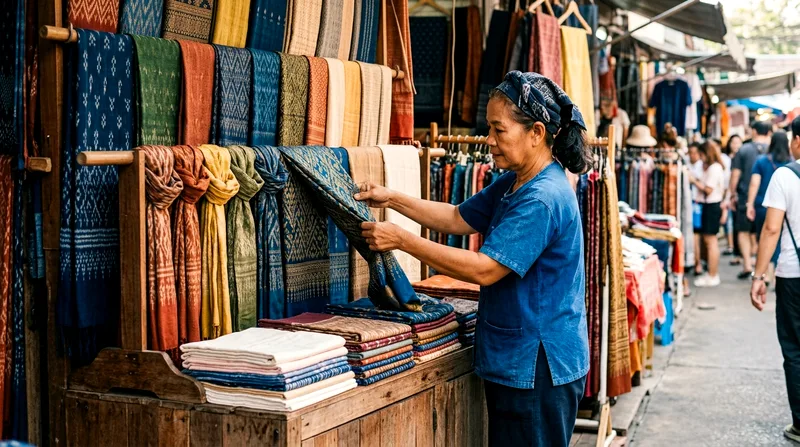
Thai silk is probably the single most requested souvenir from Bangkok, and it's also the easiest to buy badly. Real Thai silk has a slightly irregular weave and a distinctive sheen that shifts color depending on the angle — it's woven from the Bombyx mori silkworm using techniques promoted internationally since the 1950s by Jim Thompson, the American businessman whose former home is now a museum near the BTS National Stadium station. Cheap synthetic imitations are everywhere and often sold at the same stalls as the real thing, sometimes a few meters apart.
I'd put Jim Thompson House and its retail outlets at the top of any silk-shopping list, not because they're the cheapest — they're not — but because what you buy there is guaranteed authentic, and the museum visit itself (around 150-200 baht entry) makes a worthwhile stop even if you buy nothing. For a more affordable but still reliable option, look for products carrying the Thai royal cipher "Pandara" or similar government-backed authenticity marks, often found in silk cooperatives and OTOP (One Tambon One Product) outlets scattered through Bangkok's better markets.
Where to buy authentic silk
Jim Thompson's flagship retail shop near the museum and its branches in Siam Paragon and Central World are the safest bets for guaranteed authenticity — expect to pay roughly 1,000-3,000 baht for a scarf and considerably more for larger pieces like table runners or yardage. Chatuchak Weekend Market has several long-established silk vendors, mostly in the sections near Soi 3 and Soi 4, where prices run lower but quality varies stall to stall. Avoid the silk sold cheaply along Khao San Road and most beachwear-style tourist strips — it's almost always a blend, regardless of what the vendor tells you.
Quality and pricing tips
Burn a thread if you can get a sample — real silk burns to a fine ash and smells like burning hair, not plastic. Feel for slight weight and a cool touch against the skin; synthetic silk tends to feel slicker and lighter. Expect to pay at least 600-800 baht for a genuine small silk scarf even at a market; anything much cheaper is very likely a blend. Bargaining is expected at markets — start around 40% below the asking price — but most reputable silk shops and all mall outlets have fixed prices, so don't try to haggle at Jim Thompson or Emporium.
Spices and Food Souvenirs
Food souvenirs are the most practical thing you'll bring home from Bangkok — they're light, they don't need authentication, and they actually get used rather than displayed on a shelf and forgotten. The city's wet markets and specialty food shops stock curry pastes, dried chilies, and snack foods that taste nothing like the version sold in European supermarkets.
Just be aware of import restrictions before you buy in bulk. Fresh fruit, meat, and some uncooked spices can't legally enter the EU, UK, US, or Australia, so stick to sealed, packaged, or dried goods and check your destination country's customs rules — durian, in particular, is banned on most flights outright due to its smell, not just customs rules.
Thai spice blends and pastes
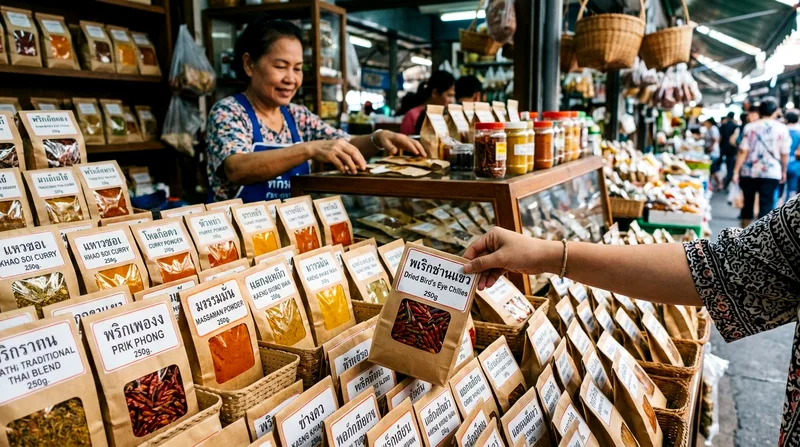
Red and green curry pastes, tom yum paste, and massaman blends are sold in small sealed pouches or jars at most supermarkets (Tops, Big C, Gourmet Market) for 30-80 baht each, and they travel well since they're shelf-stable or vacuum-sealed. Sampeng Lane in Chinatown is a good spot for dried spices sold loose by weight — expect to bargain gently and bring your own container or ask for vacuum sealing if you're flying long-haul. Avoid buying fresh pastes from open-air market stalls unless you're eating them within days; they're not designed for travel and spoil quickly without refrigeration.
Packaged snacks and sweets
Dried mango, tamarind candy, and coconut-based sweets are sold everywhere from 7-Eleven to high-end gift shops in Siam Paragon's basement food hall, and prices vary wildly — a bag of dried mango might be 40 baht at a 7-Eleven or 150 baht gift-wrapped at a mall. Tao Kae Noi seaweed snacks and Thai-style fish crackers are reliable gifts that most people actually enjoy, unlike a lot of souvenir shelf-fillers. I'd skip the elaborately packaged "Bangkok" branded gift boxes aimed squarely at tourists near Khao San Road — you're paying double for packaging, not quality.
Handicrafts and Artisan Goods
Thailand's handicraft traditions run deep, and Bangkok concentrates goods from across the country — northern lacquerware, central-region ceramics, southern basketry — into a handful of markets and specialty shops. The trade-off is that quality and authenticity vary enormously, and tourist-zone shops often sell mass-produced imports labeled as handmade.
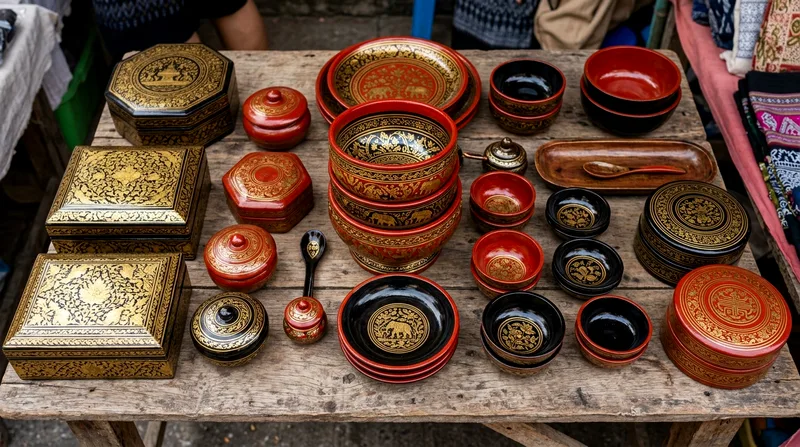
Local artisan cooperatives, often marked with the OTOP label mentioned earlier, are generally your best source for goods that genuinely support small producers rather than middlemen. These cooperatives have stalls scattered through Chatuchak and occasional pop-up fairs near Central World and Siam Paragon, particularly around major Thai holidays.
Ceramics and pottery
Celadon ceramics — the pale jade-green glazed pottery associated with Thailand since the Sukhothai era — are sold at dedicated celadon shops around Silom and in Chatuchak's ceramics sections, with small bowls starting around 150-300 baht and larger decorative pieces running into the thousands. Benjarong, the colorful hand-painted porcelain traditionally used in Thai royal courts, is pricier and more delicate; buy it only from shops that will pack it properly, since it travels poorly in regular luggage. I'd avoid the identical-looking cheap ceramic sets sold at Khao San Road stalls — they're usually machine-printed, not hand-painted, despite the labeling.
Wood carvings and lacquerware
Hand-carved teak items — elephants, Buddha figures, decorative boxes — are widely available at Chatuchak and at specialty shops along Charoen Krung Road near Talad Noi. Prices depend heavily on size and detail; a small carved elephant might run 200-500 baht, while a large decorative piece can reach several thousand. Note that genuine antique Buddha images and certain religious artifacts require an export license from the Fine Arts Department — this rarely applies to modern reproductions sold to tourists, but ask explicitly if a seller claims a piece is antique, since taking an unlicensed antique religious item out of the country is illegal.
Top Markets for Bangkok Souvenir Shopping
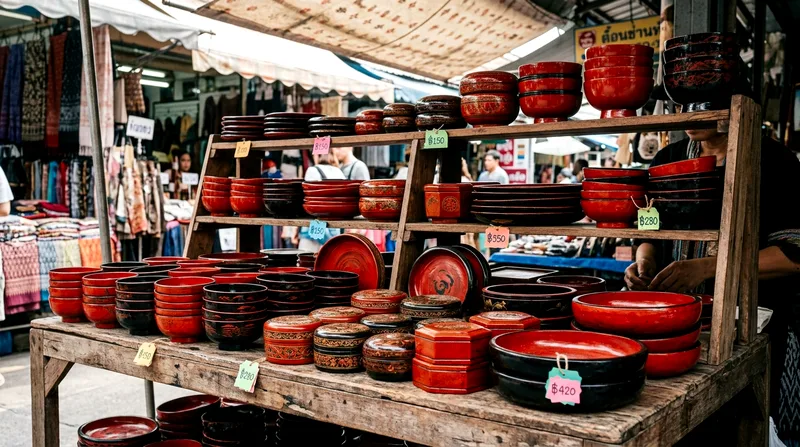
Markets are where Bangkok shopping gets interesting, and where this guide's advice probably differs most from the standard tourist itinerary. Not every famous market is worth the trip for souvenirs specifically — some are better for the experience than the buying.
Chatuchak offers the widest souvenir selection, while Damnoen Saduak is better for the floating-market experience than for prices.
Bangkok souvenir markets compared: hours, best buys, and bargaining
| Market | Open Days/Hours | Best For | Bargaining Expected | Crowd Level |
|---|---|---|---|---|
| Chatuchak Weekend Market | Sat-Sun, approx. 9am-6pm | Widest variety, textiles, ceramics | Yes | High, especially midday |
| Damnoen Saduak Floating Market | Daily, mornings best (approx. 7am-noon) | Photos, food, boat experience | Limited | High, tour-bus heavy |
| Sampeng Lane | Daily, approx. 9am-6pm | Cheap textiles, dried goods, wholesale prices | Yes | Moderate to high |
| Talad Rot Fai (vintage market) | Evenings, Thu-Sun typical | Vintage collectibles, night atmosphere | Yes | Moderate |
Hours and days vary by season and vendor; confirm current schedules before planning a trip around a specific market.
Chatuchak Weekend Market
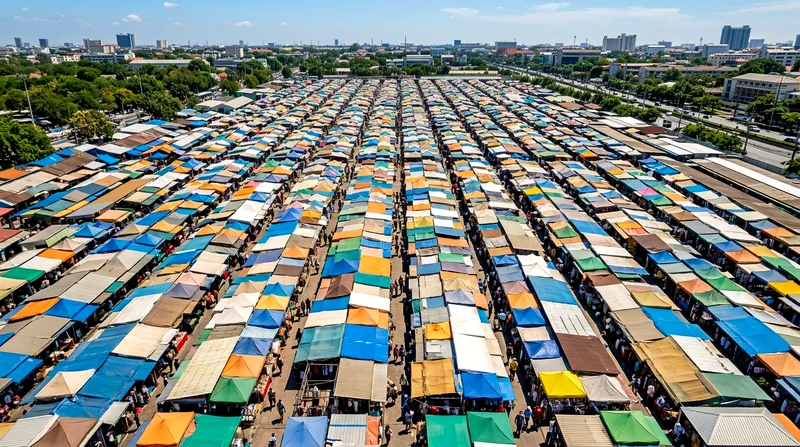
Chatuchak, open Saturdays and Sundays roughly 9am to 6pm (some sections open Friday evening for wholesale), is the largest weekend market in Thailand with over 8,000 stalls across sections selling everything from vintage Thai movie posters to handwoven textiles. It's the single best one-stop souvenir destination in Bangkok, but go early — by midday the heat and crowds under the market's metal roofing become genuinely unpleasant, and many serious shoppers arrive by 9am and are done by noon. Pick up a printed map at the entrance; the layout is notoriously disorienting and phone signal inside can be patchy.
Damnoen Saduak Floating Market
Damnoen Saduak, about 100km southwest of Bangkok (roughly 1.5-2 hours by road), is the floating market most tour operators sell, and it's genuinely photogenic — but it's also heavily geared toward day-trip tourists, with inflated prices and a fair amount of imported souvenir filler alongside the fruit and food vendors on boats. Go for the experience and the food, not expecting market-beating souvenir prices; you'll generally do better buying handicrafts back in the city. If you want a floating market with a bit less tourist saturation, Amphawa (also outside Bangkok, better visited in the late afternoon and evening) is a reasonable alternative worth comparing before you book a day tour.
Talad Noi and riverside markets
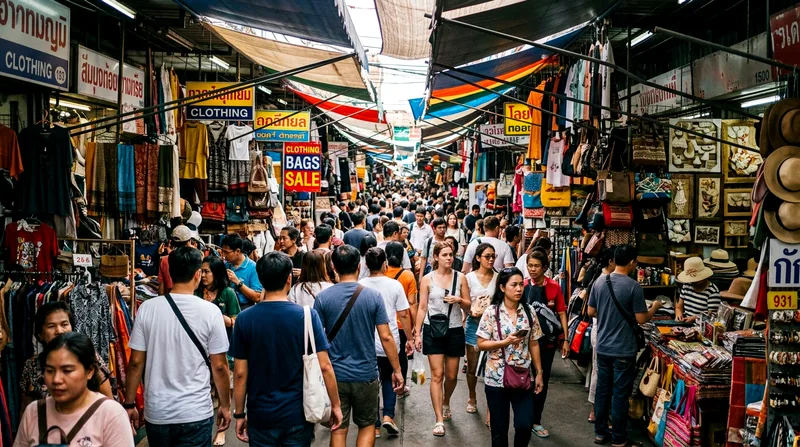
Talad Noi, a Chinatown-adjacent riverside neighborhood near Hua Lamphong, is less a souvenir market than a wander-and-discover area — old machinery shops, street art, and small antique dealers selling genuine secondhand brassware and curios. Nearby Sampeng Lane is the better bet for volume souvenir shopping: a narrow, crowded lane of wholesale-style stalls selling textiles, accessories, and dried goods at prices noticeably lower than tourist-zone markets, though you'll need to bargain and expect no English signage in many stalls. Talad Rot Fai (the retro/vintage night market, with a location near Srinakharinwirot University) is worth a visit for vintage collectibles and a very different nighttime market atmosphere, though it leans more toward browsing and nostalgia items than classic souvenirs.
Bangkok Shopping Malls for Souvenirs and Modern Retail
Malls aren't where you'll find the cheapest souvenirs, but they solve real problems: fixed prices, air conditioning on a 35°C afternoon, guaranteed authenticity on silk and handicrafts, and tax-refund paperwork for larger purchases (Thailand offers VAT refunds for tourists on qualifying purchases over 2,000 baht per store, processed at the airport). If you've had a frustrating bargaining experience at a market, a mall visit afterward is a reasonable reset.
Central World and Siam Paragon
Central World, one of the largest malls in Southeast Asia, and Siam Paragon, directly connected to Siam BTS station, both house Jim Thompson outlets, OTOP-style Thai craft counters, and high-end department stores like Siam Paragon's own luxury wing. Siam Paragon's basement food hall (Gourmet Market) is one of the best single stops in the city for packaged food souvenirs — curry pastes, teas, snacks — all shelf-stable and well packaged for travel. These malls aren't cheap and the souvenir sections are relatively small compared to the fashion and electronics floors, so don't expect a dedicated souvenir shopping trip here — think of it as a convenient add-on if you're already in the area.
Emporium and EmQuartier
Emporium and its sister mall EmQuartier, both on Sukhumvit near Phrom Phong BTS, skew more upscale and are better for Thai-designed homeware, contemporary ceramics, and boutique Thai fashion than mass-market souvenirs. If you want something a step above typical market crafts — contemporary celadon, designer silk accessories, artisanal skincare using Thai herbal ingredients — these two are worth an hour of browsing. I wouldn't make a special trip here purely for souvenirs if you're on a tight schedule; Silom and Sukhumvit also have smaller boutique shops with similar goods and less mall-navigating required.
Frequently asked questions
What are the best souvenirs to buy in Bangkok?
Thai silk scarves from a verified source like Jim Thompson, curry pastes and dried spices from Sampeng Lane or a supermarket, celadon ceramics, and small hand-carved teak pieces cover most budgets and pack reasonably well. Skip anything fragile unless you're prepared to carry it on, and avoid fresh food items that won't clear customs.
Where can I find authentic Thai silk in Bangkok?
Jim Thompson's retail shops (including outlets in Siam Paragon and Central World) guarantee authenticity, though at premium prices. Chatuchak Weekend Market has reliable silk vendors too, mainly in sections near Soi 3-4, but quality varies by stall, so check the weave and ask for a burn-test sample if unsure.
Are Bangkok souvenir markets open daily?
No — Chatuchak Weekend Market runs Saturday and Sunday only, roughly 9am to 6pm. Sampeng Lane and most mall-based shopping operate daily. Damnoen Saduak Floating Market technically runs daily but is busiest and most active in the morning, roughly 7am to noon.
How do I know if souvenirs are authentic?
Look for government OTOP labels on handicrafts, buy silk from established retailers rather than unmarked stalls, and be skeptical of "antique" claims on ceramics or religious items — genuine antiques require an export license. When in doubt, buy from a cooperative or a shop with fixed prices rather than a stall offering a suspiciously low deal.
What souvenirs can I take home from Bangkok?
Packaged and sealed food items, silk and cotton textiles, ceramics, wood carvings, and lacquerware all travel fine in checked luggage with reasonable padding. Avoid fresh produce, raw meat, and durian (often banned outright on flights), and check if any item you're buying might be classified as an antique requiring an export permit.