Compare Bangkok walking tours by type, cost, and neighborhood — guided, free, and self-guided options to help you choose the right fit before booking.
Which Walking Tour Suits You?
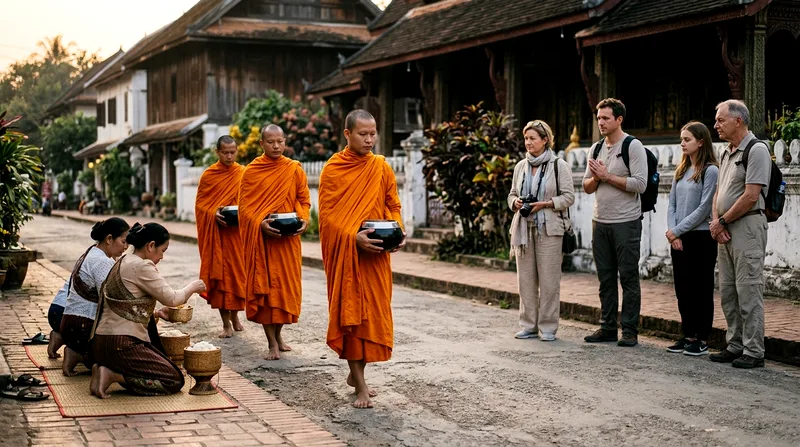
Bangkok rewards people who get out of taxis and tuk-tuks and actually walk — the city's best details are at street level: a noodle vendor's 40-year-old wok, a shrine squeezed between two shophouses, monks collecting alms at dawn. But not every traveler wants the same kind of walk. A 25-year-old backpacker and a retired couple from Lyon have very different tolerances for heat, pace, and crowd size, and Bangkok's walking tour market — spanning free tip-based tours, small guided groups, and private local guides booked through platforms like Viator, GetYourGuide, or ToursByLocals — reflects that range.
The honest starting point is admitting that Bangkok walking tours are physically demanding in a way that, say, a Chiang Mai old-town walk isn't. Bangkok's pavements are uneven, humidity sits above 70% most of the year, and distances between sights in areas like Chinatown look shorter on a map than they feel on foot. A tour that's "2.5 hours, 3km" sounds manageable until you're doing it at midday in April.
Solo travelers and budget explorers
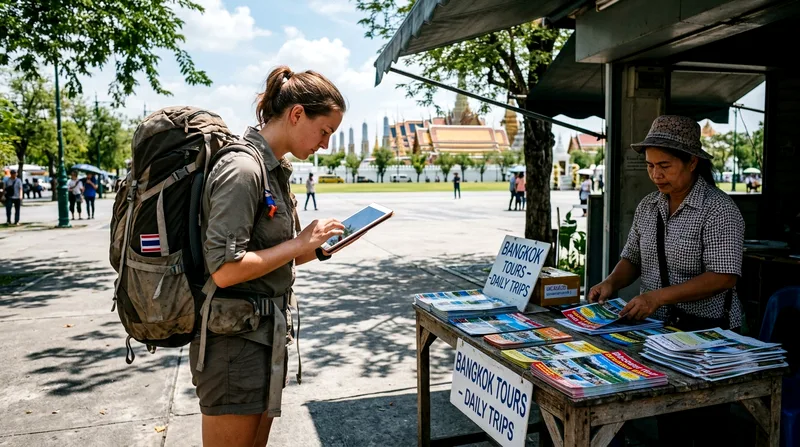
Solo travelers get the most value from group walking tours — guided or free — because the cost splits across the group and you get built-in company without commitment. A free walking tour through GuruWalk or FreeTour-style operators typically runs 2 to 3 hours, covers one compact area (often the Old City or Chinatown), and operates on a tip-what-you-want model, with 300-500 THB per person considered a fair tip for a guide's time. Budget travelers also benefit from self-guided routes using a downloaded map and a few temple entry tickets — Wat Pho's entry fee is modest and the Grand Palace, while pricier, is worth the splurge once. If you're solo and want flexibility to linger at a market stall or skip a stop entirely, a private guide costs more but moves at your pace alone, not the group's.
Families and seniors
Families with children under about eight should think twice about standard walking tours — the pace assumes adult stamina and adult attention spans, and most operators don't offer stroller-friendly routes through Chinatown's alleys. Older children (ten-plus) generally do fine on a 2-hour temple route with breaks. Seniors fare better on private or small-group tours capped at six to eight people, where a guide can genuinely adjust pace, suggest shade breaks, and skip stairs-heavy sections of places like Wat Arun. I'd avoid large 15-plus person group tours for both families and seniors — they move at the speed of the slowest member anyway, but you lose the personal attention that makes the slower pace bearable.
Walking Tour Categories Compared
Three broad categories dominate the Bangkok walking tour market, and they differ more in structure and attention than in the sights they cover — most routes through Rattanosin Island hit similar landmarks regardless of price.
Private guides cost more but flex to your pace, while free tours offer the lowest-risk way to try a guided walk through Bangkok.
Bangkok walking tour types compared: group size, cost, pace, and best-for profile
| Tour Type | Typical Group Size | Cost Range | Pace | Best For |
|---|---|---|---|---|
| Free walking tour | 12-20 people | Tip-based (approx. 300-500 THB/person) | Fixed, brisk | Budget travelers, first-timers |
| Guided group tour | 8-15 people | Moderate, fixed price | Fixed, moderate | Solo travelers, couples |
| Private local guide | 1-6 people | Higher, per-group pricing | Fully flexible | Families, seniors, special interests |
| Self-guided route | Just you/your group | Low (entry fees only) | Entirely your own | Independent, experienced travelers |
Typical figures based on common market patterns; always check current prices and group sizes before booking.
Guided group vs. private local tours
Guided group tours, the kind you'll find listed heavily on Viator and GetYourGuide, typically run with 8 to 15 participants, last 2.5 to 4 hours, and include a fixed route with set stops — often the Grand Palace exterior, Wat Pho, and a market walk. They're well-organized and reasonably priced, but you're one voice among many, and questions get limited airtime. Private local guides, bookable through ToursByLocals or directly via some agencies, cost noticeably more per person but flex around your interests — more time at Wat Pho's reclining Buddha, less time in a souvenir alley, a detour to a coffee shop if you want one. For couples or families who value conversation over checklist efficiency, private guides are worth the premium. For budget-conscious solo travelers, the group format works fine.
Free walking tours vs. paid experiences
Free walking tours Bangkok operators advertise through GuruWalk and similar booking platforms sound appealing, but "free" means tip-based, not without cost — a motivated guide expects 300-500 THB and deserves it if the tour is good. The trade-off: free tours often run larger groups (12-20 people isn't unusual), have less flexible scheduling, and occasionally get cancelled with little notice if too few people sign up. Paid experiences guarantee the tour runs, cap group size more reliably, and often include extras like temple entry fees or a cold drink stop — a real consideration when it's 35°C outside. I'd recommend free tours as a low-risk way to test whether guided walking suits you at all, then upgrade to paid or private options for neighborhoods you want to explore in depth.
What to Look for When Booking
Booking platforms make it easy to compare dozens of options, but the listing photos all look similar — golden temples, smiling guides — so you need to read past the marketing.
Group size, inclusions, and cancellation policies
Check the stated maximum group size before anything else; a listing that doesn't specify a cap is a red flag, since "small group" can quietly mean 20 people. Confirm whether temple entry fees are included — the Grand Palace's entry fee is substantial enough that it changes the real cost of a tour significantly if it's not bundled in. Read the cancellation policy carefully: many Bangkok operators on Viator and GetYourGuide offer free cancellation up to 24 hours ahead, which matters given how often Bangkok's weather turns with little warning. Avoid any tour requiring full prepayment with no refund option — Bangkok's tourism market is competitive enough that flexible operators are easy to find.
Duration, pace, and language options
Most reputable walking tours run 2 to 4 hours; anything shorter rushes through too much, and anything longer risks heat exhaustion for most travelers unfamiliar with tropical humidity. European travelers especially underestimate this — a comfortable 3-hour walk in Lisbon or Rome is a genuinely demanding one in Bangkok's climate. Check the language the guide speaks fluently, not just "available in," since some platforms list languages a guide can manage rather than one they're fluent in. If you're traveling with seniors, ask specifically whether the route includes stairs or uneven river-stone paths, common around Wat Arun and parts of Thonburi.
Best Neighborhoods for Walking Tours
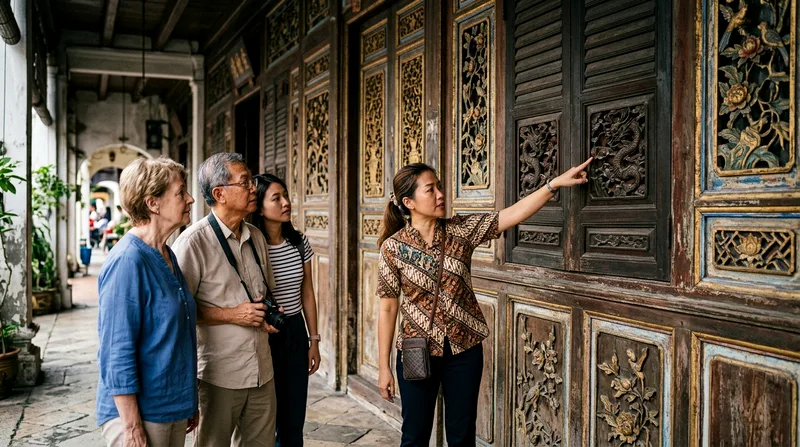
Neighborhood choice matters more than tour category for shaping what kind of day you'll have. Bangkok's walkable districts each have a distinct character, and matching the neighborhood to your interests beats picking whichever tour has the most reviews.
Old City and temple districts
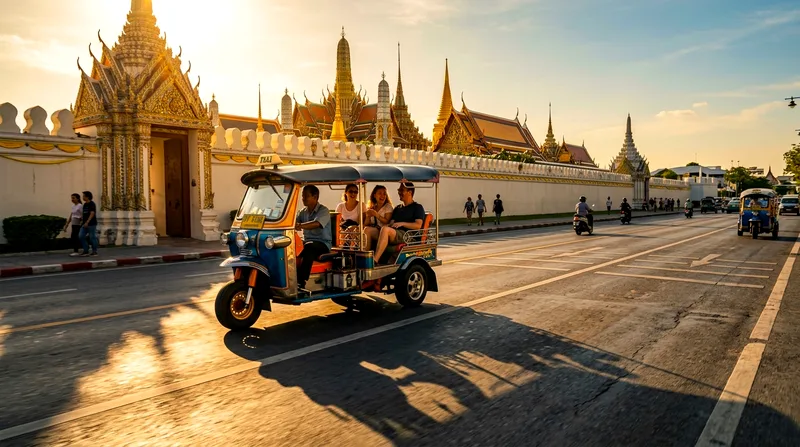
Rattanakosin Island — Bangkok's historic Old City — holds the Grand Palace, Wat Pho, and Wat Arun within a compact, walkable area, making it the default choice for temple walking tours Bangkok operators build their flagship routes around. Expect 2.5 to 4 hours covering these three sites plus some riverside walking. The downside: this is the most touristed part of the city, so expect crowds at the Grand Palace especially from mid-morning onward. Early-morning tours (starting by 8am) beat the heat and the tour-bus crowds that arrive by 10am. Dress code is strictly enforced at the Grand Palace — covered shoulders and knees, no exceptions — so check this before you go regardless of which tour you book.
Chinatown and riverside areas
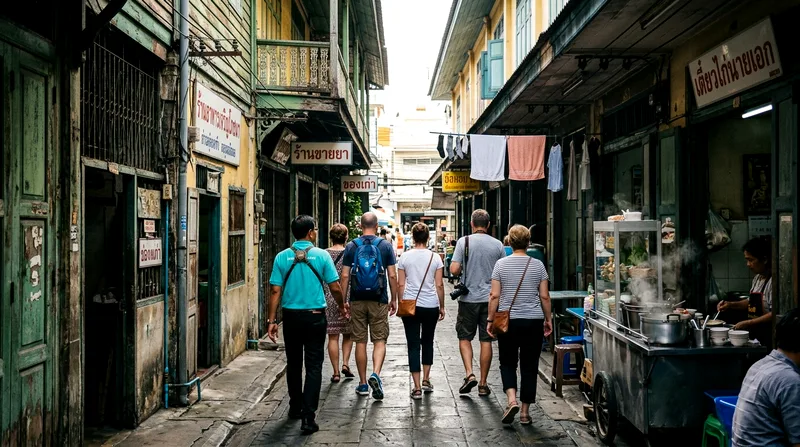
Chinatown (Yaowarat) walking tours trade grand monuments for sensory density — narrow alleys packed with gold shops, herbal medicine stalls, and street food that locals queue for. These tours suit food-focused travelers and are usually shorter, 2 to 3 hours, often scheduled in late afternoon or evening when stalls fire up. Across the river, Thonburi District offers a quieter, more residential walking experience — canal-side communities, smaller temples, far fewer tourists. It's a better fit for seniors or anyone who found the Old City's crowds overwhelming, though there's less to see per hour, which some travelers find underwhelming compared to Chinatown's constant stimulation. Combining a Chinatown evening walk with a Thonburi morning walk on different days gives a fuller, less exhausting picture of the city than cramming both into one day.
When to Book Your Walking Tour
Book guided and private walking tours at least 2 to 3 days ahead during Bangkok's high season (November through February), when cooler, drier weather pushes demand up across every tour category. Free walking tours generally accept same-day or next-day sign-ups since group sizes flex, but popular time slots — especially early morning Old City routes — still fill up. During the hot season (March to May) and the rainy season (June to October), availability is looser and some operators offer better flexibility on rescheduling, though afternoon showers in rainy season can derail an outdoor walking route with little warning.
If you're combining Bangkok with stops in Ayutthaya or a longer Thailand loop through Chiang Mai, Krabi, or Phuket, it's worth booking your Bangkok walking tour for the first full day of your trip — you'll be oriented to the city before heading elsewhere, and jet lag often means early starts anyway, which suits the 7-8am temple tour slots perfectly. Compare current walking tours and prices before you book, since availability and seasonal promotions shift throughout the year.
Frequently asked questions
What are the best walking tours in Bangkok?
The strongest options combine the Old City's Grand Palace and Wat Pho with a guided small-group or private format capped around 8-10 people. For food and market atmosphere, a Chinatown evening walk is widely considered the city's most memorable self-contained route. Compare current listings on platforms like Viator or GetYourGuide and check recent reviews before booking, since quality varies by specific guide, not just by tour category.
Are there free walking tours in Bangkok?
Yes — tip-based free walking tours operate through platforms like GuruWalk, typically covering the Old City or Chinatown in 2-3 hours. They're genuinely free to book, but tipping 300-500 THB per person is the norm and expected for a good guide. Group sizes run larger than paid tours, often 12-20 people.
Which neighborhoods are best for walking tours?
Rattanakosin Island (the Old City) suits first-time visitors wanting the Grand Palace and major temples in one route. Chinatown suits food-focused travelers and works best in late afternoon or evening. Thonburi District, across the river, offers a quieter, less touristed walk better suited to seniors or repeat visitors.
How long do Bangkok walking tours typically last?
Most guided and free walking tours run 2 to 4 hours, covering 2-4km depending on the neighborhood. Temple-focused Old City routes tend toward the longer end given the distances between the Grand Palace, Wat Pho, and the riverside. Self-guided walks can be shortened or extended freely since there's no fixed schedule.
What should I look for when booking a walking tour?
Confirm the maximum group size, whether temple entry fees are included in the price, and the cancellation policy — free cancellation up to 24 hours before is standard among reputable operators. Also check the guide's fluency in your language and whether the route involves stairs or uneven paths, which matters for seniors or anyone with mobility concerns.