Compare the top 3 floating markets for a floating market day trip Bangkok offers. Travel time, cost, crowds, authenticity — and which to book.
Floating Market Day Trip Bangkok: Which One Is Worth Your Morning?
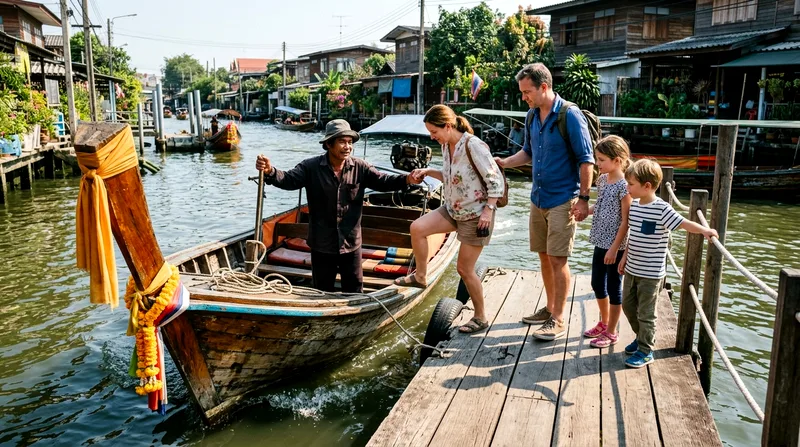
Three floating markets dominate Bangkok day-trip itineraries, and almost every tour operator — Klook, Viator, GetYourGuide — sells some version of all three. That's part of the confusion. Damnoen Saduak, Amphawa, and Maeklong all sit within roughly two hours of the city, all involve boats or canals, and all get marketed with nearly identical photos of stacked fruit and wooden longtails. They are not the same trip.
A floating market day trip Bangkok visitors book usually falls into one of two moods: you want the classic, busy, photogenic market experience, or you want something that feels less staged and more like a town going about its business. Damnoen Saduak delivers the first. Amphawa leans toward the second. Maeklong Railway Market is neither, really — it's a ten-minute spectacle built around a train track running straight through a produce market, and it's usually paired with one of the other two rather than visited alone.
This comparison breaks down the practical differences — time, cost, crowd patterns, what you'll actually see — so you can book the right one instead of the one with the best thumbnail photo.
The Three Markets at a Glance
Each market has a distinct personality, and knowing which one matches your travel style matters more than the price difference between tours, which is usually small — most half-day options run in a similar band regardless of destination.
Damnoen Saduak: the iconic choice
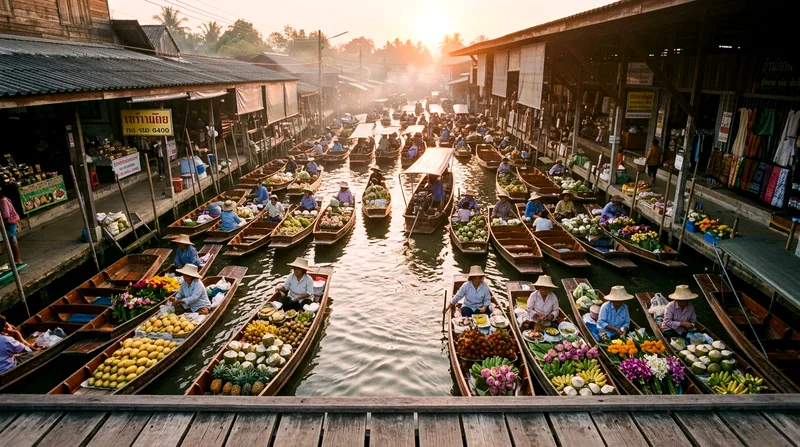
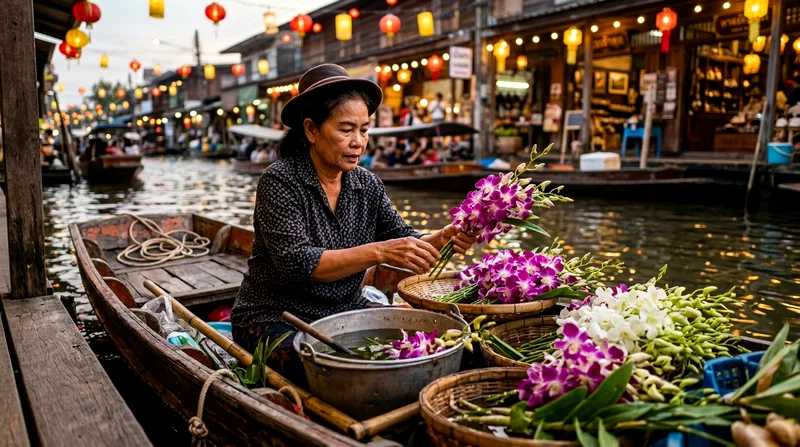
Damnoen Saduak, about 100 km southwest of Bangkok, is the market in every brochure — narrow canals jammed with wooden boats piled with mangoes, durian, and noodle bowls cooked to order. It's roughly a 1.5 to 2-hour drive each way, and most tours arrive by mid-morning, which is exactly when it's busiest. The market itself is genuinely striking, but a large share of what you see — including some of the boat vendors — now caters specifically to tour groups rather than local shoppers. If you want the iconic photo and don't mind sharing the canal with dozens of other boats, this is still the benchmark.
Amphawa: the local alternative
Amphawa sits about 80 km from Bangkok, closer than Damnoen Saduak, but it runs on a different clock — it's really a weekend and late-afternoon market, busiest from around 3pm to 9pm on Fridays, Saturdays, and Sundays. That means most day tours visit in the afternoon rather than the morning, which already sets it apart. The canal is narrower, the boats are smaller, and a good portion of the customers are Thai families from Bangkok rather than tour groups. It feels less like a show. The trade-off: visit on a weekday and it can be quiet to the point of disappointing, with half the stalls closed.
Maeklong: the railway market
Maeklong Railway Market isn't a floating market at all — it's a produce market built along an active railway line, about 70 km from Bangkok near Samut Songkhram. Several times a day, a train passes within inches of the stalls, and vendors retract their awnings and baskets in a practiced, fast routine before resetting seconds after it clears. The whole event takes maybe five minutes, but it's unlike anything else on this list. It's almost always visited as an add-on to Damnoen Saduak, since they're about 30 minutes apart by road — rarely as a standalone trip.
Head-to-Head: Time, Cost, Crowds & Authenticity
Numbers tell the story better than adjectives here, so this is where the comparison earns its keep.
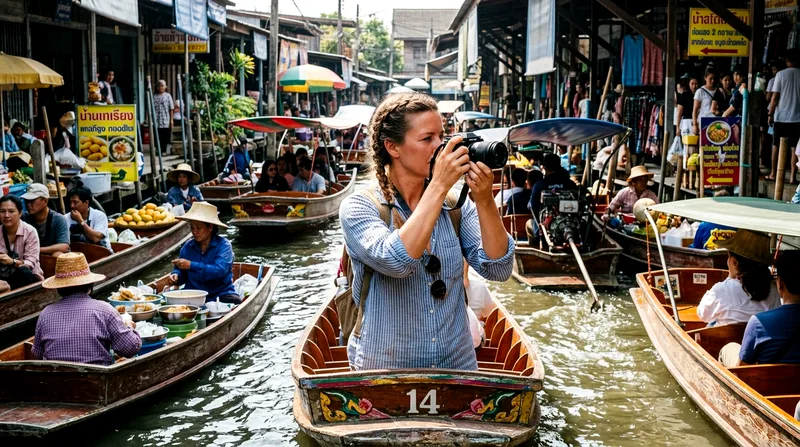
Damnoen Saduak wins on spectacle, Amphawa wins on authenticity, and Maeklong wins on novelty — pick based on which of those you value most.
Floating market day trip Bangkok comparison: Damnoen Saduak vs Amphawa vs Maeklong
| Market | Distance from Bangkok | Best time to visit | Crowd level | Best for |
|---|---|---|---|---|
| Damnoen Saduak | approx. 100 km (1.5-2 hr) | Before 9am, weekdays | High, peaks mid-morning | First-time visitors, photos |
| Amphawa | approx. 80 km (1.5 hr) | Weekend afternoons/evenings | Low midweek, high weekends | Local food, authentic feel |
| Maeklong | approx. 70 km (1.5 hr) | Timed to train schedule | Moderate, short bursts | Novelty, combo add-on |
Distances and crowd patterns are typical, not fixed — traffic, holidays, and tour schedules change actual travel time, so confirm timing when booking.
Travel time and distance from Bangkok
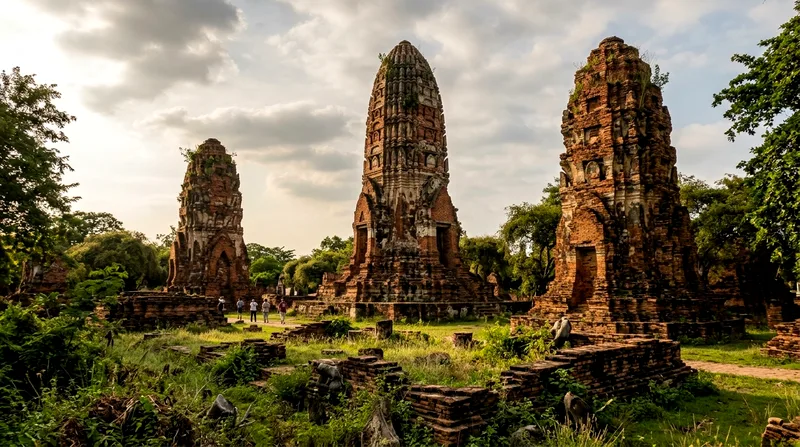
Amphawa is the closest at roughly 80 km (about 1.5 hours by road), Maeklong is similar at around 70 km, and Damnoen Saduak is the farthest at about 100 km, pushing close to two hours each way depending on traffic leaving Bangkok. On a half-day tour, that travel time eats a real chunk of your morning — a Damnoen Saduak half-day trip can mean 3-4 hours total in transit against maybe 90 minutes actually at the market. Compare that to a day trip to Ayutthaya, which is a similar distance but built around ruins you walk through at your own pace rather than a fixed market schedule — the time math favors Ayutthaya if you dislike feeling rushed.
Crowd levels and peak hours
Damnoen Saduak peaks between 9am and noon, which unfortunately is when nearly every tour bus arrives — arrive before 8am independently and it's a different, calmer market. Amphawa is nearly dead on weekday mornings and packed on weekend evenings; there's no way to split the difference, you pick one or the other. Maeklong's crowd is really about train timing — check the schedule, because missing the train means standing around a fairly ordinary produce market for half an hour. None of the three come close to the crowd density of, say, Chatuchak Weekend Market in Bangkok itself, but Damnoen Saduak's narrow canals make a moderate crowd feel much larger than it is.
Authenticity and vendor experience
This is the honest trade-off nobody puts in the brochure. Damnoen Saduak has leaned hard into tourism for decades, and prices on boats are generally quoted for foreigners first, locals second — haggling is expected and normal. Amphawa still functions primarily as a market for Thai visitors and nearby residents, so vendors aren't performing for cameras, and you'll see more cooked food stalls and fewer souvenir boats. Maeklong's authenticity is almost incidental — it's a working market that happens to have a dramatic train, not a market built around tourism at all, which is partly why it feels more genuine despite being entirely about the spectacle.
What you'll see and buy
At Damnoen Saduak, expect tropical fruit, coconut ice cream served in the shell, boat noodles cooked on tiny onboard stoves, and a dense concentration of souvenir stalls — hats, magnets, printed sarongs. Amphawa trades some of that for grilled seafood, fresh-roasted coffee stalls, and desserts aimed at Thai visitors rather than tourists, plus riverside cafes that stay open into the evening. Maeklong is mostly fresh produce, dried seafood, and household goods — it's not really a shopping stop, it's a five-minute event you watch, photograph, and move on from.
Which Market Should You Choose?
There's no single best floating market near Bangkok — there's a best one for your specific trip, and that depends on what you're optimizing for.
For first-time visitors and photos
If this is your only floating market stop in Thailand and you want the recognizable image — canals packed with boats, a woman in a wide hat paddling past stacked pineapples — book Damnoen Saduak. Go on a morning tour that departs Bangkok by 6:30-7am to beat the worst of the crowd, or accept that you'll be sharing the canal with several tour groups by 10am. Families with young kids tend to do well here because the boat ride itself is entertainment, not just transport.
For authentic local experience
If you've already seen floating market photos online and want something closer to how locals actually spend a weekend, Amphawa is the better booking — but only on a Friday, Saturday, or Sunday afternoon/evening. Couples and solo travelers who want a slower, food-focused outing tend to prefer it over Damnoen Saduak's assembly-line pace. It pairs naturally with a Maeklong stop on the way, since they're close together.
For unique railway market experience
If you're drawn to the odd and specific rather than the scenic, Maeklong is worth the detour — but never book it alone. It's a 5-10 minute event, and most tours combine it with Damnoen Saduak into a single morning. Check the train schedule in advance (trains typically pass several times daily), since arriving between trains means waiting around a fairly unremarkable market with nothing to do.
Combo Tours and Booking Tips
Most travelers don't need to choose just one — the geography makes combining markets fairly easy, and most tour operators have built their products around exactly that.
Multi-market full-day itineraries
The standard full-day pairing is Damnoen Saduak in the morning and Maeklong Railway Market on the way back, often with a stop at a coconut sugar farm or elephant camp thrown in — these run roughly 8-10 hours door to door from Bangkok. A separate, less common combo pairs Amphawa with Maeklong for an afternoon-into-evening trip, which suits travelers who'd rather sleep in and skip the 6am pickup. Trying to squeeze all three markets into one day is technically possible but exhausting — you'll spend more time in the van than at any market, and it crowds out everything else Bangkok has to offer that day.
Where to book and what to expect
Klook, Viator, and GetYourGuide all list half-day and full-day versions of these tours, usually with hotel pickup included in central Bangkok. Read the itinerary closely — "floating market tour" listings sometimes substitute Amphawa for Damnoen Saduak without making it obvious in the title, which matters a lot given how different the two experiences are. Compare current boat tours and prices before you book, and check whether the boat ride itself is included or sold as an optional add-on once you arrive, since that's a common upsell at Damnoen Saduak specifically.
Verdict: Best Floating Market Day Trip
If you want one market and one only, and this is your first trip to Thailand, book Damnoen Saduak in the early morning slot — it's the classic for a reason, despite the crowds. If you've done the obvious thing before, or you're staying in Bangkok long enough to be choosy, Amphawa on a weekend evening is the more satisfying, less touristy outing, closer to how a Thai market actually runs. Maeklong should almost never be the main event; treat it as the five-minute curiosity it is and pair it with one of the other two.
Compared to other Bangkok-area day trips — Ayutthaya's ruins, a Hua Hin beach escape, or the longer haul out to Kanchanaburi — the floating markets are shorter, cheaper, and easier to combine with a half-day in the city afterward. If crowds are your main concern, know that none of these three compare to the sheer scale of tourism in Phuket or Pattaya; even busy Damnoen Saduak on a Saturday morning is a contained, walkable space you can escape from in twenty minutes if it's not for you.
Frequently asked questions
Which floating market is best for first-time visitors?
Damnoen Saduak is the best choice for first-timers because it has the highest concentration of boats, food stalls, and the classic visual you're likely picturing. Book an early morning departure, ideally arriving before 9am, to avoid the worst of the tour-bus crowds that build up by mid-morning.
How long does a floating market day trip take?
A half-day tour to a single market typically runs 5-6 hours including transport from Bangkok. A full-day combo covering Damnoen Saduak and Maeklong Railway Market usually takes 8-10 hours door to door, factoring in traffic leaving and returning to the city.
Can I visit multiple floating markets in one day?
Yes — Damnoen Saduak and Maeklong are about 30 minutes apart by road and are commonly sold as a single full-day tour. Adding Amphawa to the same day is possible but tight, since Amphawa only gets lively in the afternoon and evening, which can clash with an early-morning Damnoen Saduak start.
What is the difference between Damnoen Saduak and Amphawa?
Damnoen Saduak is busier, farther from Bangkok (about 100 km versus 80 km), and runs mainly as a morning tourist market with heavy boat traffic on narrow canals. Amphawa is smaller, closer, and operates mostly as a weekend afternoon-to-evening market used by local Thai visitors, with more food stalls and fewer souvenir boats.
Is a floating market tour worth the money?
It's worth it if you treat it as a half-day cultural outing rather than a shopping trip — the boat ride, food, and atmosphere are the value, not bargain prices. If you're short on time in Bangkok and must choose between a floating market and something like Ayutthaya's temples, prioritize whichever experience matches your actual interest, since both take a similar chunk of the day.