Compare half-day and full-day Bangkok cooking classes. Learn Thai dishes, market visits, pricing, and how to book the right class for you.
Who Each Type of Cooking Class Suits
A Bangkok cooking class isn't a one-size-fits-all souvenir activity. The right choice depends less on budget and more on who you're traveling with and how much of your day you want to hand over to someone else's schedule. Schools like Silom Thai Cooking School and Bangkok Thai Cooking Academy run multiple sessions daily, which gives flexibility — but that same flexibility means class sizes and teaching styles vary a lot between the morning and evening slots.
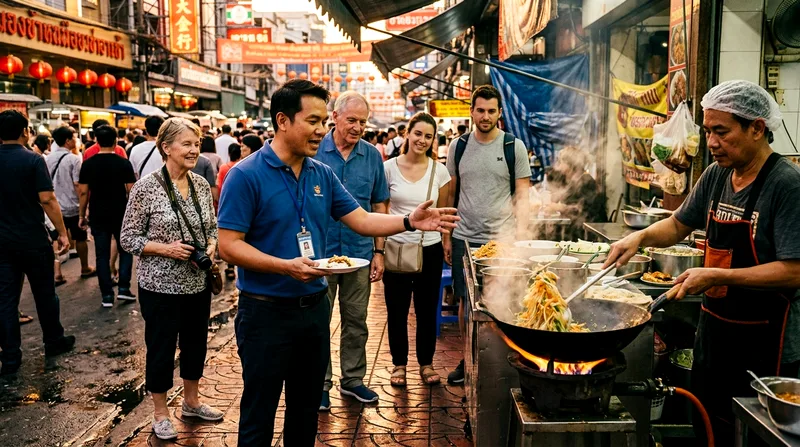
I'd steer most first-timers toward a class with a market visit, regardless of traveler type. Watching an instructor pick fresh kaffir lime leaves or explain the difference between three types of Thai eggplant does more for understanding the cuisine than any amount of chopping in a teaching kitchen. Skip the market-free versions unless you're pressed for time — they're cheaper, but you lose the part that actually teaches you something about Thai ingredients you can't easily find back home.
Best for Couples and Romantic Travelers
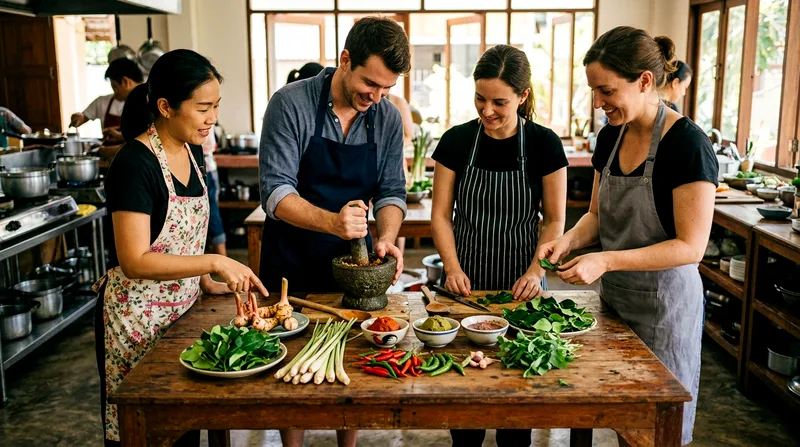
Couples tend to do best with smaller, boutique-style classes — the kind run from a converted shophouse kitchen rather than a large training facility. Tingly Thai Cooking School, for instance, is known for small group sizes, which suits couples who want to actually talk to the instructor rather than queue for stove space. Evening classes that end with a shared meal and sometimes a rooftop or riverside setting work well for anniversary trips or honeymoons. Expect to pay somewhat more for these intimate formats — group sizes under eight people cost more per head than classes running fifteen or twenty students, but the experience feels less like a group tour and more like a private lesson.
Best for Families with Children
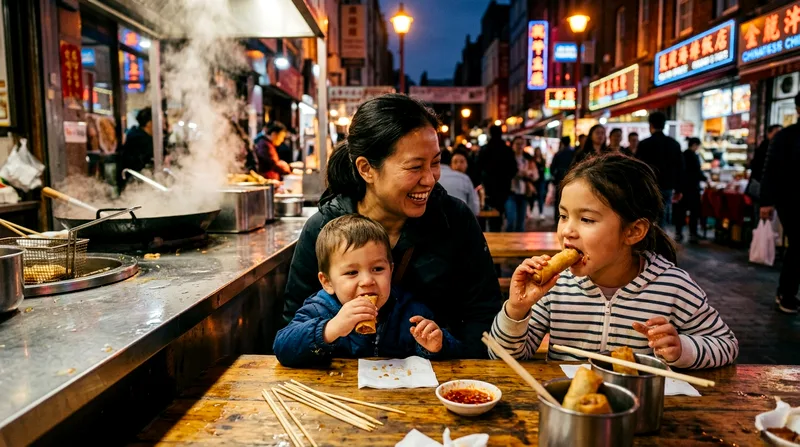
Not every school welcomes young children, and that's worth checking before you book rather than after. Knife work, hot woks, and boiling stock pots are real hazards, so most reputable operators set a minimum age — often around 8 to 10 years old — and some ask younger children to observe rather than cook. Half-day classes work better for families than full-day ones; four hours is about the limit of a ten-year-old's patience for chopping herbs and waiting for demonstrations. Look for schools that explicitly market themselves as family-friendly and offer simplified dishes like pad Thai or spring rolls alongside the spicier curries, so kids have something they'll actually eat at the end.
Best for Solo Travelers and Groups
Solo travelers get the most social value out of mid-sized group classes of ten to twenty people, where you're paired or grouped at cooking stations and end up chatting over the shared meal. It's one of the easier ways to meet other travelers in Bangkok without forcing it. Larger groups of friends or extended family should look at classes that offer private bookings — several schools, including Baipai Thai Cooking School, can arrange a private session for a group, which avoids the awkwardness of splitting across multiple cooking stations with strangers. Private group bookings cost more per person but guarantee you cook and eat together.
Half-Day vs Full-Day Classes Compared
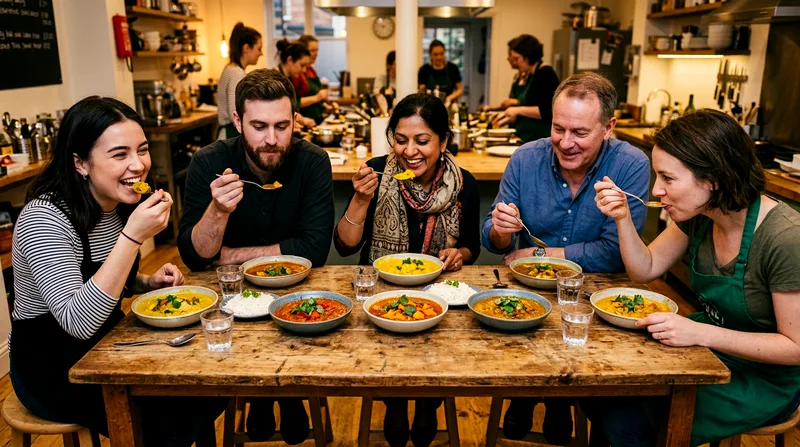
The half-day class is the default for good reason. Most run three to four hours, cover four to six dishes, and fit neatly into a morning before you head off to the Grand Palace or an afternoon boat trip on the Chao Phraya. Full-day classes stretch to six or seven hours, sometimes split across a market visit, a farm or herb garden stop, and two separate cooking sessions with a lunch break in between. You'll cook more dishes — often eight to ten — but the marginal teaching value drops off after the first five or six, since many Thai dishes share the same curry paste or stir-fry technique with a different protein swapped in.
Half-day classes cover the essential techniques in less time, while full-day classes add a market visit and more dishes for a higher price.
Bangkok cooking class formats compared: duration, inclusions, and best fit
| Format | Duration | Dishes Taught | Market Visit | Typical Price Range (per person) | Best For |
|---|---|---|---|---|---|
| Half-day, no market | 3-4 hours | 3-4 dishes | No | Budget | Short visits, families with young kids |
| Half-day with market | 4-5 hours | 4-6 dishes | Yes | Mid-range | Most first-time visitors, couples |
| Full-day with market | 6-7 hours | 8-10 dishes | Yes | Higher | Serious home cooks, food-focused travelers |
| Private/small group | 3-6 hours | Customizable | Often optional | Highest | Couples, families, groups wanting privacy |
Price tiers are relative, not fixed figures; always check current prices and inclusions on the booking platform before confirming.
Duration, Menu Variety, and Market Visits
Menu variety sounds like a selling point for full-day classes, but in practice it means more repetition of technique rather than more skill gained. A typical half-day menu might include tom yum soup, a green or red curry, pad Thai, and a stir-fried dish with your choice of protein — enough to cover the core building blocks of Thai cooking: curry paste, balancing sour-sweet-salty-spicy, and basic stir-fry heat control. Full-day classes add extras like mango sticky rice, spring rolls, or a second curry style, plus almost always a proper wet market visit in the morning. If the market visit matters to you, check that it's included rather than optional — some schools charge a supplement or run it only on specific days of the week.
Hands-On Experience and Skill Level
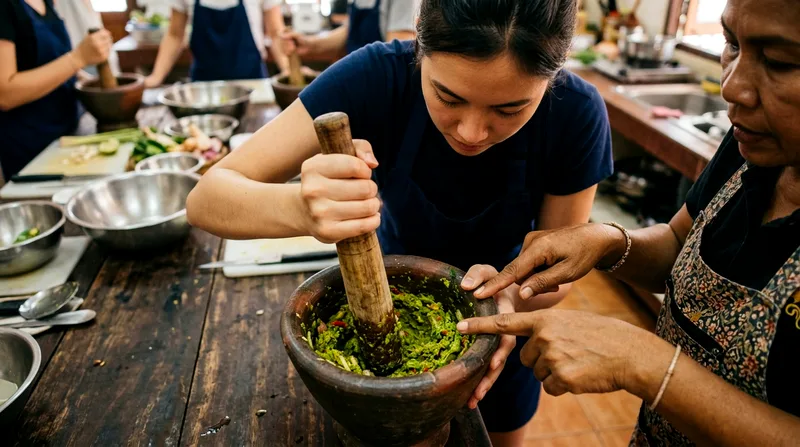
Both formats are typically hands-on rather than demonstration-only, but the ratio of watching to doing shifts with group size. In a class of six, expect to do your own pounding of curry paste in a mortar and pestle; in a class of twenty, you may share a mortar between two or three people and do more following-along than independent cooking. If you're an experienced home cook looking to actually improve your knife skills and wok technique, ask about student-to-instructor ratio before booking — a ratio of one instructor to four or five students is reasonable, one to fifteen is mostly demonstration with supervised assembly.
What to Look for When Booking a Bangkok Cooking Class
Before booking any Thai cooking class in Bangkok, read past the star rating on Viator or TripAdvisor and check the actual review text — ratings cluster around 4.5 to 5 stars across almost every operator, so the written comments about group size, instructor English fluency, and punctuality tell you far more than the number itself.
Inclusions, Group Size, and Cancellation Policy
Check exactly what's bundled into the price. Hotel pickup, market visit, a printed recipe booklet, and an apron or chef's hat to keep are common inclusions, but not universal ones. Cancellation policies vary more than people expect — some platforms like KKday and Viator offer free cancellation up to 24 hours before the start time, which is worth prioritizing if your Bangkok itinerary is still loose. I'd avoid any class that doesn't clearly state a maximum group size on the listing; "small group" without a number usually means it can swell to fifteen or more during high season.
Location, Transportation, and Dietary Options
Location matters more than most people realize when comparing listings. A class based near Silom or Sathorn is easy to reach by BTS and often throws in hotel pickup if you're staying centrally, while schools further out may require a taxi or Grab ride, adding 30-45 minutes and a modest fare each way. If you're staying at a hotel like the Hansar or the Oriental, ask the concierge about pickup arrangements directly — some cooking schools have existing relationships with upscale hotels that simplify logistics. On dietary needs: most schools handle vegetarian and vegan requests easily since Thai cooking leans heavily on vegetables and tofu substitutes, but gluten-free and shellfish allergies need to be flagged at booking, not on arrival, since fish sauce and shrimp paste are baked into many base sauces.
When and How to Book Your Class in Bangkok
Booking a Bangkok cooking class is straightforward through platforms like Viator, KKday, or directly through a school's own website — direct booking sometimes shaves off a small commission fee, but you lose the easy cancellation and review transparency that third-party platforms provide. For most travelers, booking through a platform with verified reviews is the safer bet, especially if English-language communication with the school directly is uncertain.
Booking Windows and Seasonal Availability
Book at least 2-3 days ahead during regular season, and 5-7 days ahead during peak tourist months of November through February, when Bangkok's cooler, drier weather draws the largest crowds. Morning classes — typically starting between 8:30 and 10:00 AM — sell out faster than afternoon or evening sessions because they pair well with market visits before the day heats up. If you're flexible, afternoon slots are often easier to grab last-minute and sometimes run slightly cheaper. Avoid booking a class on your arrival day; jet lag plus unfamiliar public holidays or Buddhist religious days (when some markets close early) can throw off the schedule. Always compare current prices and reviews before you book, since availability shifts week to week.
Frequently asked questions
How much do Bangkok cooking classes cost?
Prices vary by group size and inclusions, but budget-friendly half-day classes without a market visit sit at the lower end, while full-day classes with a market visit and private or small-group sessions cost noticeably more per person. Always check current prices on Viator, KKday, or the school's own site, since rates shift with season and group size.
What dishes do you learn in a Bangkok cooking class?
Most classes teach a version of tom yum soup, a red or green curry made from scratch with a mortar and pestle, pad Thai, and a stir-fried dish like basil chicken or cashew nut stir-fry. Full-day classes often add mango sticky rice, spring rolls, or a second curry paste style like massaman.
Do cooking classes include a market visit?
Not always — it depends on the class tier. Many half-day budget options skip the market and start directly in the kitchen, while mid-range half-day and most full-day classes include a guided visit to a local wet market to select herbs, vegetables, and proteins before cooking. Check the listing's inclusions section carefully rather than assuming.
Are Bangkok cooking classes suitable for beginners?
Yes — the vast majority are designed for people with no prior cooking experience. Instructors demonstrate each step before students attempt it, and classes typically walk through knife basics and wok technique early on. If you want more hands-on independence rather than guided assembly, look for classes with a lower student-to-instructor ratio.
Can couples take a cooking class together in Bangkok?
Yes, and it's one of the more popular shared activities for couples visiting Bangkok. Smaller boutique schools with group sizes under ten, sometimes ending in a shared meal in the evening, tend to suit couples better than large twenty-person classes where you may be separated across different cooking stations.