Compare Bangkok food tours and cooking classes on price, time, and takeaway value. Find which culinary experience suits your travel style.
Bangkok Food Tour vs Cooking Class: Which Should You Book?
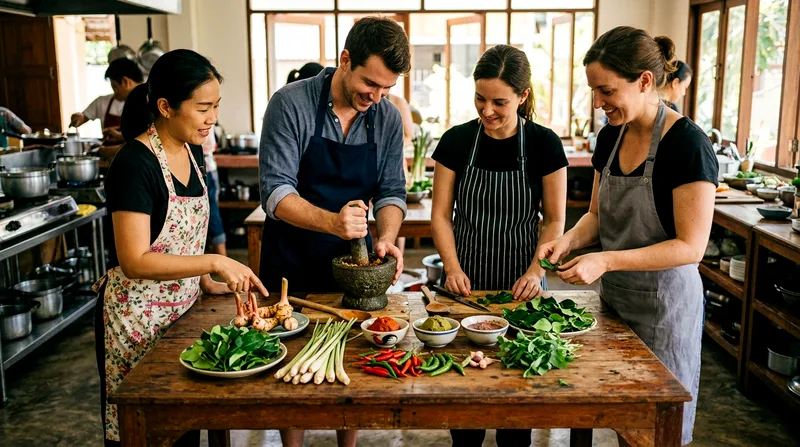
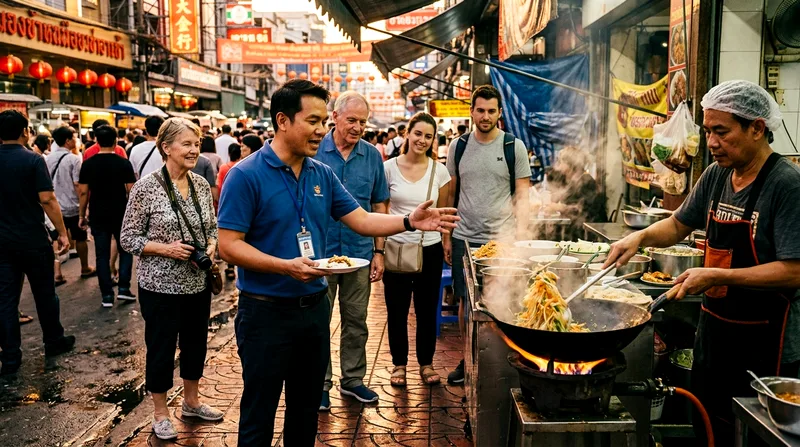
Both food tours and cooking classes offer authentic Thai culinary experiences, but they differ in cost, time, and what you take home. A food tour moves you through four or five stalls in three hours, stacking up bites of boat noodles, moo ping, and mango sticky rice while a local guide explains what you're eating and why. A cooking class slows everything down — you spend half a day in one kitchen, usually after a market walk, learning to balance fish sauce against palm sugar until a green curry tastes right.
The decision isn't really about which is "better." It's about what you want afterward: a fuller understanding of Bangkok's street food culture, or a recipe you can repeat in your own kitchen six months later. Operators like G Adventures and Cozymeal list both formats, and sites like Viator and TripAdvisor make it easy to see reviews side by side — but the honest answer depends on your travel style, your schedule, and whether you actually like cooking.
Quick Comparison at a Glance
If you're deciding between a Bangkok food tour and a cooking class in the next five minutes, here's the shorthand: tours are cheaper, faster, and broader; classes are pricier, longer, and deeper. Neither is a bad choice — they're just built for different outcomes, and conflating them is where people end up disappointed.
Food tours cost less and move faster, while cooking classes run longer and leave you with a repeatable skill.
Bangkok food tour vs cooking class comparison: cost, time, and takeaway value
| Experience | Typical Duration | Typical Price (per person) | Group Size | Best Takeaway |
|---|---|---|---|---|
| Street food walking tour | 3-4 hours | $35-$65 | 6-12 people | Variety, local context |
| Market + cooking class | 4-6 hours | $45-$90 | 4-10 people | Recipes, technique |
| Private cooking class | 3-5 hours | $70-$150 | 1-4 people | Personalized skill-building |
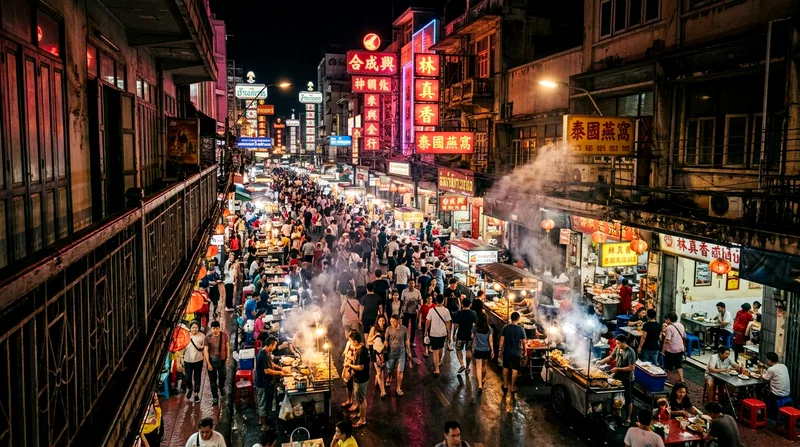
| Evening food tour (Chinatown) | 3 hours | $40-$70 | 8-15 people | Night market atmosphere |
| Half-day combo (market + tour + class) | 6-8 hours | $80-$130 | 4-8 people | Both immersion and skills |
Typical figures based on commonly published rates on platforms like Viator and Cozymeal; always check current prices when booking since group size and inclusions vary by operator.
What Each Experience Includes
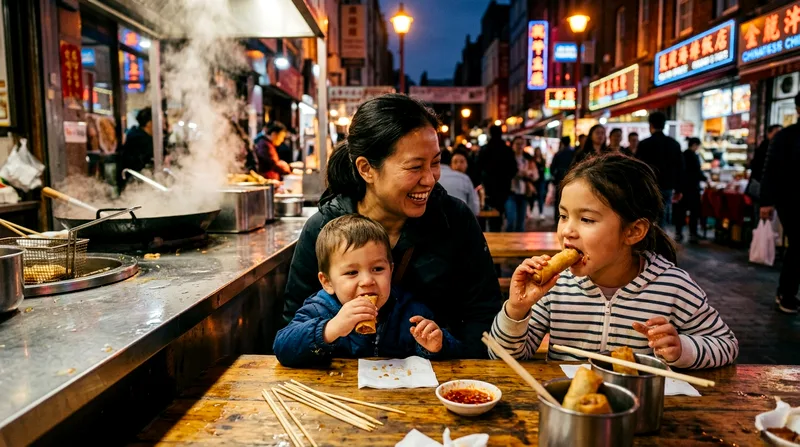
A typical food tour includes four to seven stops, a walking guide, bottled water, and all tastings — but rarely a full "meal" in the sit-down sense. You're grazing, not dining. Expect khao soi at one stall, satay at another, maybe a stop at a dessert vendor for khanom buang. A cooking class typically includes a market visit (sometimes optional), ingredients for three to five dishes, an apron, a recipe booklet, and the meal you cook, eaten as lunch or dinner. Some, like those listed through Tingly Thai, throw in a certificate, which is a nice touch but not something to pay extra for.
Experience Type and Structure
Food tours run on foot or by tuk-tuk, often starting in Chinatown (Yaowarat) or around Talad Noi, with a guide narrating as you walk. Cooking classes are mostly stationary — one kitchen, one instructor, a demonstration followed by you replicating the dish at your own station. If you dislike standing in humidity for three hours, the class is the more comfortable pick. If you get restless sitting through instruction, the tour suits you better.
Head-to-Head on Time and Cost
Money and time are the two filters that actually decide this for most travelers. If you've got a four-day Bangkok itinerary stacked with temples, the Grand Palace, and a day trip to Ayutthaya, a three-hour food tour is far easier to slot in than a six-hour cooking class that eats half your afternoon.
Duration and Scheduling
Food tours typically run in the evening, from around 5:30pm to 9pm, timed to street food vendors' peak hours — this matters because many stalls don't open until late afternoon. Cooking classes run either morning (9am-2pm, with market stop) or afternoon (1pm-6pm), and almost always require advance booking of 24-48 hours since ingredients get purchased fresh that day. Miss the cutoff and you're rebooking for tomorrow.
Price Breakdown and Value
On a per-hour basis, cooking classes cost more — but you're paying for ingredients, one-on-one instruction time, and a kitchen setup, not just street food bites. A $90 cooking class works out to roughly $18-$20 per hour; a $50 food tour lands closer to $15-$17 per hour. The gap narrows once you factor in that a food tour doesn't fill you up for dinner the way a cooking class's final meal does. Compare that to Chiang Mai, where similar cooking classes often run $10-$20 cheaper due to lower overhead — Bangkok's convenience and chef caliber come at a premium.
Hands-On Learning vs Guided Tasting
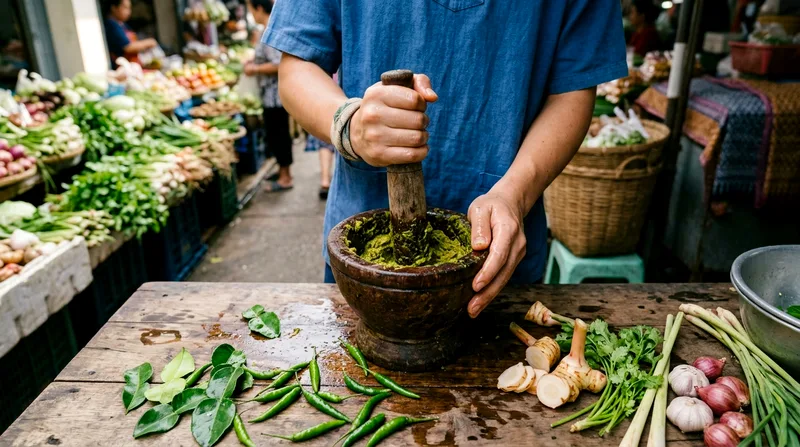
This is the real fork in the road. A food tour is guided tasting — you're a passenger, eating what's handed to you while someone explains the history of pad kra pao or why Chinatown's noodle shops cluster on one street. A cooking class is hands-on from the start: you're chopping galangal, pounding curry paste in a mortar, and standing over a wok getting corrected on your flame control.
Market Tour and Ingredient Sourcing
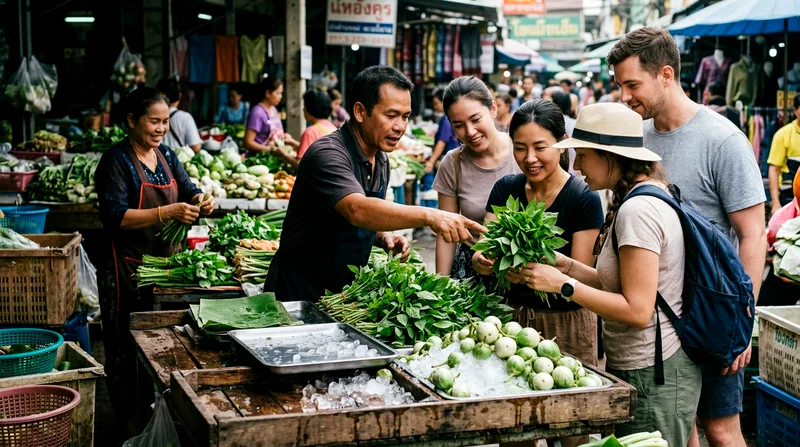
Many cooking classes begin with a visit to a wet market — Klong Toey wet market is the big one operators use, partly because it's the largest fresh market in Bangkok and gives visitors a genuine (if intense) look at how restaurants source daily. Expect fish still flapping, pig heads on ice, and vendors who've worked the same stall for decades. Not every class includes this — some use a smaller neighborhood market or skip it entirely to save time, so check the itinerary before booking if the market is the part you actually want. Food tours rarely include market visits at all; they're built around eating, not shopping.
Skill-Building and Takeaway Value
If you want to recreate tom yum goong or pad see ew after you're home, only the cooking class gets you there. You'll learn proportions — how much fish sauce versus lime versus palm sugar — and muscle memory for wok technique that a tasting tour simply can't teach. Food blogs like Eat Drink Travel often frame tours as "cultural" and classes as "educational," which is a fair split. The honest trade-off: classes demand more effort and attention, and if you're jet-lagged or traveling with young kids who won't sit through instruction, that effort может backfire into a frustrating afternoon rather than a fun one.
Who Should Book Which Experience
Neither format is universally right, and matching it to your travel personality matters more than reviews or price.
Best for Food Tours
Solo travelers who want quick social contact with a small group, couples on a tight schedule, and anyone who's already comfortable eating street food will get the most out of a tour. It's also the better pick for travelers doing a multi-city Southeast Asia trip — if you're also hitting Chiang Mai or Siem Reap, save the deep-dive cooking class for whichever city has the stronger reputation for it (arguably Chiang Mai, known for farm-to-table class setups) and use Bangkok for the tour instead.
Best for Cooking Classes
Families with kids aged 8 and up often do well in cooking classes — most kitchens set up individual stations, so children get a hands-on task without wandering into traffic like they might on a walking tour. Dietary restrictions are also easier to manage in a class: tell the instructor in advance (ideally 24 hours) and they'll usually swap shrimp paste or fish sauce for vegetarian alternatives. Senior travelers who find three hours of walking in Bangkok heat uncomfortable will also prefer the stationary, air-conditioned kitchen setup.
The Verdict
Choose a food tour for cultural immersion and tasting variety, or a cooking class for hands-on skills and recipe retention. If you only have one evening free and want maximum flavor variety with minimal commitment, book the tour — Chinatown's Yaowarat Road after dark is genuinely one of the better food experiences in Southeast Asia, arguably more atmospheric than similar night markets in Phuket or Pattaya. If you're the kind of traveler who cooks dinner for friends and wants a party trick, book the class, and look for one that includes the Klong Toey market stop rather than a pre-packaged ingredient kit.
What I'd avoid: booking a cooking class purely because it sounds more impressive to mention later, if you genuinely dislike cooking — you'll spend $80 standing at a stove resenting it. I'd also avoid the very large-group food tours (15+ people) advertised cheaply on some platforms; you end up waiting in clumps at each stall and the guide can't answer individual questions. Compare current listings on Viator or Cozymeal before booking, check group size specifically, and if budget allows, do both on separate nights — the tour for context, the class for the skill.
Frequently asked questions
Should I do a food tour or cooking class in Bangkok?
Do a food tour if you want variety and cultural context in under half a day; do a cooking class if you want a repeatable skill and don't mind a longer, more structured afternoon. If you have four or more days in Bangkok, book both on separate evenings rather than forcing a choice.
How much does a Bangkok cooking class cost?
Group cooking classes typically run $45-$90 per person for 4-6 hours including a market visit and three to five dishes. Private classes cost more, usually $70-$150, but give you one-on-one instruction and flexibility on dietary swaps. Always check current prices when booking since ingredient sourcing and group size shift the rate.
What's included in a Bangkok food tour?
Most food tours include a walking guide, four to seven tasting stops, bottled water, and all food sampled along the route — usually not a full seated meal. Tours run 3-4 hours, commonly in Chinatown or around Talad Noi, and cost roughly $35-$70 per person depending on group size and whether it's a day or evening tour.
Do cooking classes include market tours?
Many do, particularly ones that stop at Klong Toey wet market before heading to the kitchen, but not all — some use smaller local markets or skip the market entirely to save time. Check the listed itinerary before booking if seeing a working Thai market is a priority for you.
Which experience teaches skills I'll actually use at home?
The cooking class, without question. You'll learn flavor-balancing ratios (fish sauce, lime, palm sugar), wok technique, and curry paste preparation that you can repeat with ingredients from any Asian grocery store. Food tours teach you what to order and where, which is useful for travel but doesn't transfer to your own kitchen.