Explore Bangkok's best food neighbourhoods. Discover signature dishes, street food markets, and dining districts from Yaowarat to Thong Lo.
Bangkok Food Neighbourhoods: A District-by-District Starting Point
Bangkok's food scene thrives across distinct neighbourhoods, each offering unique cuisines, price points, and dining experiences. There's no single "best" place to eat in the city — the right Bangkok food neighbourhood depends on whether you want a $1.50 bowl of noodles eaten standing up, or a reservation at a restaurant with a tasting menu and a wine list.
I'd argue the biggest mistake visitors make is treating Bangkok's food scene as one undifferentiated mass of street carts. It isn't. Yaowarat does Chinese-Thai street food and seafood. Rattanakosin Island does century-old family recipes near the temples. Sukhumvit and Silom do everything else, from Japanese izakayas to rooftop bars. Thong Lo and Ari do the version of Bangkok dining that locals, not tourists, actually use on a weeknight. Knowing which district matches your appetite and tolerance for crowds will save you more time than any single restaurant recommendation.
Yaowarat: Bangkok's Chinese Food Hub
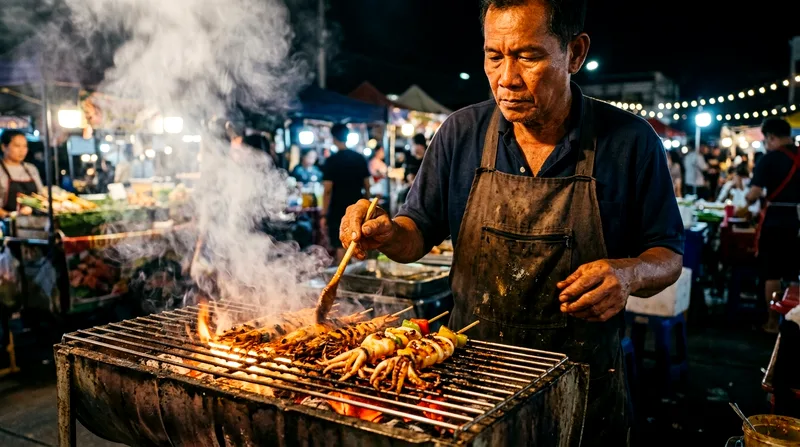
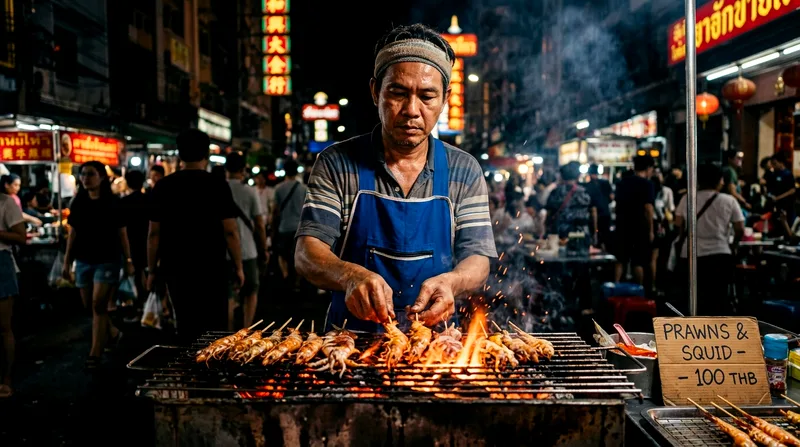
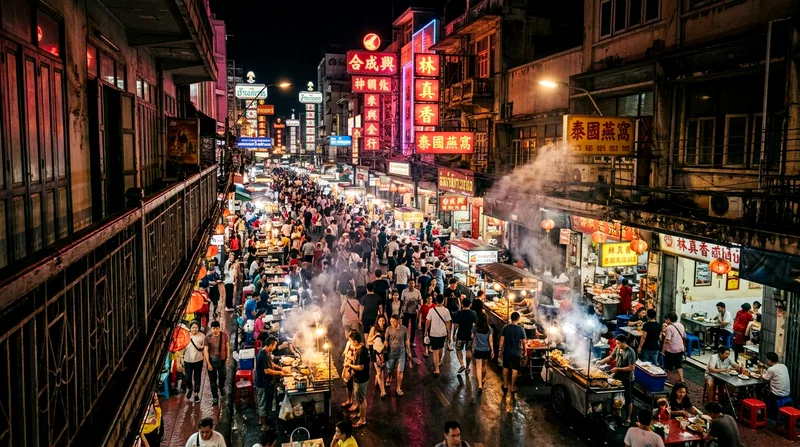
Yaowarat is Bangkok's Chinatown, and it's probably the single most photographed food street in the city after dark. The main strip, Yaowarat Road, turns into a corridor of steam, charcoal smoke, and neon Chinese signage once the sun goes down — it's genuinely dramatic, not staged for tourists, though tourists now make up a large share of the crowd on weekends.
This is where you come for crab omelettes, bird's nest soup, oyster pancakes, and some of the best grilled seafood in the city, often cooked on carts parked directly on the pavement. Expect to pay 80-200 baht per dish at street stalls, more if you sit down at one of the seafood restaurants along the side streets.
Night market atmosphere and signature dishes
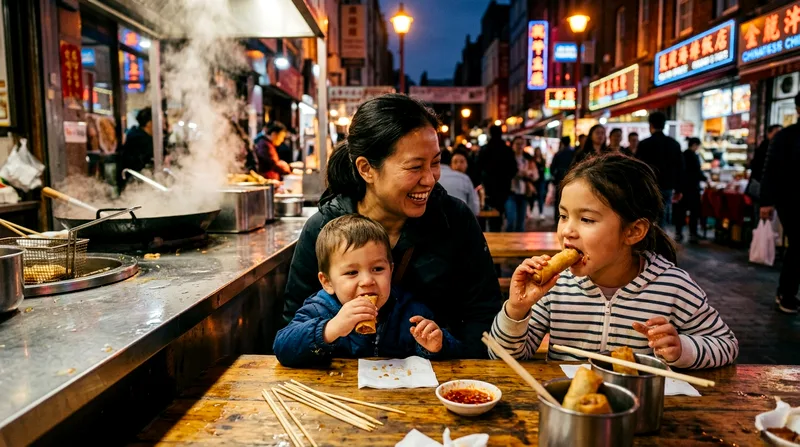
Yaowarat Night Market gets going around 6pm and stays busy until midnight or later on weekends. Go hungry and share — portions are small by design so you can try multiple stalls. Look for the carts with the longest local queues rather than the ones with English signage, which usually signals a tourist markup. Signature dishes to track down include guay jub (rolled rice noodle soup with crispy pork), gai tod (fried chicken), and fresh dragon fruit or pomegranate juice from the fruit carts. Bring cash in small denominations; very few vendors take cards.
Michelin-starred options and street stalls
Yaowarat's most famous resident is Jay Fai, the Michelin-starred street stall known for crab omelette cooked over charcoal by a chef in ski goggles. It's a genuine phenomenon — expect queues of two to four hours without a reservation, and a crab omelette that runs 800-1000 baht, steep by street food standards but modest next to a Michelin-starred restaurant anywhere in Europe. If you don't want to queue, several other seafood spots nearby serve comparable quality without the wait. This is also a fair comparison point against Chiang Mai's night markets, which are calmer and cheaper but lack Yaowarat's density and intensity.
Silom and Sukhumvit: Modern and Diverse Dining
Silom and Sukhumvit are Bangkok's two biggest, most varied dining zones, and they cover almost every cuisine and budget you could want. Silom leans business-district by day and nightlife-and-food by evening; Sukhumvit, especially around Asoke, Thong Lo, and Ekkamai BTS stops, is sprawling enough to contain entire sub-neighbourhoods of its own.
If you want convenience — hotel proximity, BTS and MRT access, English-speaking staff, familiar hygiene standards — this is the area to base yourself. It's also, frankly, less distinctly "Bangkok" than Yaowarat or Rattanakosin. You could eat well here and never quite feel like you left an international food court, which is a fair trade-off for some travelers and a disappointment for others.
International and fusion restaurants
Sukhumvit Soi 11 and Soi 23 are packed with Japanese, Korean, Middle Eastern, and fusion restaurants, many open past midnight. Silom's Soi Convent and the streets around Patpong mix old-school Thai curry shops with newer international openings. Expect 300-800 baht per person at a mid-range restaurant here, considerably more than Yaowarat street food but still cheaper than equivalent dining in Kuala Lumpur's KLCC area or most restaurants in central European cities.
Rooftop bars and casual eateries
Silom has several of Bangkok's best-known rooftop bars with skyline views, generally requiring a smart-casual dress code and a minimum spend of 500-1000 baht on drinks. They're worth one evening, not every evening — the views are the draw, not the food, which is usually unremarkable for the price. For casual eating, Sukhumvit's soi-side som tam and noodle stalls remain excellent value and a better daily habit than rooftop dining.
Rattanakosin Island: Traditional Thai Flavours
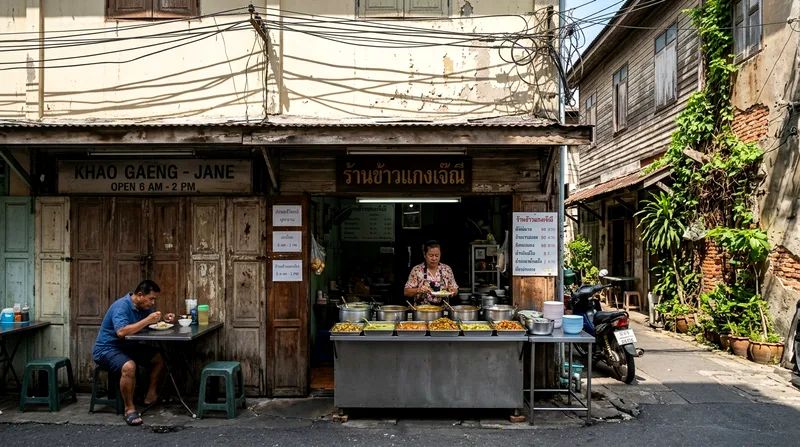
Rattanakosin Island is Bangkok's old royal core — home to the Grand Palace, Wat Pho, and Wat Arun — and it's also where you'll find some of the city's oldest, most traditional Thai cooking, often from shops that have operated for three or four generations. This is the neighbourhood for travelers who want food history alongside temple history.
The area near Khao San Road sits at the edge of Rattanakosin and deserves a specific warning: it's heavily geared toward backpacker tourism, with inflated prices and food quality that rarely matches what you'll find two streets over. Use it for atmosphere and a cheap beer, not for your best meal of the trip.
Historic temples and riverside dining
Several restaurants along the Chao Phraya River near Rattanakosin offer dinner with a view of Wat Arun lit up at night — a genuinely good setting, though you're paying for the view as much as the food, typically 400-900 baht per person. Pak Khlong Talat, the flower market nearby, is also worth a pre-dawn visit if you're an early riser, with food vendors feeding market workers from around 4am.
Authentic local recipes and family-run shops
Thipsamai, often called the best pad thai in Bangkok, sits just outside Rattanakosin proper on Mahachai Road and has been running since the 1960s. It's touristy now, with queues most evenings, but the pad thai wrapped in egg genuinely holds up. For something quieter, the back streets around Wat Ratchanatdaram have small noodle and curry shops with no English menus and no social media presence — slower to find, more rewarding once you do.
Thong Lo and Ari: Local Neighbourhood Gems
Thong Lo and Ari are where I'd send anyone who's already done Bangkok once and wants to see how the city's younger, middle-class residents actually eat. Both are residential-commercial neighbourhoods north of the tourist core, reachable by BTS, with a much higher ratio of Thai customers to foreign visitors than Sukhumvit proper.
Ari in particular has become known for its café culture and small specialty restaurants tucked into converted houses along the sois off Phahonyothin Road. Thong Lo, technically part of Sukhumvit but distinct enough to treat separately, mixes expensive fusion restaurants with excellent, cheap shophouse eateries side by side — the contrast itself is part of the appeal.
Hidden local restaurants and food stalls
Look along the smaller sois off the main Thong Lo and Ari roads — Soi Thong Lo 10 and the lanes around Ari BTS exit 3 are reliable starting points. Many of the best spots have no English signage and seat fewer than 20 people. A full meal rarely exceeds 150-250 baht per person, a fraction of what you'd pay for similar quality closer to Sukhumvit's main strip.
Seasonal specialties and neighbourhood character
Mango sticky rice stalls multiply here from March through June when mangoes are at their best and cheapest. Ari's café scene also means good coffee is easier to find here than almost anywhere else in Bangkok, a useful break if you've been templehopping in Rattanakosin or navigating Yaowarat's crowds earlier in the day.
Street Markets and Night Food Districts
Beyond the named neighbourhoods, Bangkok runs on a rotating calendar of night markets and street food districts that are worth building a trip around. Many are seasonal or weekend-only, which catches first-time visitors off guard when they turn up on a Tuesday to find half the stalls closed.
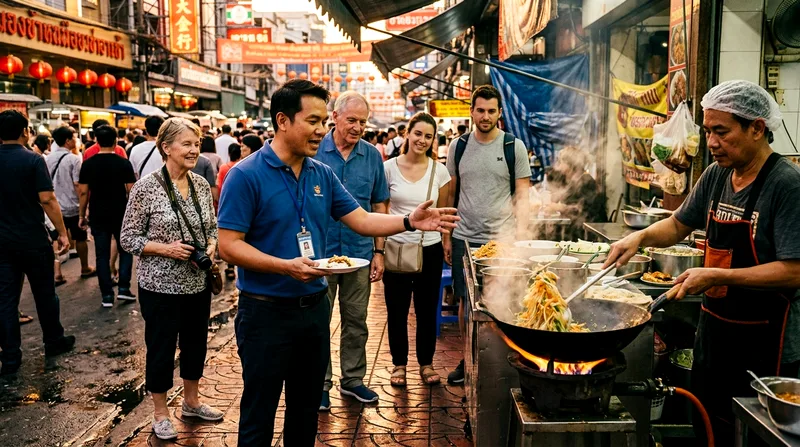
Rot Fai Night Market and the markets around Thonburi, across the river from central Bangkok, offer a cheaper, less touristy alternative to Yaowarat, though they require a longer taxi or ferry ride and have less English support. If your time is short, a guided street food tour that strings together two or three neighbourhoods in one evening — typically Yaowarat plus Talat Noi, or a Rattanakosin walking tour ending near Khao San — is a reasonable way to cover more ground without wasted trips.
Yaowarat and Rattanakosin offer the most atmosphere and history, while Sukhumvit and Thong Lo offer the easiest transport access and widest price range.
Bangkok food neighbourhoods compared: cost, best time to visit, and transport access
| Neighbourhood | Typical meal cost (baht) | Best time to visit | Transport access | Best for |
|---|---|---|---|---|
| Yaowarat | 80-250 | Evening, 6pm-midnight | MRT Hua Lamphong, river ferry | Chinese-Thai street food, seafood |
| Rattanakosin Island | 100-400 | Morning for temples, evening for riverside dinner | River ferry, limited BTS/MRT | Traditional Thai, temple sightseeing combo |
| Silom | 150-800 | Lunch (business crowd) and late evening | BTS Sala Daeng, MRT Si Lom | Rooftop bars, mixed international |
| Sukhumvit | 150-800 | Any time, very flexible | BTS Asoke/Nana, MRT Sukhumvit | Variety, convenience, nightlife |
| Thong Lo | 150-600 | Evening, weeknights quieter | BTS Thong Lo | Fusion dining, shophouse eats |
| Ari | 100-300 | Daytime for cafés, evening for mango season | BTS Ari | Café culture, local atmosphere |
Typical figures based on standard street food and mid-range restaurant pricing; always check current prices and hours before you go, especially for seasonal night markets.
Operating hours and best times to visit
Most night markets run from around 6pm to midnight, though some Chinatown vendors start as early as 4pm and the busiest stretch is 8-10pm. Weekday evenings are noticeably calmer than Friday and Saturday nights, when Yaowarat especially can feel shoulder-to-shoulder. If crowds bother you, aim for a Tuesday or Wednesday visit.
Safety, accessibility, and transportation tips
Street food safety in Bangkok comes down to turnover, not appearance — stalls with a constant stream of local customers and food cooked fresh in front of you are almost always fine. Yaowarat and Rattanakosin are walkable but have uneven pavements, open drains, and dense crowds, which matters if you're traveling with a stroller or have mobility issues. BTS and MRT cover Silom, Sukhumvit, Thong Lo, and Ari well; Yaowarat and Rattanakosin are better reached by MRT to Hua Lamphong or by river ferry, which is slower but a far more pleasant way to arrive than sitting in Bangkok traffic.
Frequently asked questions
What are the best foodie areas in Bangkok?
Yaowarat (Chinatown) for street food and seafood, Rattanakosin Island for traditional Thai dishes near the major temples, and Sukhumvit or Silom for range and convenience. Thong Lo and Ari are better once you've done the main sights and want to eat where locals actually eat on a regular night.
Which neighbourhoods should I stay in for food?
Sukhumvit or Silom give you the best balance of BTS/MRT access, hotel options, and walkable restaurants across every price point. Staying in Rattanakosin puts you closer to Yaowarat and the temples but means longer rides to Sukhumvit's nightlife and restaurant density.
Where is the best street food in Bangkok?
Yaowarat is the most concentrated and famous street food district, especially after dark, with seafood, noodles, and the Michelin-starred Jay Fai stall. Thipsamai, near Rattanakosin, is the best-known spot for pad thai specifically. Both involve queues, especially on weekends.
Is Bangkok street food safe?
Generally yes, if you follow basic rules: pick stalls with high local turnover, food cooked fresh in front of you, and visibly clean prep areas. Avoid pre-cooked dishes sitting out for hours. Most visitors have no issues; mild stomach upset, if it happens, is usually from unfamiliar spice levels or oil, not contamination.
Which district has the most authentic local food experiences?
Thong Lo, Ari, and the back streets of Thonburi offer the most locally driven dining, with far fewer English menus and tourist pricing than Yaowarat or Khao San Road. Rattanakosin's side streets, away from the main temple routes, also hold genuinely old family-run shops worth seeking out.