Compare the best Bangkok street food tours in Chinatown and Yaowarat — evening walks, tuk tuk rides, vegetarian options, and what to check before booking.
Who Street Food Tours Suit Best
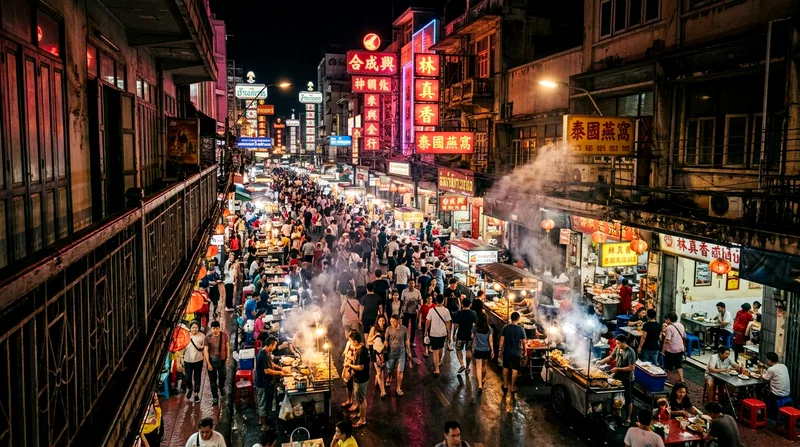
A Bangkok street food tour works best for people who'd rather eat their way through a neighbourhood than sit at one restaurant table all night. Chinatown and Yaowarat are the obvious draw — a few square kilometers packed with vendors who've sometimes worked the same corner for three generations, some with Michelin Guide mentions, including the famously long queue outside Jay Fai's shophouse on Maha Chai Road. You don't need Jay Fai on your itinerary to eat well here; that queue alone can run two to three hours, and most organized tours skip it entirely in favor of a dozen smaller, faster stops.
The format rewards curiosity over fussiness. If you want to know what you're eating before you order, and you're comfortable eating standing up or perched on a plastic stool, you'll have a better night than someone who wants a sit-down, air-conditioned dinner. Compare that to Chiang Mai's night markets, which are calmer and more spread out, or Phuket's beach-town food scene, which leans more toward tourist-adapted dishes — Bangkok's Chinatown is denser, louder, and more purely local.
First-Time Visitors and Food Adventurers
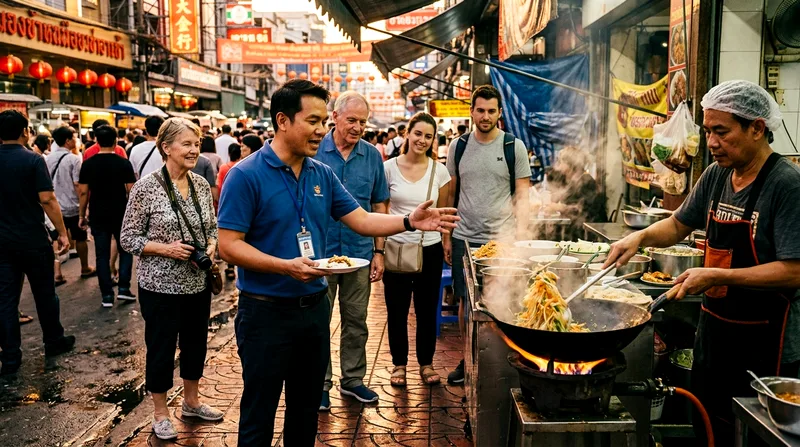
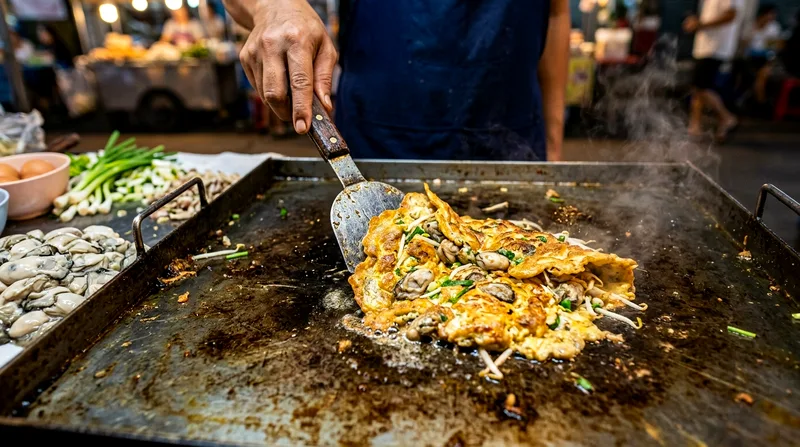
For a first Bangkok trip, a guided tour solves the two biggest problems: language barriers and decision paralysis. Yaowarat alone has hundreds of stalls, and without local knowledge you'll likely default to the same three dishes every tourist orders. A guide who eats there regularly can steer you toward specialties you wouldn't find alone — oyster omelets, braised pork leg over rice, or roasted duck noodles from a stall with no English sign. Solo travelers in particular benefit from the built-in company; eating alone at a dozen street stalls in one night is a different experience than doing it with five strangers who become dinner companions by the second stop.
Dietary Preferences and Comfort Levels
If you have a shellfish allergy, are strictly vegetarian, or avoid pork for religious reasons, say so when you book — not when you arrive. Thai-Chinese cuisine in Yaowarat leans heavily on pork, seafood, and shared woks, so cross-contact is a real risk for anyone with a severe allergy. Tours marketed as vegetarian street food Bangkok tours exist and are worth seeking out specifically, rather than assuming a standard tour can adapt on the fly. Senior travelers with mobility concerns should also ask about walking distance and standing time; a typical tour covers 2 to 4 kilometers over three hours, often on uneven pavement.
Tour Categories: Format and Neighbourhood
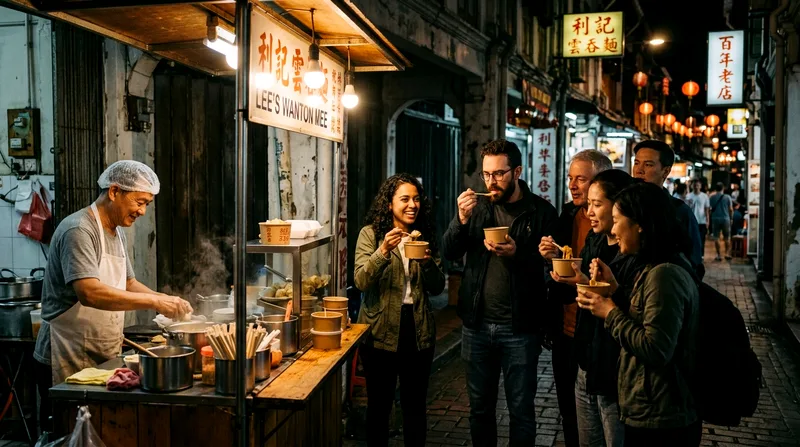
Street food tours in Bangkok split mainly by two variables: how you move between stops, and which neighbourhood you're exploring. Get both right and the night runs itself; get either wrong and you'll spend more time in transit or crowds than actually eating.
Walking Tours vs Tuk Tuk Tours
Walking tours are the default format in Chinatown, and for good reason — the streets are too narrow and congested for vehicles after dark anyway. A typical walking tour covers six to ten stops over roughly three hours, moving at a relaxed pace with time to watch vendors cook. The trade-off is distance: you're limited to whatever's within comfortable walking range of your starting point.
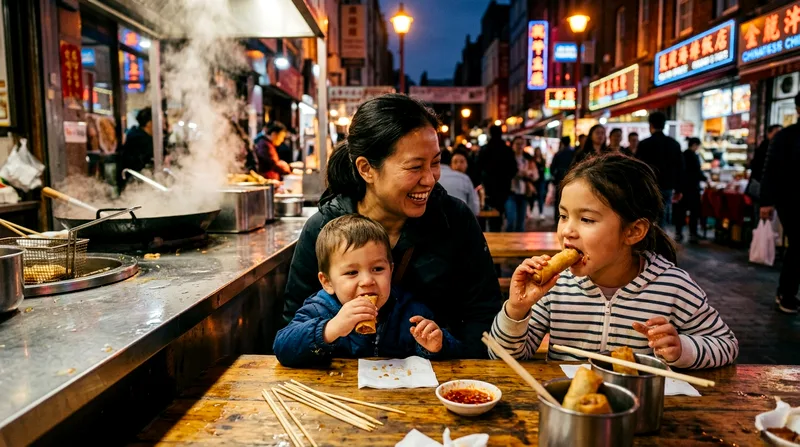
A tuk tuk food tour Bangkok operators run usually covers more ground, hopping between Chinatown, old town areas near Wat Pho, and sometimes a riverside stop, often framed as a novelty experience as much as a food one. It's faster and more photogenic, but you'll eat less at each stop and spend more time in transit between bites. I'd skip the tuk tuk format if your main goal is maximizing food — it suits travelers who want a Bangkok sightseeing experience with food woven in, not dedicated food tourists. Families with kids often prefer it simply because sitting in a tuk tuk breaks up the walking.
Chinatown, Yaowarat, and Other Areas
Yaowarat Road is Chinatown's main artery and the center of almost every evening tour — gold shops by day, food stalls by night, with crowds that thicken noticeably after 7pm. Side streets like Soi Texas and the area around Wat Traimit (Temple of the Golden Buddha) hold some of the better-regarded stalls, away from the main road's tourist density.
Beyond Chinatown, some operators run tours through Talat Noi, a quieter riverside district with street art and a more local feel, or combine a Chinatown food tour book with a stop at Khlong Toei market in daylight. Compare this to food-focused day trips to Ayutthaya or Hua Hin, which center on sit-down regional specialties rather than stall-hopping — Bangkok's Chinatown format is unique enough that it doesn't really have an equivalent elsewhere in Thailand, including Pattaya or Krabi, where the food scene is far more beach-resort oriented.
What to Compare When Booking
Once you've settled on walking versus tuk tuk and a general neighbourhood, the details separate a good night from a frustrating one. This is where most people under-research.
Walking tours in Chinatown cover more food per hour, while tuk tuk tours cover more ground but less eating time.
Bangkok street food tour formats compared: walking, tuk tuk, and vegetarian options
| Tour Format | Typical Duration | Stops | Best For |
|---|---|---|---|
| Chinatown walking tour | 3 hours | 6-10 | First-timers, food-focused travelers |
| Tuk tuk food tour | 2.5-3.5 hours | 4-6 | Families, sightseeing combined with food |
| Vegetarian/dietary tour | 2.5-3 hours | 5-8 | Vegetarians, allergy-conscious travelers |
| Private/small-group tour | 3-4 hours | 6-10 | Couples, seniors, slower pace |
Durations and stop counts are typical ranges based on common tour structures; always check the specific itinerary before booking.
Group Size, Inclusions, and Cancellation
Group size matters more than almost anything else. A group of six to eight is manageable; a group of fifteen or more means long waits at each stall and less personal attention from the guide. Check listings on platforms like Viator or Klook for the stated maximum group size — it's usually listed clearly, and smaller, pricier tours are often worth the premium. Confirm what's included: most tours bundle food costs into the price, but drinks beyond water sometimes cost extra. Check the cancellation policy too — many allow free cancellation up to 24 hours ahead, which is useful given Bangkok's unpredictable evening rain during the wet season.
Portion Sizes and Pace
Read recent reviews specifically for comments on portion size and pacing — these vary more between operators than price does. Some tours serve generous tasting portions at six stops; others serve tiny bites across twelve stops, which suits people who want variety over volume. If you're traveling with teenagers or anyone with a large appetite, look for tours explicitly described as a full dinner replacement rather than a "tasting" format, and check whether the final stop includes dessert — often mango sticky rice or Chinese-style pastries from one of Yaowarat's older bakeries.
When to Book Your Tour
Evening street food tour Bangkok operators generally run departures between 5:30pm and 6:30pm, timed to catch Yaowarat as stalls light up and crowds build — arriving any earlier means half the vendors haven't set up yet. Tours typically wrap by 9pm or 9:30pm, which still leaves time for a nightcap elsewhere if you're staying near Khao San Road or Sukhumvit.
Best Seasons and Advance Booking Windows
Cool season, roughly November through February, is the most comfortable time to walk around outdoors for three hours — daytime highs sit around 30-32°C with lower humidity than the April-May peak, when heat and crowds both spike. Rainy season (June to October) brings short, heavy downpours most evenings, but tours generally continue regardless; bring a compact umbrella rather than canceling plans.
Book at least one week ahead during December through February, when demand peaks alongside European and other international visitor numbers. Outside peak season, two to three days' notice is usually enough, though smaller-group and vegetarian-specific tours sell out faster because fewer operators run them. Always compare current prices and reviews before you book — availability and exact pricing shift by season and operator.
Key Dishes and Vegetarian Options
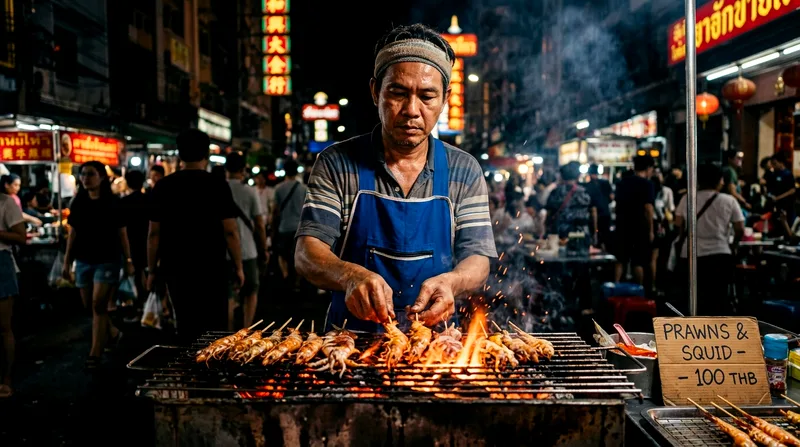
Yaowarat's menu runs on Thai-Chinese cuisine specialties rather than the central Thai dishes most visitors already know. Expect oyster omelets, braised duck or pork over rice, dim sum-style snacks, and grilled seafood skewers, alongside familiar names like pad thai and mango sticky rice that tours usually include as a safe bridge dish for less adventurous eaters. A handful of stalls carry informal "Michelin-recommended" reputations, referencing the Michelin Guide's Bangkok street food selections — ask your guide which stops on the route have that recognition, since not every tour volunteers the information.
Vegetarian street food Bangkok options exist but take more digging than meat-based dishes, since many broths and sauces use fish sauce or oyster sauce by default. Dedicated vegetarian tours typically route around stalls serving vegetable dumplings, tofu-based dishes, and fresh fruit stands, skipping the seafood-heavy stops entirely. If you're vegetarian but booking a standard tour rather than a specialized one, message the operator beforehand — most can swap one or two stops, but they need advance notice, not a request made at the first stall.
On food safety: stick to stalls with visible turnover and hot, freshly cooked food, which is exactly what organized tours are built around — guides generally know which vendors have consistent hygiene practices. That said, Bangkok's street food isn't risk-free; mild stomach upset happens occasionally even to seasoned travelers, so pack basic rehydration salts or anti-diarrheal tablets just in case, and avoid pre-cut fruit sitting uncovered in heat if you're prone to a sensitive stomach.
Frequently asked questions
What is included in a Bangkok street food tour?
Most tours include a local guide, all food tastings at each stop (usually six to ten dishes), and bottled water. Drinks beyond water, souvenirs, and transport to/from your hotel are often extra unless the listing says otherwise. Always check the inclusions list on the booking page rather than assuming — this varies between operators on Viator, Klook, and similar platforms.
Are there vegetarian options on Chinatown food tours?
Yes, but standard tours are built around meat and seafood dishes by default. Look specifically for tours labeled vegetarian or plant-based, or message the operator in advance if booking a general tour — most can adjust one or two stops with enough notice, but can't guarantee it on the spot.
How much does a Bangkok street food tour cost?
Group walking tours typically fall in a mid-range bracket per person, with tuk tuk and small-group private tours priced higher due to transport costs and lower group sizes. Exact figures shift with season and operator, so compare current prices on booking platforms rather than relying on a fixed number.
What time do evening street food tours operate?
Most evening tours depart between 5:30pm and 6:30pm and run roughly three hours, finishing around 8:30pm to 9:30pm. This timing is deliberate — Yaowarat's stalls are in full swing by early evening, and the main road gets progressively more crowded as the night goes on.
Is it safe to eat street food in Bangkok?
Generally yes, especially on a guided tour where the route favors stalls with high turnover and visibly fresh cooking. Mild stomach upset can still happen occasionally; travelers with sensitive stomachs should avoid pre-cut fruit left uncovered and carry basic rehydration salts as a precaution.