Learn Bangkok temple dress code rules, shoulder and knee coverage requirements, and cultural etiquette to avoid being turned away at the gate.
Bangkok Temple Dress Code and Etiquette Guide
Bangkok's temples aren't museums with a loose suggestion of modesty — they're active places of worship, and the Bangkok temple dress code is enforced with real consequences, not polite requests. Show up in shorts and a tank top at the Grand Palace, and you'll be stopped at the gate, full stop. No amount of pointing at your paid ticket will change the guard's mind.
The good news: the rules are consistent and easy to plan around once you know them. Shoulders and knees covered, proper footwear you can slip off, nothing see-through or torn. That's roughly 90% of it. The rest is about reading the room — lowering your voice near monks, not posing disrespectfully with Buddha statues, that sort of thing. This guide covers exactly what to wear, what gets rejected, and where to find appropriate clothing fast if you arrive unprepared.
Essential Dress Code Requirements
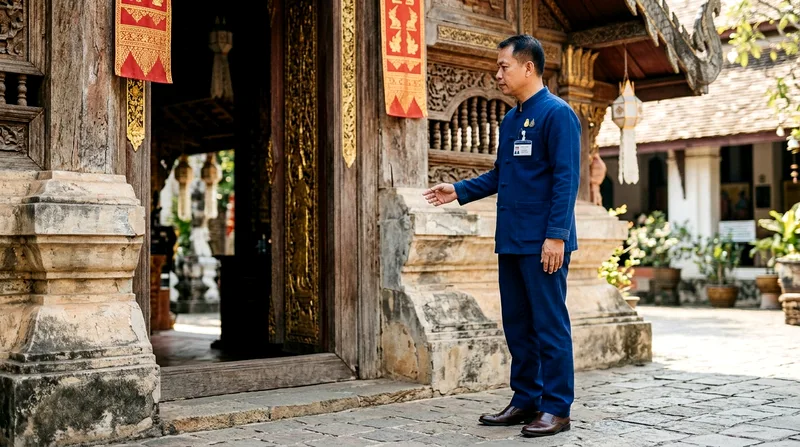
Thai Buddhism treats temples as sacred ground, and the clothing expectations reflect that — this isn't really negotiable, and arguing with staff rarely works. The baseline standard across nearly every working temple in Bangkok is full coverage of shoulders and knees, for every gender, every age, every season. It doesn't matter if it's 35°C outside; the rule doesn't bend for heat.
Shoulder and arm coverage
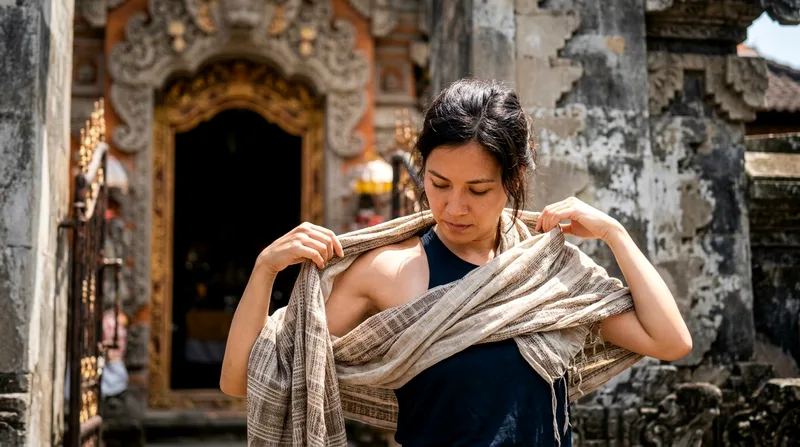
Shoulders must be fully covered — sleeveless tops, strappy dresses, and off-shoulder blouses won't pass inspection. A T-shirt with short sleeves is generally fine; a vest top is not. Sheer fabric is a gray area that usually fails, because guards are checking for coverage, not just the illusion of it. If you're wearing a strapless sundress, bring a light cotton shirt or shawl to layer over it — this is the single most common reason tourists get stopped at Wat Phra Kaew, the temple inside the Grand Palace complex.
Knee and leg coverage
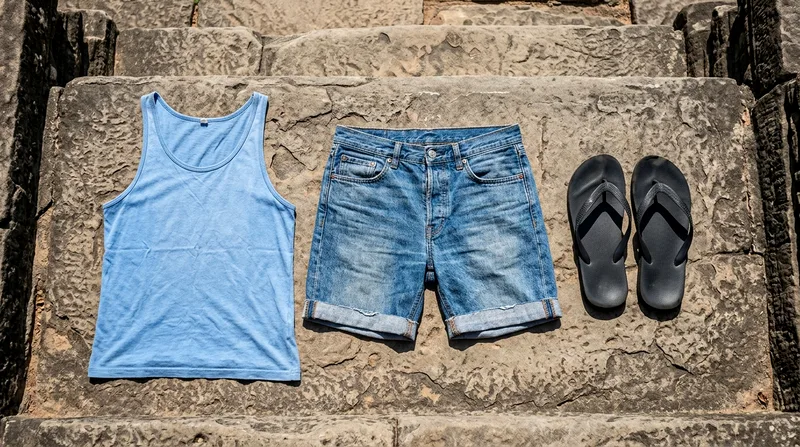
Trousers, long skirts, or dresses that fall below the knee are required — and "below the knee" is checked more strictly than people expect. Capri pants that stop mid-calf are fine; shorts that end even slightly above the knee usually aren't, even board shorts or cycling leggings. Ripped jeans with exposed skin above the knee can also get flagged. If you're wearing a skirt with a slit, make sure it doesn't open above knee height when you walk — staff do notice.
Gender-Specific Guidelines
The core rules apply to everyone, but in practice, enforcement leans harder on women's clothing simply because more women arrive in sundresses, shorts, or vest tops without realizing the standard. Men get stopped too, mostly for shorts and sleeveless shirts, but the margin for error is slightly wider.
Women's dress requirements
Loose trousers or a maxi skirt paired with a T-shirt or blouse that covers the shoulders is the safest combination. Leggings alone, without a long top covering the hips, sometimes get questioned at stricter sites because they're considered too form-fitting — pairing them with a tunic solves this. Avoid crop tops entirely, even layered under something sheer. A lightweight scarf is worth carrying regardless — some temples ask women to cover their heads in specific inner chambers, and it doubles as a quick shoulder cover if you're caught out.
Men's dress requirements
Long trousers and a collared or plain T-shirt with sleeves covering the shoulders are the standard. Tank tops, athletic vests, and swim trunks are all rejected at the gate. Linen trousers are the practical choice in Bangkok's heat — breathable, acceptable everywhere, and widely sold near every major temple for 200-400 baht. Flip-flops are fine as footwear since you'll be removing them anyway before entering most buildings.
What to Avoid at All Costs
Some mistakes are simply costly in time — you'll be sent to rent clothing, lose twenty minutes, and pay a small fee you didn't budget for. Others are genuinely disrespectful and worth avoiding on principle, not just to dodge a guard's whistle.
Prohibited clothing items
Shorts of any length that sit above the knee, sleeveless tops, see-through fabrics, swimwear, and anything with large tears or rips above the knee are off-limits. Flip-flops are generally acceptable, but high heels can be impractical since you'll be walking on uneven stone and uneven temple floors barefoot. Hats should come off inside shrine buildings as a sign of respect, even though it's not always posted on signage.
Consequences of non-compliance
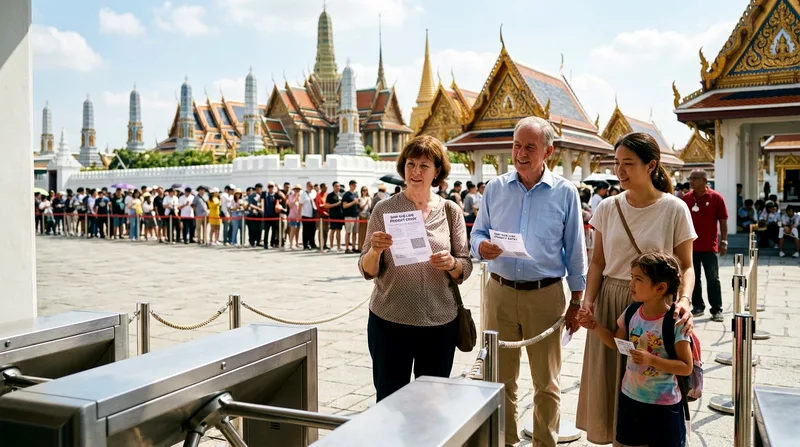
At the Grand Palace and Wat Phra Kaew, non-compliant visitors are stopped at the entrance checkpoint, not partway through the grounds — so you won't get a warning once you're inside. You're directed to a rental or sarong-loan counter near the entrance, where cloth wraps or trousers are available for a small deposit, typically returnable. At smaller or quieter temples like Wat Saket, enforcement is looser — you might get a disapproving look from a monk or caretaker rather than being turned away, but that's not something to count on or rely on as a strategy.
Temple-Specific Variations
Not every temple in Bangkok enforces the dress code with equal strictness, and knowing the difference saves you from over-packing or under-preparing.
Enforcement of the Bangkok temple dress code varies sharply, with the Grand Palace being by far the strictest and smaller temples like Wat Saket the most relaxed.
Bangkok temple dress code enforcement compared by site
| Temple | Enforcement Level | Shoes Off Required | Rental Available On-Site |
|---|---|---|---|
| Grand Palace / Wat Phra Kaew | Strict, checked at gate | Yes, inner buildings | Yes |
| Wat Pho | Moderate, spot checks | Yes, inner buildings | Yes |
| Wat Arun | Moderate, spot checks | Yes, inner buildings | Limited |
| Wat Benchamabophit | Moderate | Yes | Limited |
| Wat Saket (Golden Mount) | Relaxed | Yes | No |
Enforcement can vary by day and staff on duty; dress modestly regardless of posted strictness.
Grand Palace stricter rules
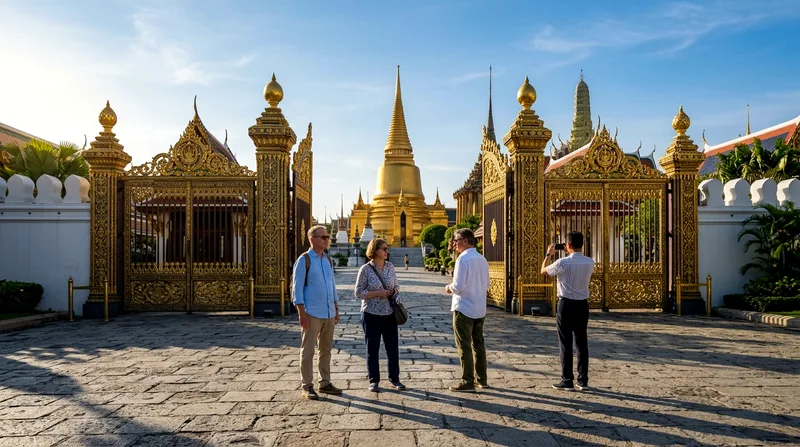
The Grand Palace and its adjoining Wat Phra Kaew (Temple of the Emerald Buddha) run the tightest enforcement in the city — there are dedicated staff checking visitors at the entrance gate, and the rules are posted in multiple languages. No shorts, no sleeveless tops, no exceptions, regardless of ticket price or tour booking. If you're joining a guided Grand Palace tour, most reputable operators will tell you the dress code in advance; if yours doesn't mention it, that's a red flag about how well-organized the tour is.
Other major temples
Wat Benchamabophit, the Marble Temple, applies similar shoulder-and-knee rules but with a noticeably more relaxed entrance check — you're less likely to be stopped, though turning up in beachwear is still a bad idea. Wat Saket, the Golden Mount, is informal enough that many visitors climb in shorts without issue, though covering up is still the respectful default. Wat Arun and Wat Pho sit somewhere in between — expect spot checks, especially near the main ordination halls.
Practical Outfit Solutions
Bangkok's heat and humidity make "cover up more" feel like unwelcome advice, but the fabric choice matters more than the amount of coverage.
Hot weather outfit ideas
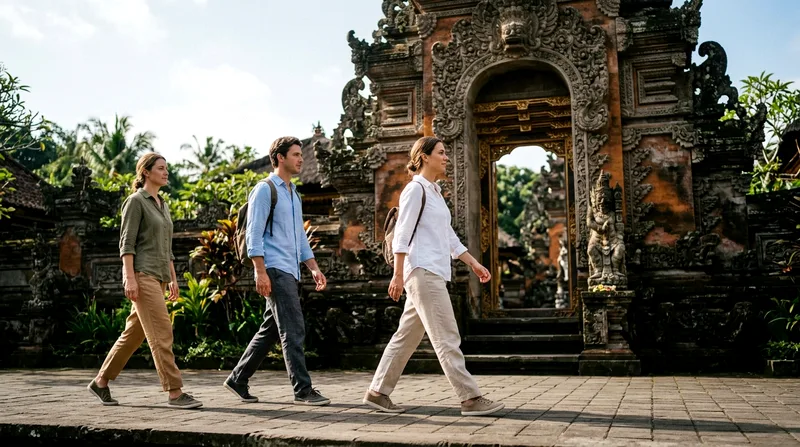
Lightweight linen or cotton trousers paired with a loose short-sleeve shirt breathe far better than synthetic leggings. A long, flowy cotton maxi dress with sleeves works well for women and avoids the layering problem entirely. Carry a packable scarf — it weighs nothing, covers shoulders in seconds, and works as a head covering if needed. Skip anything black or dark-colored if you're visiting midday; it absorbs heat and makes an already sweaty walk across stone courtyards worse.
Rental and purchase options
Every major temple with strict enforcement — the Grand Palace in particular — has a rental counter at or near the entrance offering sarongs and loose trousers, usually for a small deposit (often around 100-200 baht, refunded when you return the item). Street vendors and shops around Wat Pho and the Grand Palace sell inexpensive elephant-print trousers and cover-up scarves for roughly 100-250 baht, which many travelers just buy and keep as a souvenir rather than bothering with rental logistics. If you'd rather sort this out before arriving, pack one lightweight long-sleeve layer in your day bag no matter what the forecast says.
Frequently asked questions
Can you wear shorts into Thai temples?
Generally no — shorts above the knee are rejected at the Grand Palace, Wat Phra Kaew, and most major temples. Knee-length or longer shorts sometimes pass at relaxed sites like Wat Saket, but it's risky to rely on that. Bring trousers or a sarong as backup rather than testing the limit.
What should women wear to Bangkok temples?
A loose top covering the shoulders paired with trousers or a below-the-knee skirt is the safest bet. Avoid leggings alone, crop tops, and sheer fabrics. A packable scarf is useful for quick coverage and for any inner chambers requiring a head covering.
What footwear is acceptable in temples?
Any shoes are fine for walking the grounds, but you'll remove them before entering shrine buildings and ordination halls, so slip-on sandals or flip-flops save time. Avoid shoes with complicated laces or buckles you'll be fumbling with at each doorway.
Are there different dress codes for different temples?
Yes. The Grand Palace and Wat Phra Kaew enforce the strictest checks with staff at the gate. Wat Pho, Wat Arun, and Wat Benchamabophit apply similar rules with lighter spot-checking, while smaller temples like Wat Saket rarely stop visitors but still expect modest dress out of respect.
What happens if you don't follow the dress code?
At strict sites you're stopped at the entrance and directed to a rental counter, typically paying a small refundable deposit for a sarong or trousers. At quieter temples you might just get a disapproving glance rather than being turned away, but that's not something to count on.