Complete guide to Grand Palace Bangkok tickets, entry fees, guided tours, dress code, and best times to visit. Book online or buy at the gate.
What is the Grand Palace and why visit
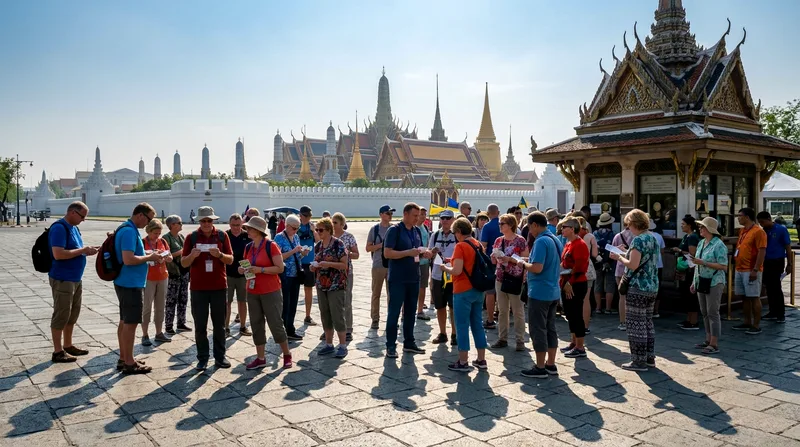
The Grand Palace sits on the east bank of the Chao Phraya River in the old royal district of Bangkok, and it's the single most-visited attraction in Thailand. Searching "Grand Palace Bangkok tickets" is usually the first step anyone takes before a Bangkok trip, and for good reason — this isn't a replaceable sight. No other complex in the city combines royal history, religious significance, and architectural density quite like it.
It was built in 1782 when King Rama I moved the capital to Bangkok, and it served as the official residence of the Kings of Thailand for 150 years. The royal family no longer lives here — they moved to Chitralada Palace in the 20th century — but the Grand Palace still hosts state ceremonies and royal functions, which occasionally closes sections to the public without much warning.
History and significance
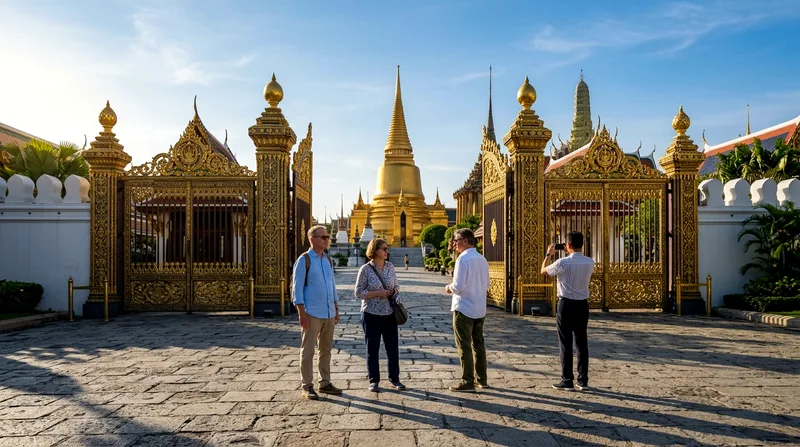
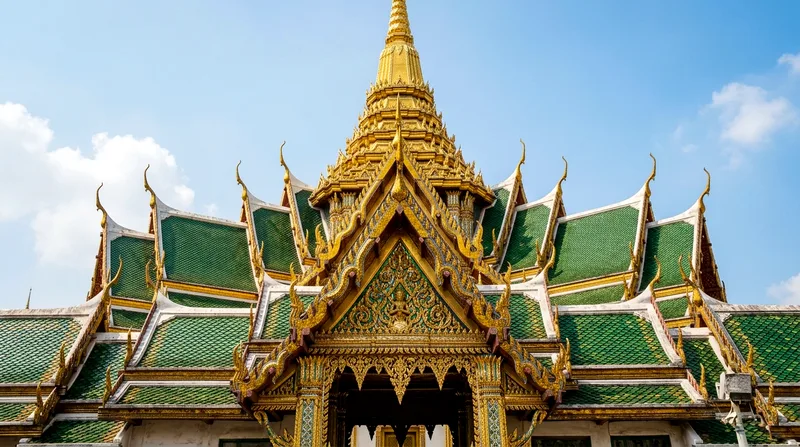
The palace complex grew over two centuries, with each reign adding buildings, so you're not looking at one coherent structure but layers of Thai, Chinese, and even European-influenced architecture stacked together. That mix is part of the appeal — the throne halls borrow Italian Renaissance facades topped with traditional Thai spired roofs, a combination that looks odd on paper and works in person. It remains an active royal and ceremonial site, which is why security is tight and the dress code is enforced without exception.
What you'll see inside
Inside the walls you'll find the Outer Court, the Middle Court with its ceremonial throne halls, and the restricted Inner Court that's closed to visitors. The main draw sits within the same compound: Wat Phra Kaew, the Temple of the Emerald Buddha, home to Thailand's most sacred Buddha image, carved from a single block of green jasper and dressed in seasonal robes changed by the king three times a year. Budget at least 90 minutes to two hours to see the grounds properly — rushing it defeats the purpose of paying the entry fee at all.
Ticket prices and how to buy
The Grand Palace entry fee for foreign adult visitors is 500 baht, and this single ticket covers both the Grand Palace grounds and Wat Phra Kaew — you don't pay separately for the Emerald Buddha temple. Thai nationals enter free with ID. Children under 120cm tall generally enter free; check current height and age thresholds at the gate since these get adjusted periodically.
What a lot of first-time visitors don't realize is that the same 500-baht ticket also includes admission to two satellite sites: the Queen Sirikit Museum of Textiles inside the palace compound, and Vimanmek Mansion near Dusit Palace, several kilometers away. The ticket is valid for seven days for those secondary venues, so you can split your visit if you're staying in Bangkok a while.
The Grand Palace's 500-baht ticket costs more than any single nearby temple but covers multiple sites at once.
Grand Palace Bangkok tickets compared to nearby attraction entry fees
| Site | Entry Fee (foreign adult) | What's Included | Typical Visit Time |
|---|---|---|---|
| Grand Palace & Wat Phra Kaew | approx. 500 baht | Palace grounds, Emerald Buddha temple, Queen Sirikit Museum | 1.5-2 hours |
| Wat Pho | approx. 200 baht | Reclining Buddha hall, temple grounds | 45-60 minutes |
| Wat Arun | approx. 100 baht | Riverside temple, climbable prang | 30-45 minutes |
| Ayutthaya temple cluster | approx. 50-100 baht per site | Individual historic temple ruins | Half day for several sites |
Fees are typical published rates and can change; always check current prices before you book or travel.
Entry fee breakdown
At 500 baht (roughly $14-15 USD, though exchange rates shift), this is one of the pricier single-site tickets in Thailand — more than Wat Pho's 200-baht entry or Ayutthaya's individual temple fees, which mostly run 50-100 baht each. Compare it to a half-day Ayutthaya temple circuit and the Grand Palace actually works out as reasonable value, since one ticket covers multiple buildings rather than charging per temple. There's no student or senior discount for foreign visitors, which surprises some European travelers used to age-based concessions at European heritage sites.
Online booking vs ticket windows
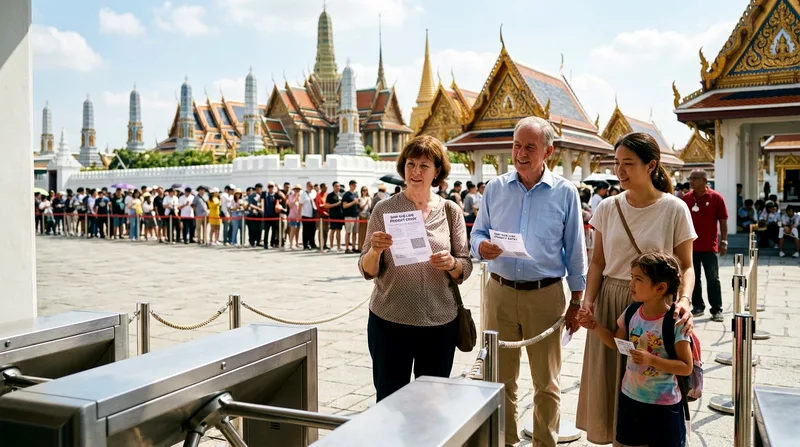
You can buy tickets directly at the gate counter near Gate 2 (Viseschaichanya Gate) with cash or card, and queues rarely run longer than 15-20 minutes except during Chinese New Year or major Thai holidays. Alternatively, platforms like Klook or Trip.com sell Grand Palace entry tickets online, sometimes bundled with a guided tour or skip-the-line claim. Buying online won't get you through security any faster — everyone passes through the same checkpoint — but it does let you skip the ticket-counter line and lock in a visit date before arriving in Bangkok. Always check current prices when booking, since third-party platforms may add a service fee on top of the official rate.
Independent visit vs guided tours
This is the real decision point, and there's no single right answer. Going independently gives you control over pace and timing — you can linger at the murals inside the cloister galleries or skip straight to the Emerald Buddha hall if you're pressed for time. A guided tour, on the other hand, adds context you'll otherwise miss entirely, since there's minimal signage explaining the symbolism of the mythical guardian statues or the significance of specific throne halls.
Self-guided exploration
If you go it alone, rent an audio guide at the entrance for about 200 baht — it's a worthwhile add-on that fills the information gap. Bring a paper map or screenshot one, because the compound's layout confuses first-timers and the free maps handed out at the gate are basic. Unofficial "guides" who approach you outside the palace walls, often claiming the palace is "closed for cleaning" and offering to take you elsewhere, are running a well-documented scam — ignore them and walk straight to the official entrance.
Guided tour benefits and options
A licensed guide, booked through a reputable operator rather than hired on the street, typically costs more but delivers real value here — this is a site where history and symbolism matter, unlike a beach day in Phuket or Krabi where a guide is optional at best. Many Bangkok tour operators bundle the Grand Palace with Wat Pho and a Chao Phraya River boat ride into a half-day tour, which solves logistics and transport in one booking. If you'd rather not plan transit and timing yourself, compare current guided tour options and prices before you book, since availability and group sizes vary by season.
Grand Palace dress code and entry requirements
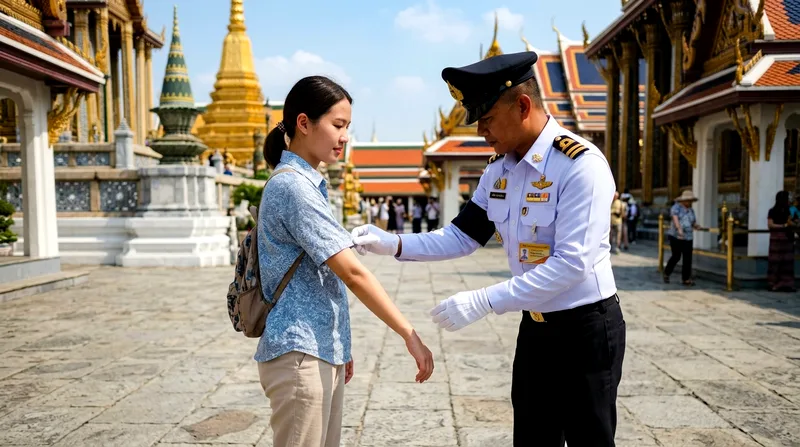
The Grand Palace dress code is strictly enforced, and staff will turn you away at the gate if you don't comply — no exceptions for tourists who claim they didn't know. This is a working royal and religious site, so the rules mirror temple etiquette across Thailand but applied more rigidly than at, say, temples in Chiang Mai.
Clothing rules
Shoulders and knees must be covered for everyone, regardless of gender. No sleeveless tops, no shorts above the knee, no see-through fabrics, no flip-flops without back straps. Leggings alone don't count as proper trousers in the staff's eyes, oddly enough, so bring a looser pair of pants or a long skirt. If you arrive underdressed, there's a free sarong and trouser loan service near the entrance, but it involves a deposit (your passport or a cash sum) and adds a line to stand in — better to just dress correctly from your hotel.
Security and photography restrictions
Expect an airport-style bag check and metal detector at the entrance. Photography is allowed throughout most of the outdoor grounds, but it's strictly forbidden inside the Wat Phra Kaew ordination hall where the Emerald Buddha sits — staff enforce this closely, and tripods are banned everywhere on the grounds. Drones are prohibited outright.
Best times to visit and crowds
The Grand Palace opening hours run from 8:30am to 3:30pm daily, with last entry around 3:30pm even though the grounds technically stay open a little later for those already inside. Unlike Wat Arun or Wat Pho, there's no evening visit option — once it closes, it closes.
Seasonal patterns
November through February is Bangkok's cool, dry season and also the busiest tourist stretch, so expect the thickest crowds and tour bus traffic then. April's Songkran festival and Chinese New Year (which varies by year) bring domestic and regional visitor spikes on top of the usual international crowd. The rainy season, roughly June to October, sees noticeably thinner crowds and occasional closures if a royal ceremony is scheduled — check official notices a day or two before your visit, something you don't need to worry about for Wat Pho or Ayutthaya's more flexible sites.
Time-of-day strategy
Arrive at opening, 8:30am, or as close to it as you can manage. By 10am, tour groups from riverboat cruises and hotel pickups flood the Outer Court, and by midday the heat inside the compound — mostly open-air stone and marble — becomes genuinely uncomfortable, especially March through May. Visiting late morning on a weekday, if a weekday is possible for you, is marginally better than weekends, but nothing beats simply showing up early.
Nearby attractions and add-ons
The Grand Palace sits in a dense cluster of sights, which makes it easy to build a full day around it without much transit time.
Wat Phra Kaew connection
Wat Phra Kaew is physically inside the Grand Palace compound, so there's no separate ticket or gate — you'll pass through it as part of the same visit. Treat it as the highlight rather than a side stop; most visitors spend more time here, at the Emerald Buddha hall and surrounding murals, than anywhere else in the complex.
Walking distance temples and sites
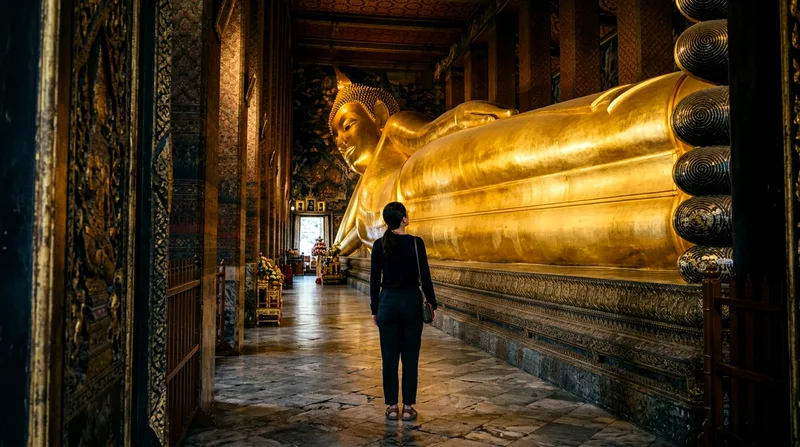
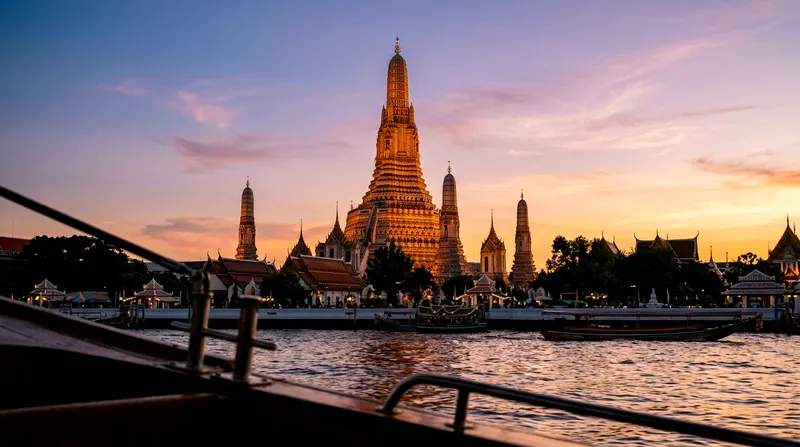
Wat Pho, home to the 46-meter reclining Buddha, is about a 10-minute walk south and charges a separate 200-baht entry — pairing the two in one morning is the single most common Bangkok sightseeing combination. The Chao Phraya River is a 5-minute walk west, where Tha Chang pier connects to cross-river boats to Wat Arun, visible from the Grand Palace's riverside walls. Compared to spreading sights across a city like Kuala Lumpur, where attractions sit far apart and demand taxis, Bangkok's old royal district rewards walking.
Frequently asked questions
How much does it cost to enter the Grand Palace?
Foreign adult visitors pay around 500 baht, which covers the Grand Palace grounds, Wat Phra Kaew (Temple of the Emerald Buddha), and two satellite museums — the Queen Sirikit Museum of Textiles and Vimanmek Mansion — valid for seven days on the latter two. Thai nationals enter free with ID, and young children under a set height, usually around 120cm, are typically admitted free.
Can you buy Grand Palace tickets online?
Yes. You can buy directly at the palace's ticket counter with cash or card, or use platforms like Klook or Trip.com, which sometimes bundle entry with a guided tour. Online purchase mainly saves you the ticket-counter queue rather than the security line, and third-party sites may charge a small service fee above the official rate — compare current prices before booking.
What is the dress code for the Grand Palace?
Shoulders and knees covered, no sleeveless tops, no shorts or short skirts, no see-through clothing, and closed-back shoes rather than flip-flops. Staff enforce this at the gate without exception. A free sarong loan service exists near the entrance but requires a deposit and adds waiting time, so dressing properly beforehand is faster.
Do I need a guided tour or can I visit independently?
Either works, but a guided tour adds real value here because on-site signage is minimal and the symbolism behind the throne halls and the Emerald Buddha isn't self-explanatory. Independent visitors can rent an audio guide for roughly 200 baht as a middle option. Avoid unofficial street guides near the entrance who claim the palace is closed — that's a known scam.
What is the best time to visit to avoid crowds?
Arrive right at opening, 8:30am, before tour buses and river cruise groups arrive around 10am. The cool season (November-February) draws the heaviest crowds overall, while the rainy season (June-October) is quieter but carries a higher chance of brief closures for royal ceremonies — check official notices a day or two ahead.