Compare the Bangkok temple pass against single tickets. See real savings math, skip-the-line value, and which combo fits your trip and budget.
Where Your Money Goes: Temple Admission Breakdown
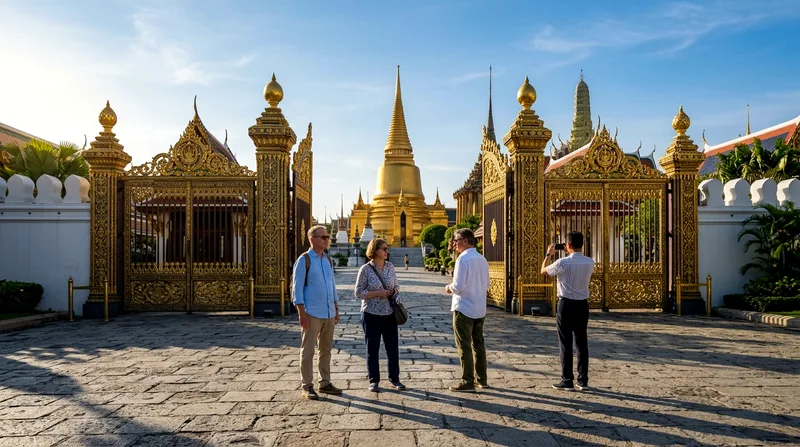
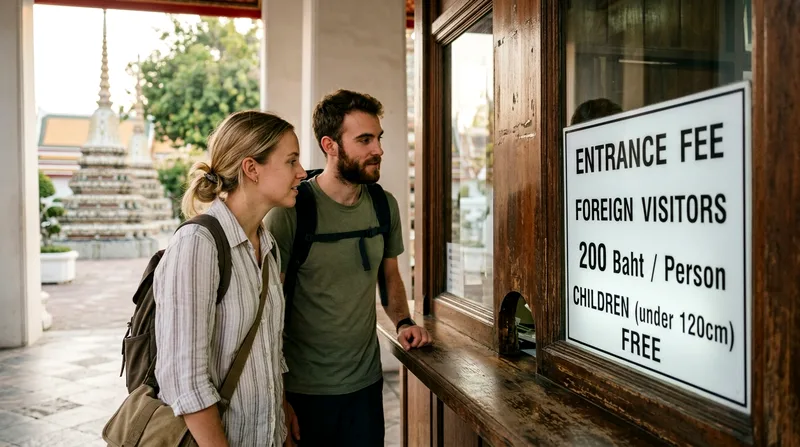
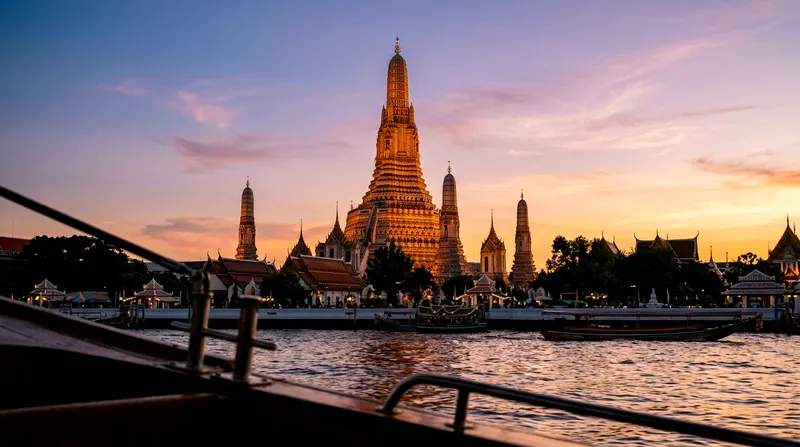
A Bangkok temple pass only makes sense once you know what you'd pay without one. The Grand Palace and Wat Phra Kaew (Temple of the Emerald Buddha) are sold as a single ticket, since you can't visit one without the other—expect roughly 500 THB per adult, with Thai nationals paying a separate, much lower rate. Wat Pho, home of the Reclining Buddha, charges around 200 THB and is a five-minute walk from the Grand Palace exit. Wat Arun, across the river, is typically under 100 THB. Add those three up and you're looking at somewhere near 800 THB per person for the classic "big three"—before any transport.
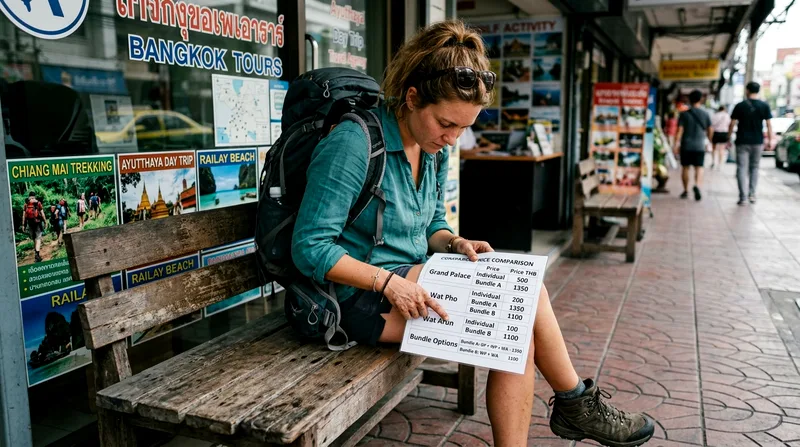
That math changes once you bring in operators. Search Tiket.com, Traveloka, or similar platforms and you'll find bundles pitched as "Grand Palace, Wat Pho and Wat Arun combo" for a flat fee that often includes a longtail boat crossing or air-conditioned transfer. Whether that's a deal depends entirely on what the bundle actually covers—some are just the admission fees resold with a markup for convenience, others fold in a guide and hotel pickup that would otherwise cost extra.
I'd treat any listed "combo price" as a starting point, not a fixed fact—platforms update rates, and the gap between a bundle and buying separately narrows or widens depending on the season and who's selling it.
Buying the Grand Palace, Wat Pho, and Wat Arun tickets separately is usually cheaper than a bundled Bangkok temple pass, unless the pass includes transport or a guide you'd otherwise pay for.
Bangkok temple pass vs individual tickets: cost and time comparison
| Option | Approx. cost (per adult) | Includes transport | Includes guide | Best for |
|---|---|---|---|---|
| Grand Palace + Wat Phra Kaew (single ticket) | ~500 THB | No | No | Independent travelers, early arrivals |
| Wat Pho (single ticket) | ~200 THB | No | No | Anyone, walk-in anytime |
| Wat Arun (single ticket) | Under 100 THB | No | No | Sunset or late-afternoon visits |
| Three-temple bundle (platform combo) | Varies, often above combined gate price | Sometimes | Sometimes | Time-pressed visitors, families |
| Skip-the-line Grand Palace ticket | Gate price plus premium | No | No | Peak season (Nov-Feb), senior travelers |
| Guided three-temple tour with pickup | Highest of the options | Yes | Yes | First-time visitors, couples wanting context |
Figures are typical ranges based on long-standing published rates; confirm current admission and bundle pricing before booking.
Individual ticket costs across major temples
Budget roughly 500 THB for the Grand Palace/Emerald Buddha combined entry, 200 THB for Wat Pho, and under 100 THB for Wat Arun—figures that have held in that general range for several years, though always confirm current pricing when you book. Wat Traimit (Golden Buddha) and Wat Saket (Golden Mount) add another 100-ish THB each if you're building a longer temple day. None of these require advance booking in the way a theme park does; you can usually buy at the gate, though the Grand Palace ticket window can have a slow-moving queue by mid-morning.
Hidden fees and platform markups
Third-party booking sites and resellers often add a service fee or bundle in a "mandatory" guide you didn't ask for. Compare what TripAdvisor listings, OverThePlanet, or similar aggregator sites show against the venue's own published admission price before assuming a markup is justified. The most common trap: paying a premium for "skip-the-line" access to a temple that rarely has long queues outside peak holiday periods anyway. Wat Arun, for instance, almost never needs a fast-track ticket—it's Grand Palace mornings where queues actually bite.
Legitimate Ways to Save on Temple Passes
There are a handful of durable ways to cut costs that don't depend on a particular sale or code. None of them are secrets, but most visitors skip them anyway because a bundled pass feels easier to plan around.
Combo packages vs single-site tickets
If your itinerary is just the Grand Palace, Wat Pho, and Wat Arun in one day, walking the route yourself and paying each gate separately is usually cheaper than a bundled combo ticket, because the three sites sit within a 15-20 minute walk (plus a short ferry hop for Wat Arun that costs a few baht). Where a combo earns its price is when it adds a guide who can explain the Emerald Buddha's history and the palace's rules, or when it includes return hotel transport—something that matters more in Bangkok's heat and traffic than it would in, say, Chiang Mai, where temples sit closer together and walking is easier.
Seasonal pricing and advance booking discounts
Admission prices at government-run sites like the Grand Palace don't fluctuate seasonally—unlike hotel rates or flights, the gate price is fixed year-round. What changes seasonally is demand: November through February draws the largest crowds, so bundled skip-the-line tickets have more genuine value then. April through June, visitor numbers drop and standing in a short line costs you ten minutes, not an hour—makes the premium far less worth paying.
Off-peak visit timing strategies
Arrive at the Grand Palace by 8:30am, half an hour before most group tours show up, and you'll walk straight to the ticket window. Early entry costs nothing extra and does more for your day than most paid fast-track add-ons. The trade-off: you'll be touring in direct sun by 10am, so bring water and a hat rather than relying on shade you won't find in the palace courtyards.
Skip-the-Line and Fast-Track Options Explained
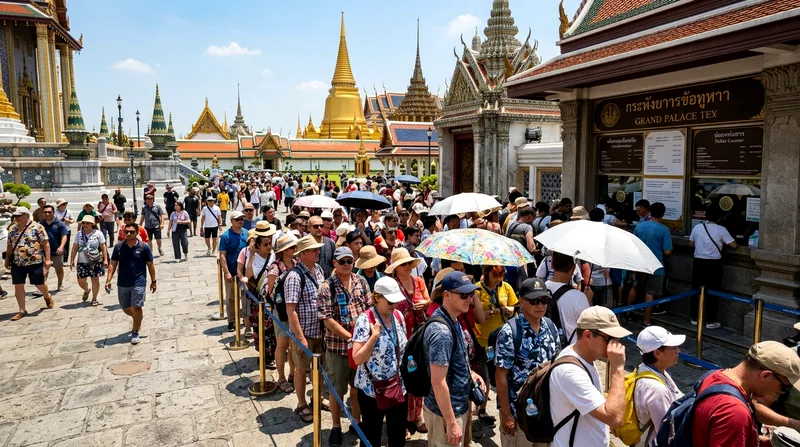
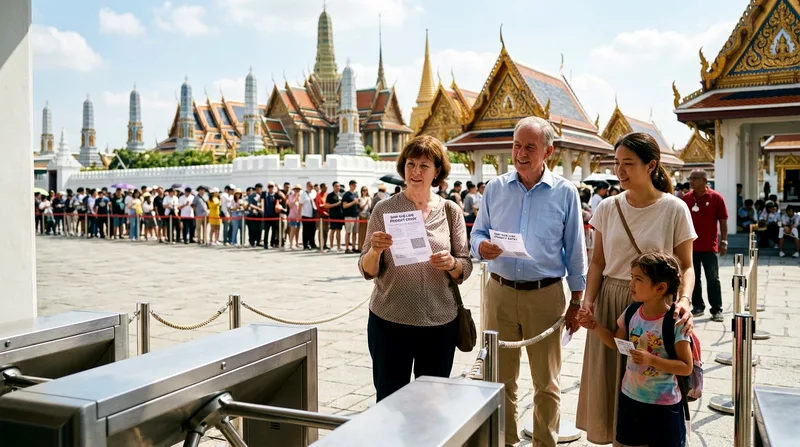
Skip-the-line Bangkok temple tickets exist mainly for the Grand Palace, since it's the one site where queues genuinely form—particularly from 10am to 1pm when tour buses cluster. Wat Pho and Wat Arun rarely have lines long enough to justify paying extra.
When fast-track access justifies the premium
If you're visiting during Thai public holidays, Chinese New Year, or peak European winter travel season (December–January), a fast-track ticket can save 30-45 minutes of standing in sun with no shade. For families with young kids or senior travelers who can't comfortably queue that long, the premium—often a modest add-on over standard admission—is a reasonable trade. Outside those windows, you're paying for a problem that doesn't exist yet.
Booking platforms offering skip-the-line bundles
Traveloka and Tiket.com both list Grand Palace and multi-temple bundles with fast-track entry as an option, and TripAdvisor aggregates listings from several operators so you can compare what's included before paying. Some older travel resources, including sites like AAA.com for members with travel benefits, occasionally list combo tickets through partner agencies—worth a glance if you already use their trip-planning tools, though their temple-specific offerings are limited compared to dedicated Asia booking platforms. Whichever you use, check the fine print on what "skip-the-line" actually means: at the Grand Palace it typically means a separate entry queue, not a bypass of the security screening everyone goes through.
What's Not Worth Skimping On
Cutting corners on a few specific things costs you more than it saves—sometimes literally, in the form of being turned away at the gate.
Dress code compliance and entry requirements
The Grand Palace enforces a strict dress code: no shorts, no sleeveless tops, no see-through fabric, and shoulders and knees must be covered for both men and women. Staff at the gate will turn you away or direct you to a rental-sarong stall that charges a deposit you'll want to avoid. This applies whether you've booked a combo pass or a walk-up ticket—no pass exempts you. Pack a light long-sleeve shirt and trousers or a long skirt; it's genuinely non-negotiable and the single most common reason I'd flag for a wasted morning.
Guided tour value for first-time visitors
Skipping the guide to save money is fine for Wat Arun's riverside architecture, which you can appreciate without context. It's a worse call at the Grand Palace and Wat Phra Kaew, where the murals, the Emerald Buddha's seasonal robe-changing ceremony, and the symbolism throughout the complex go unexplained without one. A decent guide or even an audio guide rental—usually a small fixed fee at the entrance—adds real value for first-timers. I wouldn't bother for a second visit.
Temple Pass Booking Checklist
Before you commit to any multi-temple bundle, run through what it actually includes versus what you'd pay buying each ticket at the gate.
Verification steps before purchase
Check four things: whether admission fees are itemized separately from service charges, whether transport (boat or van) is included or optional, whether a guide is mandatory or add-on, and whether the listed price is per person or per group. Cross-reference against the temple's own posted gate price—government sites like the Grand Palace publish official rates, and any bundle priced far above that combined total needs a clear reason, like transport or skip-the-line access, to justify the gap.
Redemption methods and cancellation policies
Most platforms issue a QR code or voucher redeemable at a ticket counter or meeting point near the Grand Palace's Na Phra Lan Road entrance—confirm the exact pickup location in advance, since Bangkok's palace area has several gates and tour groups often cluster at the wrong one. Check the cancellation window; many combo tickets are non-refundable once issued, while some allow free cancellation up to 24 hours ahead. If your plans include a day trip to the Maeklong Railway Market or a floating market tour, confirm the temple pass doesn't lock you into a fixed morning slot that conflicts with an early market departure.
Frequently asked questions
What is included in Bangkok temple combo tickets?
It varies by seller, so check the listing closely. At minimum, a combo covers admission to two or three sites—usually the Grand Palace, Wat Pho, and Wat Arun. Better ones add a longtail boat crossing to Wat Arun, hotel pickup, or a guide. Cheaper combos are often just the gate fees bundled with a markup and no real extras, so compare the total against buying each ticket separately before assuming you're saving money.
Are skip-the-line temple passes worth the extra cost?
Only during peak periods—Thai holidays, Chinese New Year, and the December-January high season—when Grand Palace queues can run 30-45 minutes. Outside those windows, arriving by 8:30am achieves the same result for free. Wat Pho and Wat Arun rarely have meaningful queues, so paying for fast-track there is close to pointless.
How much do Bangkok temple passes cost compared to individual tickets?
Individual tickets for the Grand Palace/Emerald Buddha, Wat Pho, and Wat Arun together run roughly 800 THB per adult. Bundled combo passes on platforms like Traveloka or Tiket.com often price above that total once you factor in service fees, unless they include transport or a guide. Run the math on the specific listing rather than assuming "combo" automatically means cheaper.
Which booking platform offers the best temple pass deals?
There's no single best platform—Traveloka, Tiket.com, and TripAdvisor-aggregated listings all carry similar bundles, and prices shift with demand. Compare at least two platforms side by side for the same itinerary, check what's actually included, and verify the pickup location and cancellation terms before paying, rather than booking the first listing you see.
What are the dress code requirements for Bangkok temples?
Shoulders and knees covered, no see-through clothing, no shorts or sleeveless tops—enforced strictly at the Grand Palace and loosely but still expected at Wat Pho and Wat Arun. Bring your own long trousers or skirt and a light long-sleeve top; rental sarongs are available at the gate but usually require a cash deposit you'd rather skip.