Book Wat Arun tickets online or at the gate. Learn entry fees, ferry logistics, guided tours, and the best time to visit Bangkok's Temple of Dawn.
What Is Wat Arun and Why Visit
Wat Arun — the Temple of Dawn — sits on the western, Thonburi side of the Chao Phraya River, directly across from the Grand Palace and Wat Pho. Its central prang rises about 70 meters and is covered in broken porcelain and seashell mosaics, a decorative technique dating back to the early Rattanakosin period when Chinese ceramic ships used the material as ballast. The temple takes its name from Aruna, the Hindu god of dawn, though ironically it's just as striking — arguably more so — at sunset, when the structure glows orange against the sky and lights up after dark.
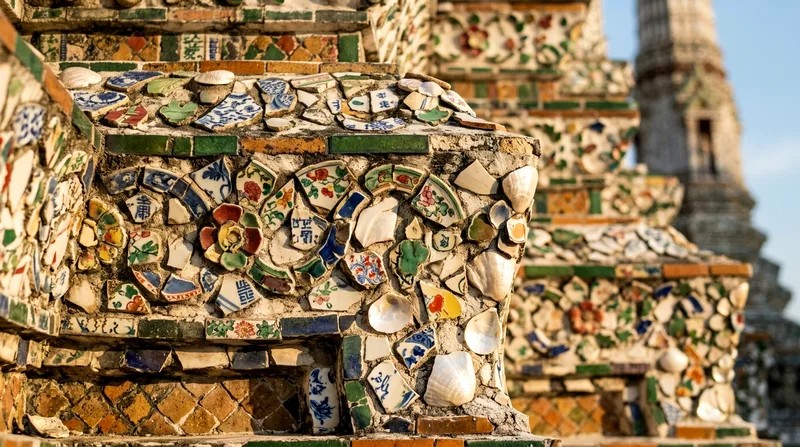
Unlike the Grand Palace, which demands a half-day and strict dress compliance checks at the gate, Wat Arun is a quicker visit: most people spend 45 minutes to an hour here, including the ferry crossing. You can climb partway up the steep central steps for a river view, walk the surrounding terraces, and see the demon guardian statues (yaksha) at the base.
I'd rank it below Wat Pho for sheer scale and below the Grand Palace for grandeur, but it wins on photogenic value — the riverside setting and the mosaic detail photograph better than almost anything else in Bangkok. If you only have time for one temple photo op, make it this one, ideally from across the river rather than up close.
Wat Arun Tickets: Entrance Fees and Options
Wat Arun tickets are inexpensive compared to most Bangkok attractions, and buying them is straightforward — there's no mandatory online booking requirement, unlike some newer attractions that have moved entirely digital.
Standard admission pricing
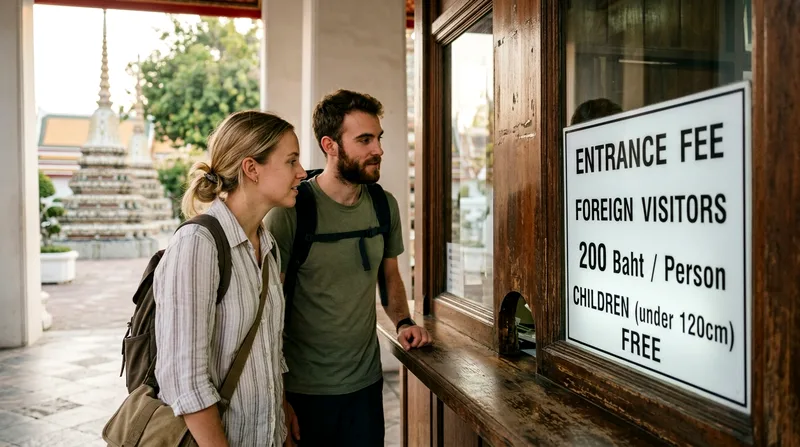
Foreign visitors pay a standard entrance fee, typically around 200 Thai Baht (roughly $5-6 USD), payable at the ticket counter near the pier entrance. Thai nationals enter free with ID. The fee covers access to the temple grounds and the base terraces of the central prang — there's no separate charge to climb the lower steps. Children under a certain height (check signage at the gate, as thresholds are occasionally revised) often enter free. Keep some small baht notes handy; counters aren't always set up for cards, and queues move faster with cash.
Online booking platforms
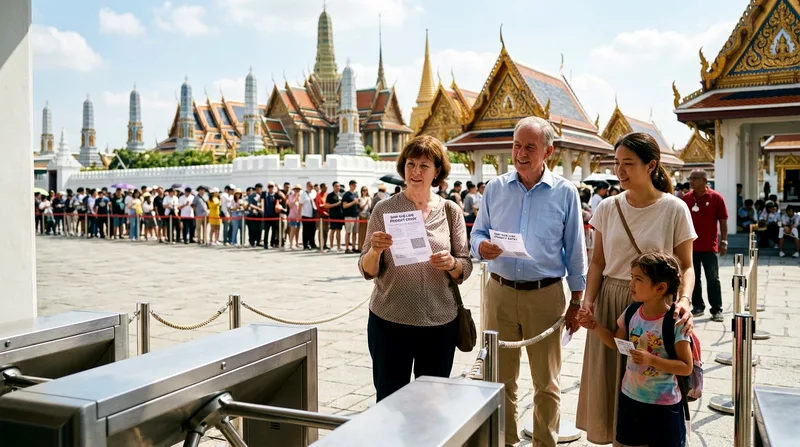
You generally don't need to pre-book standard Wat Arun entry — walk-up tickets are the norm and lines are rarely long outside peak holiday periods. That said, platforms like Trip.com and Expedia list combined packages that bundle Wat Arun with river cruises, Grand Palace entry, or guided walking tours, which can be worth it if you want transport and a guide handled in one booking. If you're going this route, compare current prices before you book, since bundled packages fluctuate more than the flat temple entrance fee.
How to Get to Wat Arun: Ferry and Transport
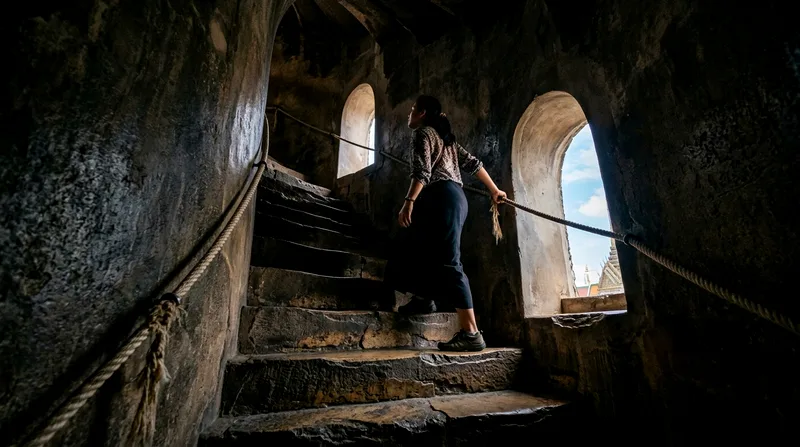
Wat Arun sits on the river's west bank, which means most visitors arrive by boat rather than road — and that's genuinely the better option, not just the small one.
Ferry crossing logistics
The classic route: take the Chao Phraya Express Boat to Tha Tien pier (near Wat Pho), then transfer to the small cross-river ferry that shuttles directly to Wat Arun's pier. This ferry runs frequently, every few minutes during daylight hours, and costs a few baht — exact change in coins is useful. The crossing takes under five minutes. This is the method most guided tours use too, so don't expect to avoid it by booking a tour; you're still getting on a boat.
Alternative transport methods
If you're coming from somewhere without direct river access — Sukhumvit, for instance — a taxi or Grab car can cross via Rama VIII Bridge or the surrounding road network, avoiding the ferry entirely. This takes longer in traffic, often 30-45 minutes from central Bangkok, and taxis sometimes balk at the drop-off point due to one-way restrictions near the temple. I'd still recommend the boat route: it's cheaper, more reliable timing-wise, and gives you a river view of the temple before you even arrive, which a car never will.
Guided Tours vs. Independent Visits
Wat Arun opening hours run daily, typically 8:00 am to 6:00 pm (sometimes listed as 8:30 am), with the illuminated exterior visible from across the river well into the evening even after the grounds close. That long window makes a self-guided visit easy to slot into almost any itinerary.
Independent visits cost less and offer more flexibility, while guided tours save planning effort for multi-temple days.
Wat Arun tickets and visit options compared
| Option | Typical Cost (Entry) | Time Needed | Flexibility | Best For |
|---|---|---|---|---|
| Independent self-guided | Approx. 200 THB | 45-60 min | High | Solo travelers, couples, photographers |
| Group guided tour (temple combo) | Package price, varies | 3-4 hrs | Low, fixed schedule | First-timers, time-pressed visitors |
| Private guided tour | Package price, varies | 3-5 hrs, custom | High within tour | Families, seniors, mobility needs |
| River cruise with Wat Arun stop | Package price, varies | 2-3 hrs | Medium | Evening/sunset seekers |
Entry fee is stable and paid on-site; tour package prices vary by operator and season, so check current prices when booking.
Self-guided visit benefits
Going independently costs you only the entrance fee and ferry fare, and you control the pace entirely — linger at the mosaic details, skip the climb if stairs aren't your thing, or come back twice (morning for photos, evening for the illuminated view) without extra cost. Signage at the site explains the major historical points adequately for a casual visit. For most travelers, especially couples and solo travelers comfortable navigating Bangkok's ferry system, this is the better value option.
Group and private tour options
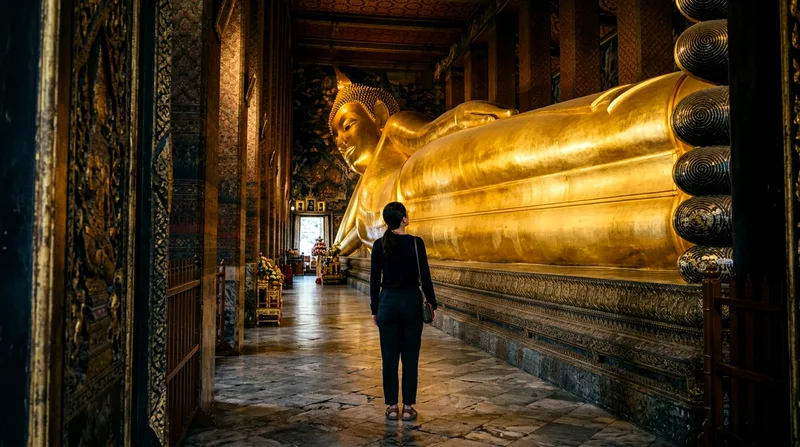
A guided Temple of Dawn tour makes more sense if you're combining it with the Grand Palace and Wat Pho — the Emerald Buddha's temple complex and Wat Pho's reclining Buddha both reward having someone explain the symbolism, and a half-day guide can sequence the river crossings efficiently. Private tours cost more than joining a group but suit families with children who tire of waiting, or senior travelers who want a slower, accompanied pace with help navigating piers and steps. Group tours are cheaper per person but move on a fixed schedule, which can mean visiting Wat Arun at midday — the worst time for both heat and light.
Best Time to Visit Wat Arun and Photography Tips
Timing matters more at Wat Arun than almost any other Bangkok temple, because the entire appeal is visual — mosaic texture, river light, and silhouette.
Seasonal crowds and weather
Cool season, roughly November through February, brings the clearest skies and the biggest crowds — this is peak European and world traveler season in Bangkok, competing with Chiang Mai's cooler mountain air and Krabi's dry-season beaches for visitor attention. April and May are brutally hot on the exposed stone terraces with little shade; go early or skip midday entirely. Rainy season (June to October) brings fewer tourists and dramatic stormy-sky photos, but also the risk of a washed-out visit if a downpour hits during your ferry crossing.
Golden hour and photo angles
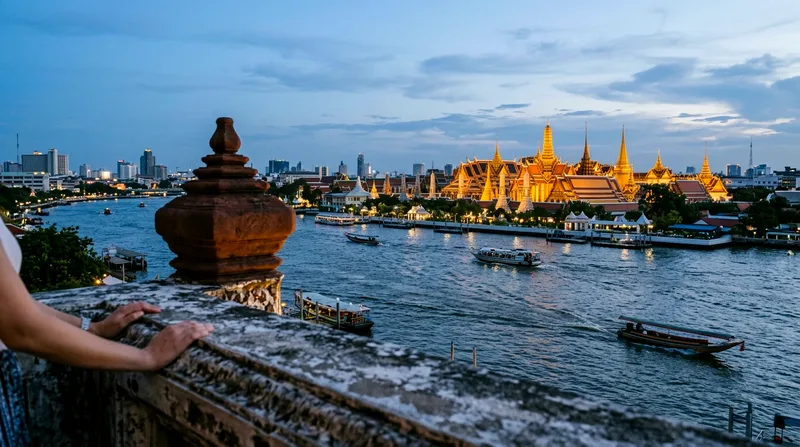
For sunrise-style shots, arrive right at opening — the temple faces east, so morning light hits the prang directly and the crowds are thinnest before 9 am. For the classic silhouette-against-sunset shot, you actually want to be on the opposite bank, near Tha Tien pier or one of the riverside bars, not inside the temple grounds — the sun sets behind Wat Arun from that side, creating the postcard image. After dark, the temple is floodlit until around 10 pm and photographs well from across the river with a tripod or steady hand. Avoid the top of the central prang climb for photos; the steps are steep, narrow, and the view is partially obstructed by railings.
Nearby Temples and Add-On Attractions
Wat Arun's location makes it easy to chain into a longer riverside itinerary rather than a standalone stop, and most visitors should plan for a half-day covering two or three sites.
Walking-distance temple combinations
Wat Pho, home of the 46-meter reclining Buddha, is a short ferry ride back across the river from Wat Arun's pier, then a 5-10 minute walk. The Grand Palace and its Emerald Buddha temple sit another 10-minute walk north of Wat Pho. Doing all three in one morning — Wat Arun first for the light, then Wat Pho, then the Grand Palace — is the standard Bangkok temple circuit, and it's walkable with ferry transfers rather than requiring taxis. Budget a full morning to early afternoon, around 4-5 hours total, and wear closed shoes you can slip off easily; all three sites require shoe removal and modest dress — shoulders and knees covered, no see-through fabric.
Riverside dining and viewpoints
Several restaurants and rooftop bars on the Tha Tien side look directly across at Wat Arun and are busiest around sunset — worth booking a table in advance during cool season if you want a window seat. On the Thonburi side near the temple itself, options are more limited and skew toward simple riverside cafés rather than destination dining. If you're also considering a Chao Phraya dinner cruise elsewhere in Bangkok, note that most routes pass Wat Arun anyway, so you don't need a separate dedicated cruise just to see it lit up at night.
Frequently asked questions
What is the entrance fee for Wat Arun?
Foreign visitors typically pay around 200 Thai Baht (about $5-6 USD) at the ticket counter near the pier. Thai nationals enter free with ID shown. There's no extra charge to access the lower terraces of the central prang. Bring cash in small denominations, since card payment isn't always available at the gate.
How do I get to Wat Arun by ferry?
Take the Chao Phraya Express Boat to Tha Tien pier, then board the small cross-river ferry that runs directly to Wat Arun. The ferry departs every few minutes during the day, takes under five minutes, and costs a few baht in coins. This is faster and cheaper than taking a taxi around via the bridge.
Can I book Wat Arun tickets online?
Standard entry tickets aren't sold as a dedicated online product and don't need to be — walk-up purchase is simple and lines are usually short. Platforms like Trip.com and Expedia do sell bundled packages combining Wat Arun with the Grand Palace, Wat Pho, or river cruises, which suit travelers who want transport and guiding included.
What is the best time to visit for photography?
Arrive right at opening, around 8 am, for soft morning light on the east-facing prang and the thinnest crowds. For the classic sunset silhouette shot, position yourself on the opposite riverbank near Tha Tien pier rather than inside the temple grounds, since the sun sets behind Wat Arun from that angle.
Can I combine Wat Arun with other temple tours?
Yes — Wat Arun, Wat Pho, and the Grand Palace form Bangkok's standard temple circuit, connected by a short ferry ride and 5-10 minute walks. Plan 4-5 hours for all three. Guided tours bundle this combination for travelers who prefer a fixed schedule over navigating ferries and ticket counters independently.