Maximize your Bangkok visit with this hour-by-hour 1 day in Bangkok itinerary. Hit temples, markets, and riverside attractions with skip-the-line tips.
Who This Itinerary Is For
This 1 day in Bangkok itinerary is built for people with one real day in the city — a layover between flights, a stopover before heading to Chiang Mai or Krabi, or the single free day at the end of a cruise through Southeast Asia. It assumes you're staying somewhere central, you're willing to start by 8 a.m., and you'd rather see fewer places properly than rush through a dozen.
It's not for everyone. If you want to combine the Damnoen Saduak floating market or the Maeklong Railway Market with the Grand Palace and a night market, you're setting yourself up for a bad day — those markets sit 60-100 km outside the city, and a round trip eats four to six hours alone. I'd rather tell you that upfront than have you standing in Bangkok traffic at 4 p.m., already regretting the plan.
Families with young children should expect to cut one stop — Wat Pho or the riverside walk — since the Grand Palace alone involves a strict dress code, no shade, and considerable walking on hot stone. Senior travelers will want to budget extra time for the same reason; nothing here is impossible, but Bangkok in April or May is genuinely brutal by midday. Couples and solo travelers have the most flexibility, since you can move faster and adjust on the fly. European travelers coming straight off a long-haul flight should consider pushing this itinerary to day two and using day one to simply adjust to the time difference — Bangkok rewards travelers who aren't running on four hours of sleep.
The fastest way to plan a 1 day in Bangkok itinerary is to match each time block to a realistic duration and budget before you commit to a route.
1 day in Bangkok itinerary at a glance: morning, afternoon and evening compared
| Time Block | Main Stops | Duration | Est. Cost (per person) |
|---|---|---|---|
| Morning | Grand Palace, Wat Pho | 3-3.5 hours | 700-900 baht (entry fees) |
| Midday | Wat Arun, riverside lunch | 2-2.5 hours | 150-300 baht |
| Afternoon (optional) | Pak Khlong Talat flower market | 30-60 minutes | Free to browse |
| Evening | Sunset river cruise or night market | 2-3 hours | 300-900+ baht |
| Transport (all day) | BTS, ferry, taxi/Grab | Ongoing | 150-400 baht total |
Costs are typical ranges based on standard foreign-visitor admission and public transport fares; confirm current prices when booking.
Morning: Grand Palace and Wat Pho
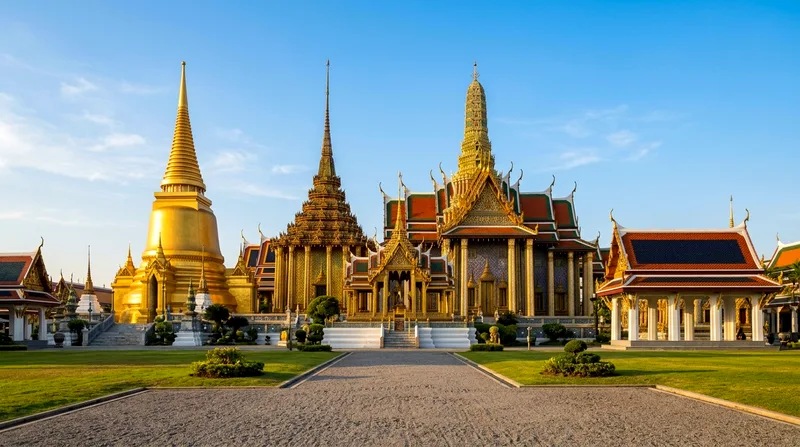
Start at the Grand Palace by 8:00 a.m., ideally arriving at opening (8:30 a.m. most days). This is the single most important timing decision in the whole itinerary — by 10:30 a.m., tour buses from Pattaya and Hua Hin day trips arrive en masse, and the complex goes from pleasant to genuinely crowded. The Grand Palace and the adjoining Wat Phra Kaew (Temple of the Emerald Buddha) typically take 90 minutes to two hours if you're not lingering over every building.
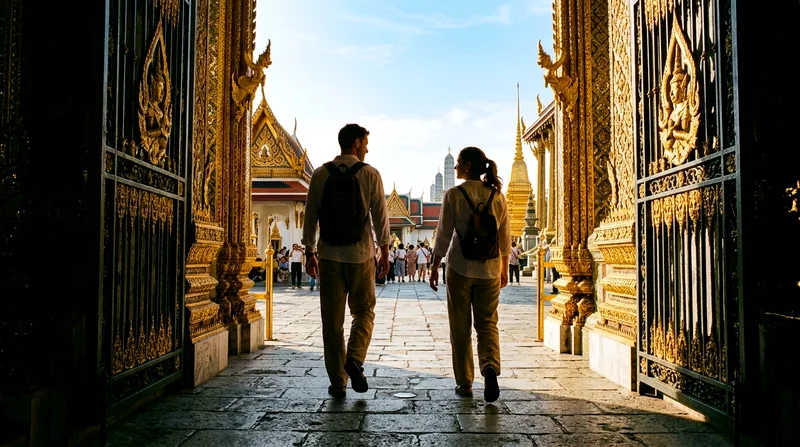
Dress code is strictly enforced: shoulders and knees covered, no sheer fabric, closed-toe shoes recommended though not always required. Sarongs are available to borrow near the entrance if you show up in shorts, but that line costs you 15-20 minutes you don't have. Just wear the right clothes.
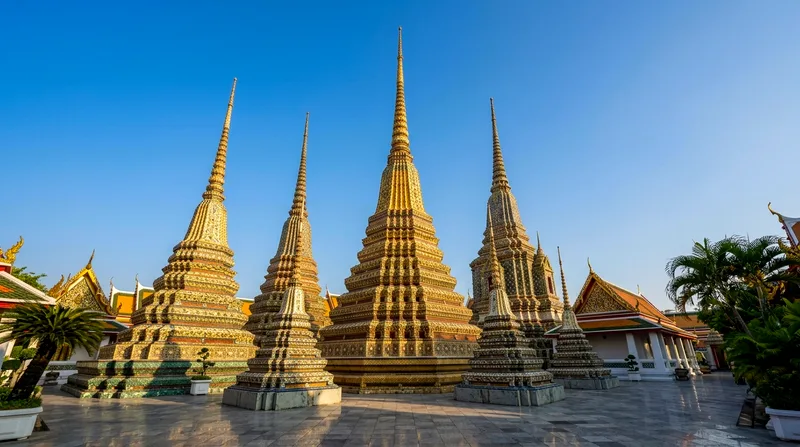
From there, walk roughly 10 minutes south to Wat Pho, home of the 46-metre reclining Buddha covered in gold leaf. Give this an hour. It's less crowded than the Grand Palace and arguably more photogenic — the scale of the statue inside the low-ceilinged hall is something photos never quite capture. Wat Pho is also one of the few places in Bangkok offering traditional Thai massage taught on-site, and a 30-minute foot massage here (roughly 300-400 baht) is a genuinely good way to rest your legs before the afternoon.
Skip-the-Line Booking Strategy
Buy Grand Palace tickets online in advance where possible, or at minimum know the official price (around 500 baht for foreign visitors) so you don't get steered toward unofficial "closed today" scams near the entrance — a long-running con where touts tell tourists the palace is shut and redirect them to a gem shop or private tour. It isn't closed; walk past them and go to the actual gate. Wat Pho has a separate admission (around 200 baht) and moves faster since it doesn't have the same security screening volume. There's no real "skip-the-line" ticket tier at either site — the only lever you control is arrival time, and it matters more than any paid fast-pass elsewhere in the city.
Realistic Timing Between Sites
Budget 3 to 3.5 hours total for both temples including the walk between them, plus water breaks — this isn't a place to skip hydration. If you're traveling with kids or elderly parents, add 45 minutes and consider skipping the foot massage to preserve energy for the afternoon river crossing instead.
Afternoon: Riverside and Markets
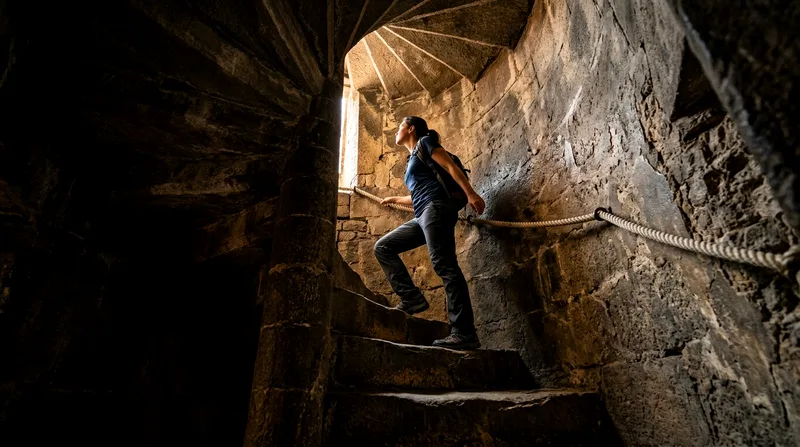
By early afternoon, head to Tha Tien pier, a five-minute walk from Wat Pho, and take the cross-river ferry to Wat Arun, the Temple of Dawn. The ferry costs a few baht and takes about two minutes. Wat Arun's central prang is covered in porcelain fragments and Chinese ceramic pieces, and you can climb partway up steep steps for a river view — not recommended for anyone with knee issues or a fear of heights, since the steps are narrow and the handrail is minimal.
Have lunch somewhere along the river rather than inside a mall food court — there are several open-air restaurants on both the Tha Tien and Wat Arun sides with decent pad thai and khao soi for 100-200 baht, with river views included free of charge.
Wat Arun and River Crossings
If you'd rather stay on the water longer, the Chao Phraya Express Boat runs north-south along the river with stops near most major sights, and a day pass (roughly 180 baht) lets you hop on and off freely. This is a genuinely underrated way to see Bangkok — cooler than the street, and you get a different angle on the skyline than you do from the BTS Skytrain.
Market Options by Location
Skip Damnoen Saduak and Maeklong today — they're worth a dedicated half-day trip on a different visit, not a bolt-on to this itinerary. Instead, if you have an extra hour, the Pak Khlong Talat flower market near the river is open late into the afternoon and takes 20-30 minutes to walk through. It's real, functional, and not staged for tourists, which is more than you can say for some of the markets closer to Sukhumvit.
Evening: Nightlife and Local Dining
Head back toward Sukhumvit or Silom by early evening — both have reliable BTS access and a concentration of good dinner options. This is where I'd book one experience in advance: a sunset river cruise along the Chao Phraya, typically 1.5 to 2 hours, departing around 6-7 p.m. depending on the season. Prices vary widely by boat type, from simple public-style dinner cruises around 600-900 baht to higher-end options well above that — compare current boat tours and prices before you book, since availability and departure points shift by operator and season.
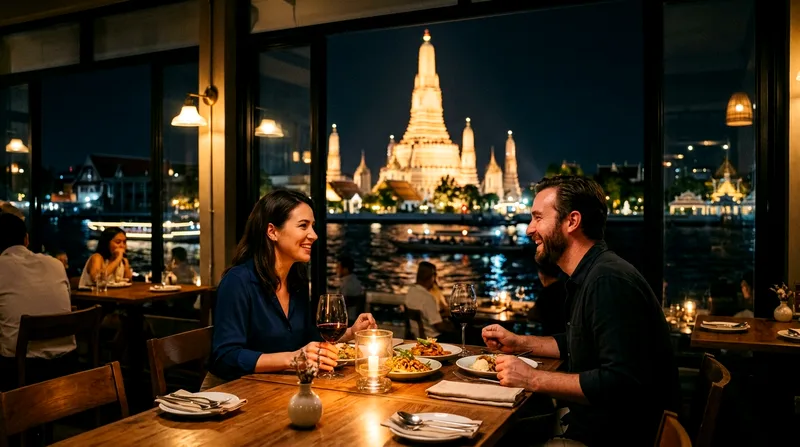
If cruises aren't your thing, or it's raining — and Bangkok's rainy season downpours between roughly May and October can be sudden and heavy — a rooftop bar is the better fallback. Several sit along Silom and Sathorn with views over the city skyline; expect a cocktail to run 400-500 baht, steeper than street-level bars, and some enforce a smart-casual dress code and a minimum spend.
Rooftop Bars and Night Markets
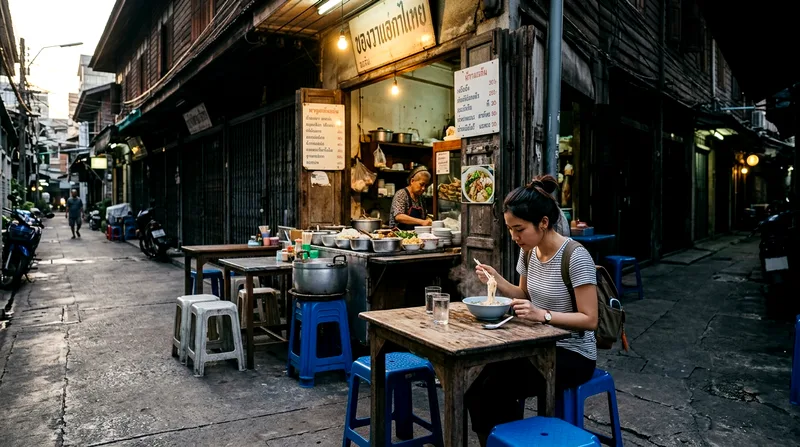
For a cheaper, more local evening, a night market is hard to beat. Options near Sukhumvit and around the Thonglor area offer street food stalls, clothing, and the kind of unscripted energy a rooftop bar can't replicate. Budget 300-500 baht for a full meal sampled across several stalls — pad see ew, grilled skewers, mango sticky rice — and expect it to be loud, hot, and crowded. If that sounds unpleasant rather than fun, this is where a quieter riverside restaurant is the better call.
Bookable Experiences
Besides the sunset cruise, some operators run combined dinner-and-cultural-show cruises with Thai classical dance included. These run longer, typically 2.5 hours, and cost more — worth it if this is your only night in Bangkok and you won't catch cultural performances elsewhere, less worth it if you're continuing on to Chiang Mai or Siem Reap, where similar shows are often cheaper and less tourist-saturated.
Getting Around Bangkok
Bangkok's transport system is better than its reputation for traffic suggests — the trick is knowing when to use which mode. For this itinerary, you'll mix walking, the river ferry, and either the BTS Skytrain or taxis depending on time of day.
BTS, MRT, and Boat Transport
The BTS Skytrain and MRT subway cover most of the city you'll want for shopping and nightlife — Sukhumvit, Siam, Silom — but neither reaches the old-city area around the Grand Palace and Wat Pho directly. That's why the river ferry matters: it's the practical link between the historic riverside zone and the modern BTS network. A Rabbit Card (refillable, around 100-200 baht including a refundable deposit) covers BTS fares and saves you queuing for single tickets each time; it doesn't work on the MRT, which uses its own token system, or on the boats, which are usually paid in cash on board.
Taxis and Ride-Sharing Apps
For the Grand Palace area specifically, a metered taxi or Grab (Southeast Asia's main ride-hailing app) is often simplest, especially early morning before traffic builds. Insist on the meter or book through the app — refusing it is the most common tourist overcharge in the city. Avoid taxis idling directly outside the Grand Palace gates; walk a block away and hail one, or use Grab, where the fare is fixed before you get in.
Where to Base Yourself
For a one-day visit, where you sleep the night before and after matters more than people expect. Sukhumvit is the easiest base for first-timers — BTS access, endless dining, and a short taxi ride to the old city in early morning traffic. Silom and Riverside hotels near the Chao Phraya put you closer to the Grand Palace and Wat Pho, cutting your morning transit to 10-15 minutes, which matters if you're trying to beat the crowds.
I'd avoid basing yourself near Khao San Road unless nightlife noise doesn't bother you — it's convenient for the old city sights but loud well past midnight, and not what most couples or families want after a long day of walking. If you're continuing on to Ayutthaya or Hua Hin the next day, a hotel near Bangkok's rail or bus terminals saves meaningful time versus crossing the city from Sukhumvit at rush hour.
Frequently asked questions
Is one day enough to see Bangkok?
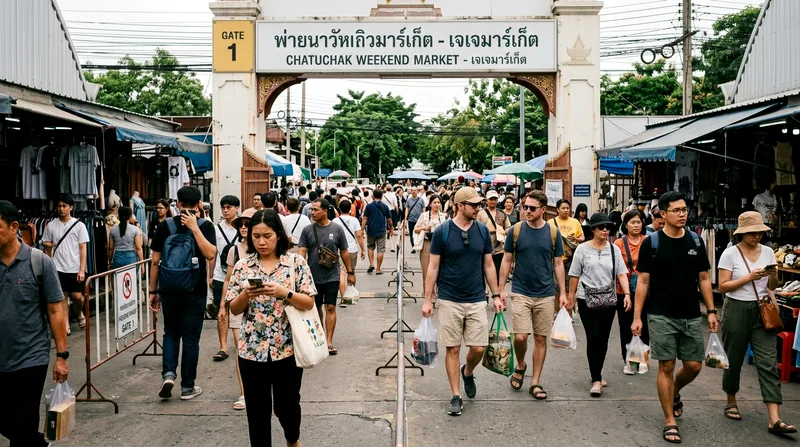
One day is enough to see Bangkok's core highlights — the Grand Palace, Wat Pho, Wat Arun, and a riverside evening — but not the floating markets, Chatuchak Weekend Market (only open Saturday and Sunday), or day trips to Ayutthaya. Treat a single day as a focused "greatest hits" loop, not a full picture of the city.
What are the worth seeing temples in Bangkok?
The Grand Palace complex with Wat Phra Kaew, Wat Pho's reclining Buddha, and Wat Arun across the river form the classic trio, all within a 20-minute walk and ferry ride of each other. Together they take about 4-5 hours including the crossing, making them realistic to combine in one morning-to-early-afternoon block.
How do I skip lines at popular attractions?
There's no real fast-pass system at the Grand Palace or Wat Pho — the only effective strategy is arriving at or just after opening, around 8:00-8:30 a.m., before tour groups arrive mid-morning. Buying tickets online in advance where available also avoids the ticket-counter queue, though it won't skip the security line itself.
What transportation should I use in Bangkok?
Use the BTS Skytrain and MRT for Sukhumvit, Siam, and Silom; use the Chao Phraya river ferry for the old city and riverside temples; use Grab or a metered taxi for short hops where rail doesn't reach, especially early morning to the Grand Palace. A Rabbit Card speeds up BTS travel but doesn't cover MRT tokens or boat fares.
Can I visit floating markets in one day?
Not alongside the Grand Palace and riverside temples — Damnoen Saduak and the Maeklong Railway Market sit 60-100 km from central Bangkok, and a round trip with time on-site takes four to six hours. If floating markets are a priority, dedicate a separate half-day trip rather than squeezing them into this itinerary.