Explore Bangkok cheaply with this 4-day budget itinerary. Mix free temples, markets, street food, and low-cost tours. Daily cost breakdown included.
Who This Itinerary Is For
This Bangkok budget itinerary is built for travelers who want the temples, the markets, and the street food without hemorrhaging cash on taxis, overpriced tours, and hotel breakfasts. It suits backpackers moving on to Chiang Mai or Krabi afterward, couples stretching a two-week Southeast Asia trip, and families who'd rather spend on experiences than on a pool bar. Four days is enough to see the Old City, get out on the water, eat your way through a few neighborhoods, and still fit in a day trip to Ayutthaya.
It's not for anyone chasing five-star comfort — if that's you, look at Phuket or Hua Hin instead, where resort budgets make more sense. It also won't work if you're allergic to walking in heat, queuing for a few minutes at temple entrances, or sharing a BTS carriage at rush hour. The plan below assumes a daily budget of roughly 1,400–2,100 THB ($40–60) per person, covering a hostel or budget guesthouse, three meals of street food or simple restaurants, public transport, and one paid attraction or tour. Couples sharing a room can trim that by $8–12 a day each.
One opinion worth stating up front: skip the "free" gem-shop and tailor-shop tours that touts push near the Grand Palace. They're a time-wasting commission scheme, not a bargain, and they'll cost you an afternoon.
Day 1: Old City Temples and Markets
Base yourself near the Old City for this first day — it keeps everything walkable and saves on transport costs that add up fast if you're staying out in Sukhumvit.
Morning: Grand Palace and Emerald Buddha
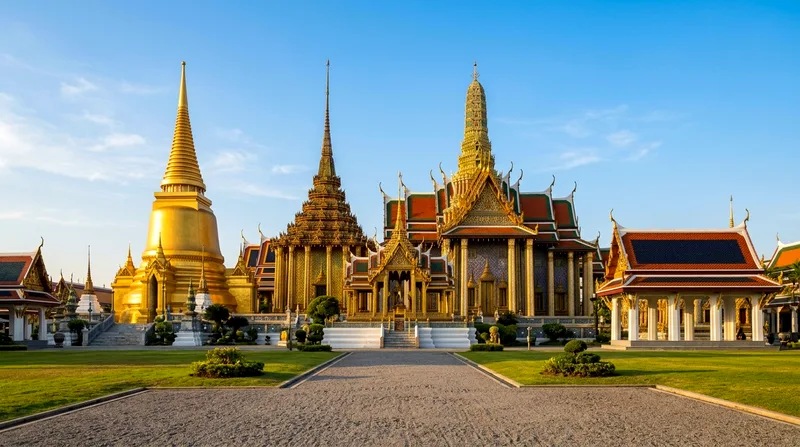
Arrive by 8:30 a.m., when the complex opens and before tour buses clog the entrance. Admission is 500 THB (about $14) — the one genuinely non-negotiable expense of the day, and worth it for the Emerald Buddha alone. Wear long trousers or a skirt past the knee and closed shoes; guards turn away bare shoulders and shorts, and the rental sarongs at the gate cost extra time you don't want to lose. Budget two hours. Avoid the "closed today" line from strangers outside the gate — it's the oldest scam in the city, meant to redirect you to a jewelry shop tour.
Afternoon and Evening: Wat Pho and Wat Arun
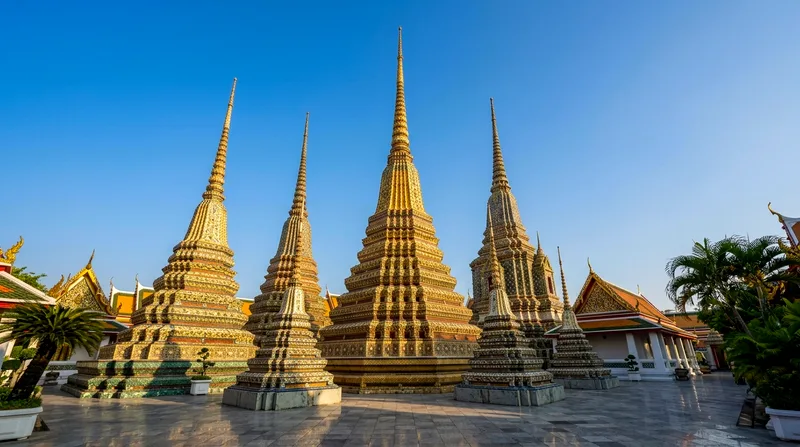
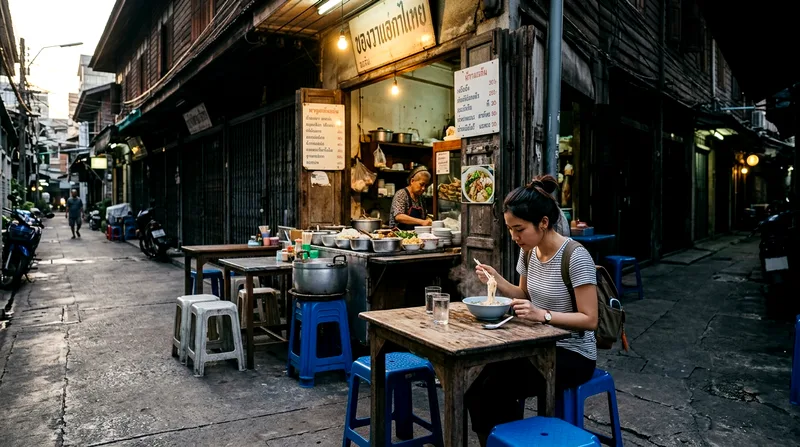
Walk ten minutes to Wat Pho (200 THB, about $6) to see the 46-metre reclining Buddha, then catch the cross-river ferry (4 THB) to Wat Arun, the Temple of Dawn, for 100 THB entry. Climbing its steep central tower is free once you're inside and gives the best river views in the Old City at golden hour. For dinner, head to the street stalls along Maharat Road or Rambuttri near Khao San for pad kra pao or khao man gai at 50–80 THB a plate. If it rains — common from May to October — duck into the air-conditioned National Museum (200 THB) instead of waiting it out.
Day 2: Floating Markets and Riverside
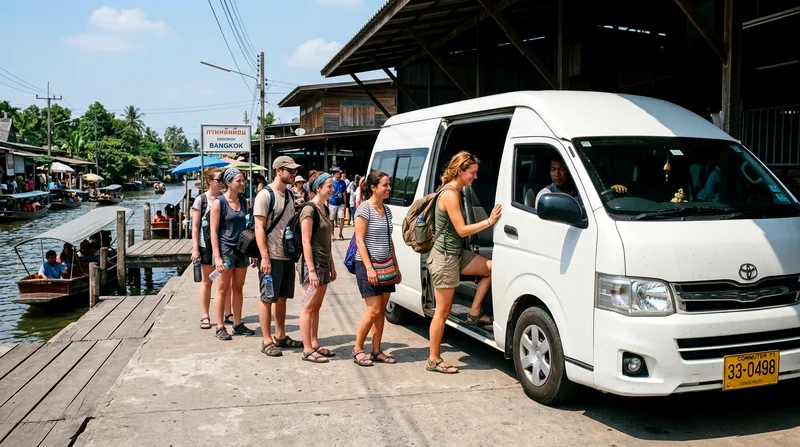
This is the one day worth booking ahead, since the floating markets sit outside the city and self-arranging transport eats time and money.
Morning: Floating Market tour
Damnoen Saduak and Amphawa are the two realistic options, both roughly 80–100 km from central Bangkok. A shared minivan tour booked through Klook or a similar platform runs 400–700 THB ($11–20) per person including transport, versus 1,500+ THB for a private taxi round trip. Amphawa is quieter and more local, with fewer souvenir boats; Damnoen Saduak is the classic postcard scene but busier and pricier for boat rides, which run 150–300 THB on top of the tour cost. Compare current prices and departure times before booking — early morning slots (7–8 a.m. pickup) avoid both the heat and the tour-group crush.
Afternoon and Evening: Riverside and Khao San Road
Back in Bangkok by early afternoon, take the Chao Phraya Express Boat (15–30 THB per ride) up toward Yodpiman or Asiatique for a cheap, scenic way to see the riverside without paying for a dinner cruise. Walk Khao San Road in the evening for its night market stalls — cheap pad thai (60–80 THB), fruit shakes (40 THB), and people-watching that costs nothing. Skip the overpriced rooftop bars that have sprung up along the strip; a Chang beer at a street-side table is a third of the price and better for watching the chaos.
Day 3: Street Food and Neighborhoods
Day three trades monuments for markets and food, and it's the cheapest day of the trip if you plan it right.
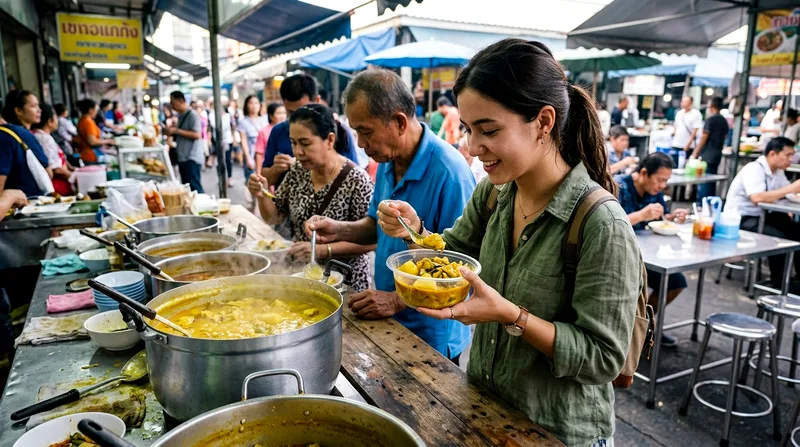
Morning: Chatuchak Weekend Market
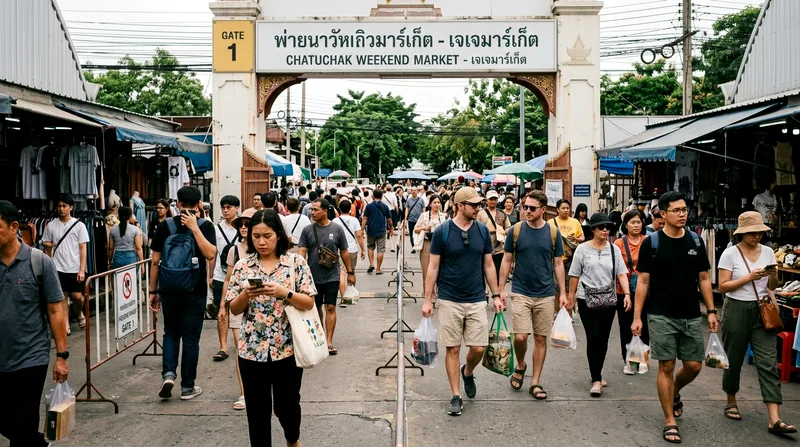
Chatuchak is only open Saturday and Sunday, so this day needs to land on a weekend — plan your four days accordingly. Take the BTS to Mo Chit or MRT to Kamphaeng Phet; entry is free, and with over 8,000 stalls you could spend the whole morning without buying anything but a 30 THB iced coffee. Bargain on clothing and souvenirs — vendors expect it, and 20–30% off the first quoted price is normal. Go before 11 a.m.; by midday the covered sections turn into a sauna.
Afternoon and Evening: Local street food crawl
Head to Chinatown (Yaowarat) by late afternoon for one of the best cheap-eats stretches in Bangkok — oyster omelets, boat noodles, and grilled satay for 40–100 THB a dish. For something calmer, the Talat Noi backstreets nearby have mural-covered walls and old shophouses, free to wander. If your legs are done, skip Chinatown's crowds and eat instead at a Sukhumvit Soi food court like the one near Terminal 21, where a full meal runs 80–120 THB in air conditioning.
Day 4: Day Trip to Ayutthaya
Ayutthaya, the former Siamese capital about 80 km north of Bangkok, is the best-value day trip from the city — better than Pattaya, which is really a beach town, not a history stop, and less crowded than Ayutthaya's regional rival in fame, Siem Reap, which requires a flight and visa rather than an hour's train ride.
Full-day guided or self-guided temple tour
Self-guided is genuinely cheaper and not much harder: a third-class train from Bangkok's Hua Lamphong or Bang Sue station costs around 20 THB and takes about 1.5–2 hours. Rent a bicycle near the station for 50 THB a day and cycle between Wat Mahathat, Wat Chaiwatthanaram, and Wat Phra Si Sanphet — combined entry fees run about 150–200 THB total. A packaged day tour booked through Klook costs 900–1,500 THB ($25–42) including transport, a guide, and sometimes lunch — worth it if you want history explained rather than guessed at, or if you're short on time. Compare current prices and group sizes before booking, since quality varies a lot between operators.
Return to Bangkok evening
Trains and minivans back to Bangkok run until early evening; aim to leave Ayutthaya by 5 p.m. to avoid arriving too late for dinner. Back in the city, a low-key final night at a Sukhumvit or Silom street stall — som tam, grilled pork skewers, sticky rice, maybe 150 THB total — is a better use of your last baht than a pricey rooftop bar. If you've got energy left, the BTS runs until midnight, so a last pass through Asiatique's riverside market is free to wander even if you don't buy anything.
Getting Around Bangkok
Transport is where budget itineraries quietly fail. Taxis look cheap individually but add up, and traffic can turn a 10-minute ride into 40 minutes burning the meter — or worse, a flat "tourist rate" if the driver refuses the meter, which is illegal and worth walking away from.
BTS Skytrain and MRT subway
The BTS Skytrain and MRT subway cover most tourist areas — Siam, Sukhumvit, Silom, Chatuchak — with single rides from 16–59 THB depending on distance. A one-day BTS pass costs around 150 THB, worth it only if you're making 4+ trips; otherwise pay per ride with a rechargeable Rabbit card, which saves a little and skips the ticket-machine queue. Neither system reaches the Old City well, which is the one gap in an otherwise efficient network.
Tuk-tuks, taxis, and boats
Tuk-tuks are fun once, for a short hop, agreed in price before you get in — expect 80–150 THB for a 10-minute ride, and never take one if a driver suggests "just a quick stop" at a shop, a classic commission scam. Metered taxis are cheap if the driver uses the meter: a 15-minute ride rarely exceeds 100 THB. River ferries along the Chao Phraya cost 15–30 THB and are often faster than road traffic for Old City-to-riverside routes.
Where to Base Yourself
Where you sleep shapes your daily transport costs more than anything else on this trip.
Khao San Road and Old City
Dorm beds here run 250–450 THB ($7–13) a night, private budget rooms 600–1,000 THB. It's noisy, especially on weekends, but you're walking distance from the Grand Palace, Wat Pho, and Wat Arun, which cuts day-one and day-two transport to near zero. Light sleepers should ask for a room off the main strip.
Sukhumvit and Silom neighborhoods
Sukhumvit and Silom cost slightly more — budget guesthouses run 700–1,200 THB a night — but put you closer to the BTS line, Chatuchak, and better food-court options for day three. It's a reasonable trade-off if you'd rather have easy transit than Old City charm, and it's a shorter hop if you're also considering a side trip toward Pattaya afterward.
Budget Breakdown by Day
A realistic 4-day Bangkok budget itinerary runs $40–60 per person per day, all-in. Day 1 is the costliest because of Grand Palace admission; Day 2 and Day 4 carry the tour costs; Day 3 is the cheapest if it lands on a Chatuchak weekend. Compare that to Chiang Mai, where daily costs run slightly lower thanks to cheaper guesthouses, or Kuala Lumpur, where food is comparably cheap but transit passes cost more — Bangkok sits in the middle of the regional budget-travel pack, not the cheapest, not the most expensive.
A 4-day Bangkok budget itinerary averages $40–60 per person per day once accommodation, food, transport, and one tour or attraction are included.
Bangkok budget itinerary: daily cost breakdown by category (THB and USD)
| Day | Accommodation (THB) | Food (THB) | Transport & attractions (THB) | Daily total (approx. USD) |
|---|---|---|---|---|
| Day 1 – Old City | 300–800 | 250–400 | 700–900 | $35–55 |
| Day 2 – Floating Market | 300–800 | 250–400 | 500–900 | $30–55 |
| Day 3 – Street Food | 300–800 | 300–500 | 100–300 | $25–45 |
| Day 4 – Ayutthaya | 300–800 | 250–400 | 200–1,500 | $25–70 |
Figures are per person, typical ranges only; actual costs vary by season, room type, and whether you book a guided or self-guided tour.
Frequently asked questions
How much money do I need for a 4-day Bangkok trip?
Budget $160–240 per person total for 4 days, covering a hostel or budget guesthouse, three cheap meals a day, public transport, and entry to the Grand Palace, Wat Pho, Wat Arun, one floating market tour, and the Ayutthaya day trip. Add a buffer of $20–30 for souvenirs or an extra drink or two.
What are the cheapest attractions in Bangkok?
Wat Arun's exterior grounds, Lumpini Park, Chatuchak Weekend Market, and the Chao Phraya riverside walks near Asiatique are all free or nearly so. Wat Pho (200 THB) and Wat Arun's tower climb (100 THB) are the best-value paid temples — cheaper and less crowded than the Grand Palace, though less grand.
Where can I find budget-friendly tours in Bangkok?
Platforms like Klook and similar booking sites list shared minivan floating market tours and Ayutthaya day trips from around 400–1,500 THB, cheaper than arranging a private taxi. Always check what's included — some listings exclude entry fees or lunch — and compare current prices before booking, since they shift with season and demand.
Is Khao San Road good for budget travelers?
Yes, for sleeping and eating cheap — dorms from 250 THB, street food from 50 THB — but it's loud, especially Thursday through Saturday nights, and some bars and tuk-tuk touts target first-time visitors with inflated prices. Fine for a short stay; less ideal if you want quiet mornings.
What is the best way to get around Bangkok cheaply?
Combine the BTS Skytrain and MRT subway for longer east-west and north-south routes with Chao Phraya river ferries for Old City and riverside hops. Both cost under 60 THB per ride. Save tuk-tuks and metered taxis for short late-night trips when transit has stopped running.